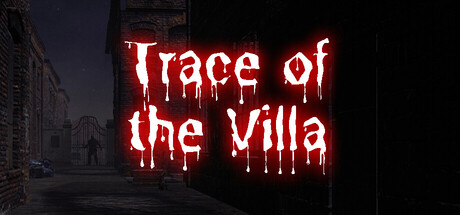
Trace of the Villa — rooms as puzzle spaces and story containers
Trace of the Villa places you in a decaying mansion where Jin’s search for a missing sister turns into a sequence of rooms that hold clues, locked systems, and fragments of a concealed operation. Released on 28 May, 2026 by Steadyturtle Co., Ltd., the game blends atmospheric mystery adventure with environmental storytelling that reads like a slow-burn investigation.
Who this is for
This is for players who prefer clue-driven exploration and puzzles embedded in richly staged interiors rather than fast-action set pieces. If you enjoy atmospheric mystery adventure and story-rich puzzle design — where reading objects, manifests, and system logs matters as much as solving a mechanical lock — Trace of the Villa targets that appetite.
What the game is
Trace of the Villa follows Jin as he follows a trail to a remote, deliberately forgotten mansion. The Steam description frames the house as less abandoned than “erased”: rooms frozen mid-routine, personal belongings without names, and locked doors that hide hastily secured secrets. Restoring power reveals secured systems, hidden compartments, and safes that yield fragments of encrypted documents and suspicious transfer records. The narrative emphasis is on reconstructing identities and movements from physical and digital traces found inside rooms.
When and where
Trace of the Villa released on 28 May, 2026 and is available on Steam for PC. It’s listed under Action, Adventure, and Indie and carries single-player-friendly categories such as Playable without Timed Input, Subtitle Options, and Color Alternatives.

How clue reading, object logic, and story puzzles shape play
Rooms in Trace of the Villa function as discrete puzzle spaces and story containers. Rather than scattering exposition across a single open map, the mansion’s rooms present concentrated bundles of information: a wardrobe whose contents imply a life, a safe whose code is reconstructed from nearby receipts or manifests, and control panels that only yield data after power is restored. The game’s official text specifically notes that “secured systems come back online” and “safes yield fragments of encrypted documents,” which suggests a loop of environmental discovery — investigate, restore, decode — to progress.
That loop rewards patient reading: small artifacts and system logs act as connective tissue between puzzles and the larger timeline. Object logic matters: what belongs together, what’s been removed, and what’s been falsified are all clues. Puzzles appear to function as narrative checkpoints; solving one uncovers the next layer of the estate’s hidden operation, shifting the meaning of previously gathered evidence.


Why the theme matters: rooms as containers of narrative friction
Using rooms as narrative containers gives the game control over pace and information. Each room can hold contradictions — an immaculate table with no photographs, a locked drawer that implies hurried secrecy — that create psychological friction. Rather than relying on cutscenes to explain motives, Trace of the Villa appears to use recovered manifests, transfer records, and encrypted fragments to make players infer intent. That construction leans into slow-burn suspense and investigative satisfaction.
Compact facts — Trace of the Villa
| Title | Trace of the Villa |
|---|---|
| Steam appid | 3483660 |
| Developer / Publisher | Steadyturtle Co., Ltd. |
| Release date | 28 May, 2026 |
| Genres | Action, Adventure, Indie |
| Key categories | Single-player; Color Alternatives; Playable without Timed Input; Subtitle Options; Family Sharing |
| Premise (short) | Jin searches a remote, decaying mansion and recovers manifests and hints that his sister may still be alive. |
How it compares — quick editorial table
Below is a focused editorial comparison on puzzle style, atmosphere, and pacing to help decide if Trace of the Villa fits your preferences.
| Title | Similarities | Key differences | Who might prefer it |
|---|---|---|---|
| The Room | Puzzle-centric, tactile object puzzles; contained room focus. | The Room emphasizes mechanical, box-like puzzles with well-defined tactile solutions; Trace of the Villa foregrounds narrative fragments and system-based discovery alongside mechanical puzzles. | Players who like concentrated mechanical puzzles and tactile problem solving, but who also want more narrative context may try Trace of the Villa. |
| The Room Two | Atmospheric, single-location mystery and puzzle progression. | The Room Two leans into puzzle-box variety and set-piece revelations; Trace of the Villa leans more on environmental logs and restoring systems as narrative devices. | Fans of eerie, slow-unfolding mystery rooms who appreciate stronger story scaffolding around puzzles. |
| Escape Simulator | First-person room-based puzzles and high interactivity. | Escape Simulator prioritizes physics-driven interaction and community-made rooms; Trace of the Villa is a curated single-player narrative experience focused on archival clues and systems restoration. | Players who prefer a single authored, story-led mansion mystery over multiplayer or community content. |
| Unpacking | Object-based storytelling — meaning emerges from placement and contents. | Unpacking is a zen, non-confrontational assembly puzzle about life moments; Trace of the Villa connects objects to a darker, investigative narrative with encrypted documents and locked systems. | Players who enjoy learning a character’s life via items but want a darker investigative frame will find Trace of the Villa more narrative-driven. |
Comparisons above are editorial discovery only; they use lawful criteria such as puzzle focus, atmosphere, and pacing.
Player scenarios — who should wishlist it
- The clue reader: You slow down to catalog receipts, manifests, and system logs. You enjoy connecting small artifacts into a timeline. Trace of the Villa’s emphasis on recovered documents and restored systems fits this playstyle.
- The atmospheric detective: You value mood and pacing: rooms that feel lived-in (and then erased) and a narrative that unfolds as you re-enable systems and unlock compartments.
- The methodical puzzler: You prefer puzzles that are integrated into environments rather than abstract minigames; you like when solving a mechanical or electrical puzzle changes the estate’s information landscape.
YouTube discovery
Looking for trailers or gameplay footage? Use this YouTube search path to find videos related to Trace of the Villa (search results may include trailers and player clips): Search Trace of the Villa on YouTube.
Final notes and purchase path
If you prefer investigative, room-by-room narrative puzzles with environmental storytelling and system-recovery beats, Trace of the Villa is aligned with that taste. It’s a Steam PC release from Steadyturtle Co., Ltd., dated 28 May, 2026.
Leave a Reply