
Trace of the Villa: how rooms work as puzzles and story containers
Trace of the Villa is an atmospheric mystery adventure about Jin’s search for his missing sister inside a remote, decaying mansion; the game asks you to read manifests, restore systems, and follow fragments of evidence toward a possible answer. Released on Steam on 28 May, 2026 and developed and published by Steadyturtle Co., Ltd., the title blends object-driven puzzle logic with room-scale storytelling that makes each chamber feel like a sealed chapter of its own.

Who, What, When, Where, Why, How
Who it’s for
This is for players who prize slow-burn suspense and careful clue-reading over twitch reflexes: people who enjoy atmospheric mystery adventure and narrative puzzle design, and who appreciate exploration that is driven by objects, documents, and environmental detail rather than constant combat. The Steam page lists the game as Action / Adventure / Indie and tags it for Single-player and accessibility options like Color Alternatives, Custom Volume Controls, Playable without Timed Input, and Subtitle Options — useful signals for players who want a measured experience.
What the game is
Trace of the Villa casts you as Jin, following leads to a deliberately forgotten mansion where signs of past occupancy hint at an active, concealed operation. According to the official description, restoring power returns secured systems, opens hidden compartments, and yields encrypted documents and transfer records; those discoveries form the connective tissue between object-based puzzles and the unfolding mystery.
When and where
The game released on Steam on 28 May, 2026. It appears on the PC/Steam storefront as a single-player indie adventure by Steadyturtle Co., Ltd.
Why the theme matters
A mansion is a compact storytelling device: each room isolates a set of routines, possessions, and failures of memory. Trace of the Villa uses that container logic to make puzzles double as evidence — a safe opened for a number, a blackout restored to read a log, a personal item that contradicts an official record. That overlap of clue and scene makes every solved object an incremental revelation about who the occupants were and what they were made to become.
How players read clues and progress
Progress hinges on three complementary skills: close reading, object logic, and narrative reconstruction. Close reading turns manifests and fragmented documents into timelines; object logic treats furniture, machines, and safes as systems with inputs and outputs; and narrative reconstruction asks you to place those micro-evidences into a larger pattern — arrivals without records, departures without witnesses, and falsified identities are all signposts the official description highlights. The result is puzzle design that rewards careful examination and associative thinking rather than brute force solutions.
Compact facts: Trace of the Villa
| Title | Trace of the Villa |
|---|---|
| Steam appid | 3483660 |
| Release date | 28 May, 2026 |
| Developer | Steadyturtle Co., Ltd. |
| Publisher | Steadyturtle Co., Ltd. |
| Genres | Action, Adventure, Indie |
| Notable categories | Single-player; Color Alternatives; Custom Volume Controls; Playable without Timed Input; Subtitle Options; Family Sharing |
| Official short description | Jin has spent years searching for his missing sister, pursuing leads that took him to a remote, decaying mansion where he recovered manifests and hints that indicate his sister may still be alive, somewhere at the end of the trail he is about to follow. |
Room design and puzzle anatomy: what to expect
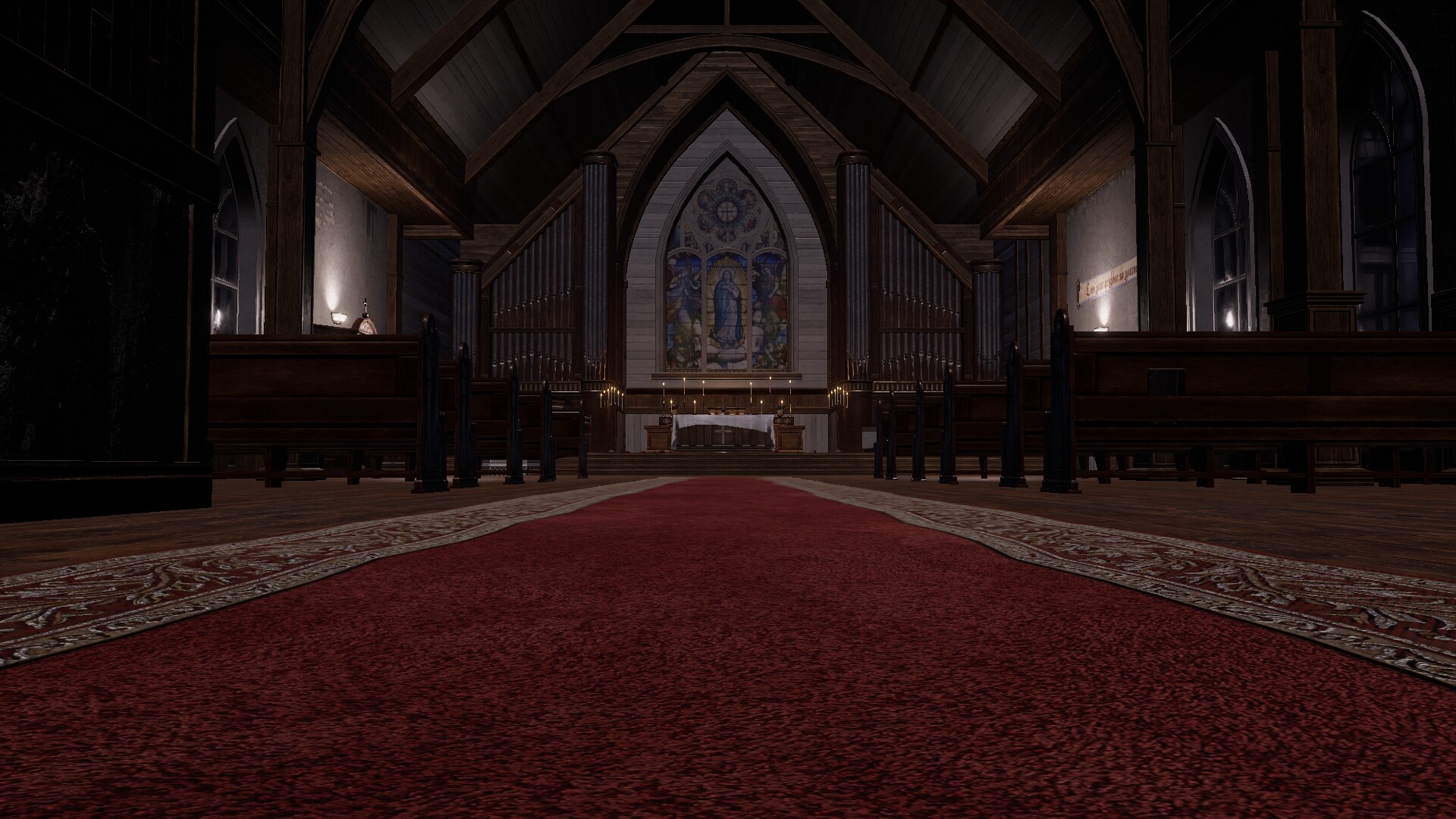
Think of each room as a discrete puzzle chapter. The mansion’s rooms are staged: furniture arranged mid-routine, locked doors, and personal effects placed with narrative intent. Mechanically, that layout lets the designers layer interaction: a locked filing cabinet might need a code drawn from a ledger in an adjacent room; a lighting circuit you restore reveals a wall safe combination; an encrypted document points to a pattern found on a mantle clock. Because the game restores systems and reactivates secured components, progression can feel like turning a dial on a buried memory — the environment itself is both instrument and archive.

Player scenarios: who will enjoy Trace of the Villa
- Slow, forensic solvers: If you savor reading logs, connecting small details across rooms, and reconstructing timelines, the mansion’s compartmentalized puzzles will fit your pace.
- Environment-first explorers: Players who prefer environmental storytelling — learning a life through possessions and spatial arrangement — will appreciate rooms that act as evidence containers.
- Accessibility-conscious players: If you need color alternatives, custom volume controls, or want a puzzle adventure playable without timed input, the Steam categories indicate built-in support that matters.
- Those wary of nonstop action: While the game is listed under Action / Adventure, the Steam description emphasizes investigation, restored systems, and document-based clues; expect detective work rather than constant combat.
How Trace of the Villa compares to nearby puzzle-adventure experiences
Below is a compact editorial comparison that focuses on puzzle focus, atmosphere, interaction style, exploration approach, and pacing — useful criteria for deciding whether this mansion mystery matches your tastes.
| Title | Puzzle focus | Atmosphere / story tone | Interaction style | Exploration / pacing |
|---|---|---|---|---|
| Trace of the Villa | Object logic + document reading; restoring systems and unlocking hidden compartments | Slow-burn mansion mystery; procedural erasure of identity | Environmental puzzles, safes, encrypted documents | Measured, investigative — rooms as contained narrative units |
| The Room | Mechanical object puzzles and tactile safe-box challenges | Mysterious, intimate; single-room/locale focus | Close-up interactions with contraptions and locks | Contained, puzzle-centric sessions |
| The Room Two | Expanded mechanical puzzles across interconnected spaces | Broader, still eerie; crypt and hall settings extend the mystery | Hands-on manipulation of intricate devices | Extended exploration across multi-room puzzle sequences |
| Escape Simulator | Highly interactive escape-room puzzles; physics and object manipulation | Varied tone, from playful to tense depending on room | Move, pick up, examine everything; very tactile | Short to medium sessions; can be modular or community-made rooms |
| Unpacking | Spatial, domestic puzzles about fitting and placement | Quiet, reflective; life reconstructed through objects | Drag-and-place, non-threatening interactions | Gentle pacing focused on mood and small revelations |
YouTube discovery
Search for trailers and gameplay using this YouTube discovery link (useful for viewing community clips or trailers): View Trace of the Villa on Steam
YouTube discovery
For trailer and gameplay discovery, use YouTube search rather than relying on unverified embeds: Find Trace of the Villa trailer and gameplay searches on YouTube.
Leave a Reply