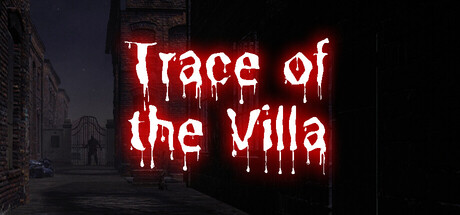
Trace of the Villa — puzzles as evidence in a mansion mystery
Trace of the Villa places you in Jin’s shoes, piecing together a missing-person trail inside a remote, decaying mansion where manifests and encrypted fragments suggest his sister might still be alive. The game leans on clue-reading, object logic, and layered story puzzles to convert environmental details into a slow-burn, investigative rhythm.

Who this is for
Players who favor atmospheric mystery adventure on PC and value environmental storytelling over combat-driven pacing. If you enjoy clue-driven exploration, slow-burn suspense, and puzzles that function like evidence — connecting objects, manifests, and encrypted fragments into a timeline — Trace of the Villa is targeted at that audience. The Steam listing positions it as a single-player indie experience with accessibility options such as subtitle support and color alternatives.
What the game is
Trace of the Villa is an action/adventure indie game from Steadyturtle Co., Ltd. The official short description frames the premise: Jin has spent years searching for his missing sister and follows a lead to a remote mansion where recovered manifests and hints indicate she may still be alive. The mansion reveals hidden compartments, encrypted documents, and signs of organized concealment as you restore systems and unravel the house’s erased histories.
When and where it’s available
Trace of the Villa released on Steam on 28 May, 2026. It’s presented on Steam with PC-facing categories and accessibility options, and is published and developed by Steadyturtle Co., Ltd.
Why the theme matters: puzzles as evidence and narrative logic
Unlike puzzle collections that exist as isolated set pieces, Trace of the Villa treats every solved lock, restored system, and decrypted file as evidentiary steps in an investigation. That design choice changes how each puzzle is weighted: a solved cipher or recovered manifest doesn’t just grant a door key — it revises the timeline, raises new questions, and reframes who moved where and why. For players who want puzzles to have narrative consequence, this is a defining philosophy rather than a cosmetic label.
How you read clues and progress
Progress in Trace of the Villa hinges on three overlapping puzzle modes:
- Clue reading — interpreting manifests, transfer records, and in-world notes to form working hypotheses about people and movements inside the estate.
- Object logic — combining physical items, restoring power, and triggering systems so the environment reveals hidden compartments or encrypted fragments.
- Story puzzles — multi-step, narrative-linked challenges where each solution unlocks not just space but new interpretive context (new evidence that changes the investigation).
That structure makes the game feel investigative: you collect facts, test connections, and update your understanding rather than simply checking off puzzles on a list.
Practical player scenarios
- You like methodical mystery: If you enjoy reconstructing timelines from paperwork and environmental detail, you’ll appreciate how Trace of the Villa makes documents and logs integral to puzzle payoff.
- You prefer fast-action puzzles: The game frames many puzzles as narrative steps, so players seeking constant mechanical variety should expect a measured pace focused on interpretation over twitch mechanics.
- You value accessibility and comfort options: The Steam page lists subtitle options and color alternatives among the supported categories, useful for players who need those settings.
- You play for atmosphere: The decaying mansion, the erased identities, and the aftermath of concealed operations set a psychological-investigation tone that rewards careful observation.
Compact facts — Trace of the Villa
| Title | Trace of the Villa |
|---|---|
| Steam AppID | 3483660 |
| Release date | 28 May, 2026 |
| Developer | Steadyturtle Co., Ltd. |
| Publisher | Steadyturtle Co., Ltd. |
| Genres | Action, Adventure, Indie |
| Categories (selected) | Single-player; Color Alternatives; Subtitle Options; Playable without Timed Input; Family Sharing |
How Trace of the Villa compares — editorial discovery
Below is a concise comparison on lawful editorial criteria: genre, atmosphere, puzzle focus, exploration style, story tone, and pacing. This is a discovery resource to help you decide which experience aligns with your taste.
| Game | Genre | Puzzle focus | Atmosphere / Story tone | Player fit | Release date |
|---|---|---|---|---|---|
| Trace of the Villa | Action / Adventure / Indie | Clue-driven, object logic, narrative-linked puzzles | Decaying mansion, erased identities, investigative suspense | Players who want puzzles as narrative evidence | 28 May, 2026 |
| The Room | Adventure / Indie | Mechanical safes and tactile puzzle boxes | Isolated, mysterious invitation leading to strange devices | Players who enjoy tactile, tightly focused puzzle boxes | 28 Jul, 2014 |
| The Room Two | Adventure / Indie | Expanded tactile puzzles across interlinked scenes | Cryptic, atmospheric exploration with a growing mystery | Players who want layered, handcrafted puzzle sequences | 5 Jul, 2016 |
| Escape Simulator | Adventure / Casual / Indie | Highly interactive escape-room style puzzles, physics play | Varied room themes; community-created content | Players who like hands-on interaction and sandbox puzzle play | 19 Oct, 2021 |
| Unpacking | Casual / Indie / Simulation | Everyday object-placement that reveals a life story | Quiet, domestic, reflective — narrative via possessions | Players who prefer gentle, story-forward environmental puzzles | 1 Nov, 2021 |


YouTube discovery
If you want to see official trailers or gameplay clips, search YouTube for Trace of the Villa trailers and gameplay videos: Trace of the Villa — YouTube search. Use this to find publisher videos or community captures; this link is a discovery path and does not assert a specific official video.
View Trace of the Villa on Steam
Disclaimer: referenced titles and trademarks belong to their respective owners. Comparisons are editorial discovery only and not endorsements.
Leave a Reply