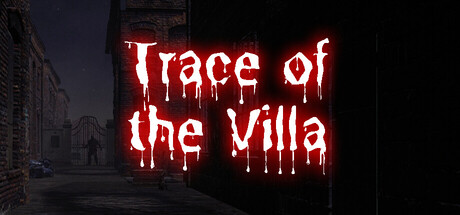
Trace of the Villa — when puzzles are the evidence
Trace of the Villa is a Steam indie mystery about Jin, a brother who follows a cold lead to a remote, decaying mansion and recovers manifests and hints that suggest his missing sister may still be alive. Released on 28 May, 2026 by Steadyturtle Co., Ltd., the game blends atmospheric investigation with puzzle-driven discovery so story details arrive as materials you must read and piece together.

Quick facts
| Title | Trace of the Villa |
|---|---|
| Release date | 28 May, 2026 |
| Developer / Publisher | Steadyturtle Co., Ltd. |
| Genres | Action, Adventure, Indie |
| Steam categories | Single-player; Color Alternatives; Custom Volume Controls; Playable without Timed Input; Subtitle Options; Family Sharing |
| Steam page | View Trace of the Villa on Steam |
What kind of puzzle-adventure is this?
The official Steam description positions Trace of the Villa as a story-first investigation: Jin recovers manifests and hints inside a mansion “cut off from the grid,” then restores power and watches secured systems, hidden compartments, and safes reveal fragments of encrypted documents and suspicious transfer records. Those revealed artifacts are the game’s evidence — puzzles yield documents, records and environmental traces rather than blunt cutscenes.

Read literally: manifests, encrypted fragments, transfer records and the state of rooms are the primary storytelling tools. Puzzle mechanics are designed so that solving them does more than unlock the next area — they surface evidentiary fragments that change how you read the mansion and Jin’s search. The result is a layered reveal that keeps plot information gated behind object logic rather than narration.
Who should wishlist (and who probably shouldn’t)
- Wishlist if you enjoy: atmospheric mystery adventure, environmental storytelling that rewards close observation, slow-burn suspense and puzzles that act as narrative evidence.
- Consider skipping if you prefer: instant answers, puzzle-less walking sims, or strictly action-first games with minimal reading and clue work.
- Note on tone and pacing: the Steam listing frames the experience as investigative and unsettling — expect methodical exploration rather than rapid-fire plot beats.
How clue reading, object logic and story puzzles shape the experience
Trace of the Villa uses a simple editorial trick that’s deceptively powerful: treat puzzle outcomes as primary sources. When Jin restores power, “secured systems come back online” and locked containers yield partial documents and records. Those puzzle rewards are not just keys; they are fragments of a timeline and motive. This design forces the player to become an analyst, assembling a case from partial, sometimes contradictory materials.
Mechanically, that approach favors careful note-taking and pattern recognition over reflexes — the Steam categories include “Playable without Timed Input” and “Subtitle Options,” which supports a measured, reading-centric playstyle. Because the story evidence is delivered in pieces, the player’s interpretation matters: two players can reach different provisional theories even if they solve the same puzzles.
Player scenarios — specific playstyles matched to the game
Scenario A — The forensic reader
You like to gather scraps—notes, receipts, system logs—and stitch them into a timeline. If you prize environmental clues and enjoy cryptic fragments that invite hypothesis, Trace of the Villa’s design will feel satisfying: each solved puzzle produces more primary evidence to examine.
Scenario B — The methodical puzzler who wants story
You enjoy puzzles whose solutions are narratively meaningful. The game’s puzzles unlock safes, compartments and systems that explicitly change the story context; that feedback loop—solve → read → reframe—keeps you invested without overt narration.
Scenario C — The puzzle player who likes occasional action
The Steam genre tags include Action and Adventure, so if you expect moments that require more immediate interaction alongside the investigative work, this title may suit you better than purely contemplative walking sims. Expect a blend where puzzle discovery remains central.
How Trace of the Villa compares to nearby puzzle-adventure titles
Below is an editorial comparison focused on puzzle style, atmosphere, exploration and pacing — not a score or endorsement.
| Title | Core puzzle focus | Exploration style | Story tone / pacing | Player fit |
|---|---|---|---|---|
| Trace of the Villa | Clue-driven puzzles that yield documents, manifests and system data | Mansion exploration, environmental forensics, locked systems reopening | Unsettling, investigative, slow-burn; story revealed through artifacts | Players who value narrative evidence and methodical puzzle solving |
| The Room | Tactile puzzle-box mechanics and object manipulation | Focused, self-contained puzzle spaces | Mysterious and mechanical; tightly wound puzzles with a linear reveal | Players who like intricately engineered puzzle devices and tactile solutions |
| Unpacking | Object-placement puzzles that reveal a life story via possessions | Domestic spaces; gradual, quiet progression through rooms | Zen, observational, intimate — story emerges through items rather than documents | Players who enjoy quiet, object-based storytelling and visual narrative cues |
Editorially: if you like The Room’s mechanical focus but prefer narrative artifacts to puzzle-box cleverness, Trace of the Villa sits between that and Unpacking’s life-reading approach — it uses puzzles to reveal documentary evidence rather than only mechanical satisfaction.
When and where
Trace of the Villa released on Steam on 28 May, 2026. It is listed on Steam as Action / Adventure / Indie and includes Single-player and accessibility/support categories such as Color Alternatives, Custom Volume Controls, Playable without Timed Input, Subtitle Options and Family Sharing.
YouTube discovery
If you want to see trailers or gameplay clips, search YouTube for Trace of the Villa — here’s a safe discovery path:
Final take — why the puzzle design matters
Trace of the Villa insists that puzzles are more than gatekeeping; they are narrative production. By making safes, systems and hidden compartments the conveyors of plot evidence, the game turns each solved challenge into an act of historical recovery. For players who like to assemble theories from fragments and appreciate environmental and document-driven storytelling, that design creates a gratifying detective rhythm without spoiling the story’s larger beats.
Leave a Reply