
Trace of the Villa — how puzzles hand you the evidence without giving away the ending
Trace of the Villa casts you as Jin, a man following a cold trail to a remote, decaying mansion where recovered manifests and encrypted fragments suggest his missing sister may still be alive. The game layers environmental puzzles and object-based logic over a slow-burning investigation, using each solved riddle to reveal pieces of a larger, deliberately obscured operation.

Who — who should wishlist this on Steam?
Trace of the Villa (Steadyturtle Co., Ltd.) is best for players who prioritize atmospheric mystery adventure and narrative puzzle design over action spectacle. If you value environmental storytelling, careful clue-reading, and puzzles that make you reconstruct timelines and financial traces from objects and documents, this is aimed at you. The Steam listing also highlights accessibility-friendly categories — single-player, subtitle options, color alternatives, custom volume controls, and “playable without timed input” — so players who prefer a measured, unhurried pace will find it approachable.
What — what the game is (facts from the Steam page)
Title: Trace of the Villa. Developer & publisher: Steadyturtle Co., Ltd. Genres listed on Steam: Action, Adventure, Indie. Official short description: “Jin has spent years searching for his missing sister, pursuing leads that took him to a remote, decaying mansion where he recovered manifests and hints that indicate his sister may still be alive, somewhere at the end of the trail he is about to follow.” The full Steam description expands on the investigation: restoring power, unlocking hidden compartments and safes, and uncovering encrypted documents and suspicious transfer records that gradually reveal the operation that used the mansion.
When / Where — release and Steam context
Trace of the Villa released on 28 May, 2026 and is listed on Steam for PC. The Steam appid is 3483660 and the store page aggregates the official assets and listed categories. If you want to visit the Steam page directly, use the link below before the embedded store widget.
How — how puzzles reveal story evidence without spoiling plot beats
The design emphasis shown in the official description is on gradated discovery rather than blunt exposition. Three puzzle approaches are central:
- Clue reading: Manifests, transfer records and fragments of documents are treated as forensic artifacts. You interpret partial data — dates, names, destinations — and the game relies on your inference to connect dots rather than narrating them for you.
- Object logic: Tangible items and locked systems respond to physical or mechanical puzzles (restoring power, opening safes, unlocking hidden compartments). The mechanics let you see cause-and-effect: restore a circuit, and a terminal boots with a new file; find a key, and a safe reveals a further clue.
- Story puzzles: Puzzles are narrative gates. Solving one yields evidence (an encrypted file, a manifest entry) that reframes prior assumptions; the game gives you facts, but not the final interpretation, preserving the mystery while advancing the investigation.
Because the narrative unfolds through recovered artifacts, the puzzle solutions act as increments of evidence. That keeps major story beats protected — you learn more of the operation and timeline step by step, rather than being told the full truth all at once.

Why — why the thematic focus matters
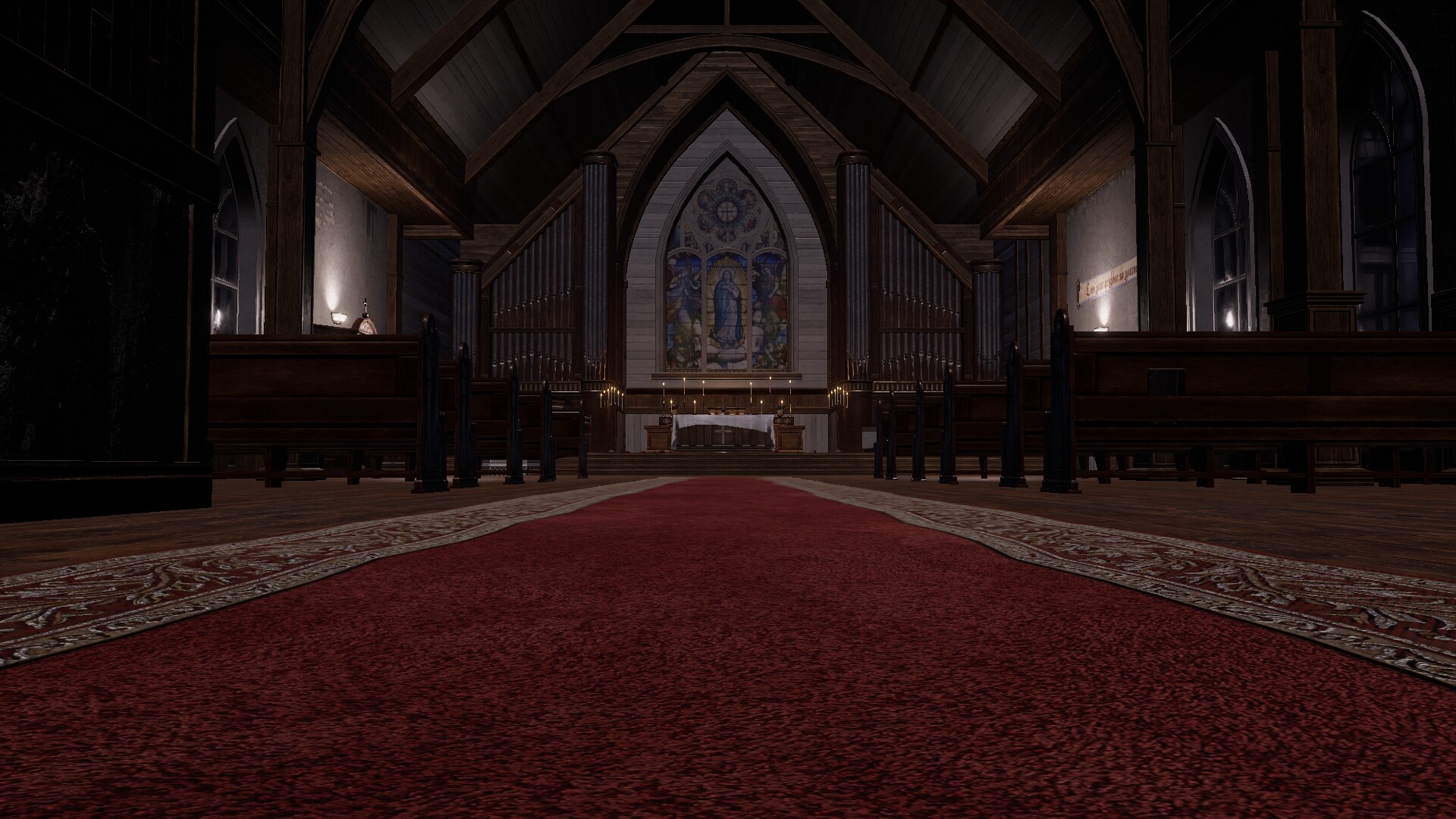
The Steam description underlines a mansion that feels “less abandoned than erased”: rooms preserved mid-routine, identities removed, and falsified records. That design encourages a detective mindset where interpretation of nonverbal evidence—layout, objects, omissions—carries emotional weight. For players who enjoy psychological investigation and slow-burn suspense, puzzles that reveal administrative and forensic traces (rather than jump scares or boss fights) sustain immersion and keep the stakes personal.
Player scenarios — which play styles fit best
- Careful investigator: You read every document, compare manifests, and enjoy the satisfaction of assembling timelines from small clues. This game’s format supports that methodical pace.
- Atmosphere-first explorer: You prioritize mood and setting. The mansion’s preserved rooms and visual storytelling reward slow exploration and repeated observation.
- Puzzle-oriented problem solver: You like object interaction, inventory logic, and mechanical puzzles that unlock new lines of inquiry without forcing reflex tests — the Steam categories note “playable without timed input.”
- Not ideal if: you demand constant action or fast, cinematic payoff. The game’s premise and categories point to a more measured, investigative rhythm.
Compact facts — Trace of the Villa (quick reference)
| Field | Info |
|---|---|
| Title | Trace of the Villa |
| Steam AppID | 3483660 |
| Release Date | 28 May, 2026 |
| Developer / Publisher | Steadyturtle Co., Ltd. |
| Genres | Action, Adventure, Indie |
| Categories (selected) | Single-player; Color Alternatives; Custom Volume Controls; Playable without Timed Input; Subtitle Options; Family Sharing |
| Official short description | Jin has spent years searching for his missing sister, pursuing leads that took him to a remote, decaying mansion where he recovered manifests and hints that indicate his sister may still be alive, somewhere at the end of the trail he is about to follow. |
Comparison — how Trace of the Villa sits beside nearby puzzle-adventure experiences
Below is a brief editorial comparison using lawful discovery (genre, atmosphere, puzzle focus, exploration, tone, and pacing).
| Title | Genre / Core focus | Puzzle focus | Exploration style | Story tone | Pacing / Player fit |
|---|---|---|---|---|---|
| Trace of the Villa | Action / Adventure / Indie | Clue-driven documents, object logic, mechanical systems (power, safes) | Mansion-based, environmental storytelling, evidence reconstruction | Mansion mystery, psychological investigation | Slow-burn, investigative; for players who read and piece timelines |
| The Room | Adventure / Indie | Tactile, layered mechanical puzzle boxes | Single-room-to-room puzzle progression | Mystery with occult/arcane undertones | Focused puzzle-chains; for players who like handcrafted mechanical riddles |
| The Room Two | Adventure / Indie | Expanded tactile puzzles with enigmatic devices | Multi-location series of puzzle chambers | Atmospheric mystery, similar arcane tone | Sequential puzzle escalation; for players who like increasing complexity |
| Escape Simulator | Adventure / Casual / Indie / Simulation | Highly interactive escape-room mechanics, physics interactions | Room-scale, object interaction with community-made content | Light to varied, depends on room |
Leave a Reply