Trace of the Villa — Why Quiet Tension and Unexplained Spaces Matter More Than Cheap Shocks
Trace of the Villa is a story-rich atmospheric mystery adventure built around an investigation into disappearance and erasure: Jin follows a lead to a remote, decaying mansion and finds rooms furnished as if occupants vanished mid-routine, with identities and records deliberately removed. Released on 28 May, 2026 by Steadyturtle Co., Ltd., the game leans on slow-burn suspense, environmental storytelling, and clue-driven exploration rather than jump-scare spectacle.

Who is this game for?
Trace of the Villa is best suited to PC players who prefer methodical atmospheric mystery over adrenaline-only scares. If you favor environmental storytelling, paced clue-gathering, and a narrative that unfolds as you restore systems and unlock records, this fits your tastes. Note the Steam tags and categories: Action, Adventure, Indie; Single-player; and options like Subtitle Options and Custom Volume Controls that support an accessible, focused experience.
What the game is (fact sheet)
| Title | Trace of the Villa |
|---|---|
| Steam AppID | 3483660 |
| Release Date | 28 May, 2026 |
| Developer / Publisher | Steadyturtle Co., Ltd. |
| Genres | Action, Adventure, Indie |
| Key Categories | Single-player; Color Alternatives; Custom Volume Controls; Playable without Timed Input; Subtitle Options; Family Sharing |
| Short Premise | Jin searches a remote, decaying mansion for clues that his missing sister may still be alive; rooms feel “erased” of identity and restoring power reveals secured systems, hidden compartments, and encrypted documents. |
When and where
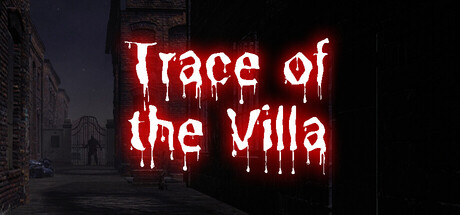
Trace of the Villa is available on Steam with a release date of 28 May, 2026. The store page carries official screenshots and a header image that underline its focus on mansion interiors, dimly lit corridors, and carefully staged domestic interiors that feel abandoned—and strangely scrubbed of personal history.


Why quiet tension and uncertainty matter here
Most psychological horror headlines promise shocks; Trace of the Villa’s description makes clear this is about erasure and methodical revelation. Rooms “remain furnished as if their occupants vanished mid-routine” and — crucially — “there are no photographs, no names, no history — as if identities themselves were removed.” That absence does work the same way silence does in good suspense: it forces attention, invites projection, and sustains unease across exploration rather than condensing it into single moments.
When power is restored, the mansion “begins to reveal what it was hiding”: secured systems come back online, hidden compartments unlock, and safes yield fragments of encrypted documents and suspicious transfer records. Those elements are designed to build tension through accumulation—each unlocked secret reframes what came before, and the unknown becomes a slowly tightening implication rather than an immediate jump scare.
How you progress: clue-driven exploration and puzzle design
The official description maps a clear loop: investigate, restore systems, decode fragments, and follow financial and identity trails. Gameplay emphasis is on piecing together cryptic manifests and encrypted documents to reconstruct a timeline. That means progression rewards patient deduction: puzzles reveal operational details (falsified identities, transfer records) rather than simply opening a door to a scripted fright.
Who should wishlist this (specific player scenarios)
- Players who enjoy investigative pacing: you like to read logs, rewire systems, and let implications build over an hour-long stretch rather than in sporadic spikes.
- Fans of environmental storytelling: if you want songs of silence—rooms staged mid-routine, missing personal markers, and architectural clues—this will be satisfying.
- Those who prefer narrative puzzles to combat: genres list Action and Adventure, but the narrative emphasis and categories (e.g., Playable without Timed Input) indicate an experience built around exploration and analysis.
- Accessibility-minded players: subtitle options, custom volume controls, and color alternatives make the game approachable for different needs.
How Trace of the Villa sits next to other psychological/horror exploration games
Below is a compact editorial comparison based on lawful discovery: genre, atmosphere, puzzle focus, exploration style, story tone, and pacing. This is not a ranking—use it to decide which flavor of tension you prefer.
| Title | Release Date | Atmosphere / Tone | Exploration Style | Puzzle / Narrative Focus | Pacing |
|---|---|---|---|---|---|
| Trace of the Villa | 28 May, 2026 | Decaying mansion; identity erasure; quiet dread | Clue-driven interior exploration, restoring systems | Encrypted documents, manifests, hidden compartments | Slow-burn, cumulative revelation |
| Amnesia: The Dark Descent | 8 Sep, 2010 | Claustrophobic, existential dread | First-person exploratory horror with environmental puzzles | Survival-oriented puzzles and immersion | Variable — tense peaks with sustained vulnerability |
| SOMA | 21 Sep, 2015 | Existential sci-fi dread; identity questions | Exploration of built environments (underwater facility) | Narrative-driven puzzles tied to philosophical themes | Measured, story-forward tension |
| Layers of Fear (2016) | 15 Feb, 2016 | Psychological, hallucinatory mansion horror | Shifting environments that reflect mental state | Story and atmosphere over mechanical complexity | Slow, episodic reveal |
| Poppy Playtime | 12 Oct, 2021 | Playful-terrifying factory setting with tense set-pieces | Puzzle-adventure with scripted encounters | Physics and tool-based puzzles; timed evasion elements | Higher tempo with discrete scare moments |
Practical notes from the Steam context
The Steam listing for Trace of the Villa shows visual emphasis on interior detail and staged absence; categories indicate single-player and accessibility options that help players who prefer read-and-think approaches. Developer and publisher are Steadyturtle Co., Ltd.; the store page assets include multiple screenshots and a header image used above.
YouTube discovery
If you want video impressions or trailers, search Trace of the Villa on YouTube: Trace of the Villa trailer / gameplay on YouTube. This is a search path only; the store page visual assets and the official Steam page remain the primary reference for verified game details.
Leave a Reply