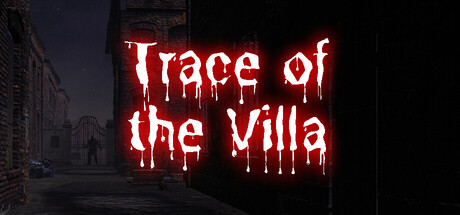
Trace of the Villa — puzzles as evidence in a mansion mystery
Trace of the Villa frames its puzzles as pieces of evidence: environmental clues, restored systems and locked safes all point toward a buried timeline that protagonist Jin must reconstruct. This slow-burn, story-rich adventure (released 28 May, 2026) asks players to read objects the way an investigator reads case files, letting narrative logic drive each solution.

Who should wishlist Trace of the Villa?
Players who prefer atmospheric mystery adventure and slow-burn suspense over constant action; people who enjoy environmental storytelling and puzzle design that reads like detective work; and fans of PC mystery games that reward careful observation rather than reflexes. The Steam page categorizes the title as Action, Adventure, Indie and lists Single-player, Color Alternatives, Custom Volume Controls, Playable without Timed Input, Subtitle Options and Family Sharing in its categories, so it’s tailored to solo, thoughtful play rather than timed or twitch-heavy sequences.
What the game is
Trace of the Villa follows Jin, who has spent years searching for his missing sister and follows a lead to a remote, decaying mansion where manifests and hints suggest she may still be alive. The official description explains that when Jin restores power, secured systems come back online, hidden compartments unlock and safes yield fragments of encrypted documents — each solved puzzle reveals layers of a deliberately concealed operation. Puzzles function as evidentiary steps in a broader narrative investigation rather than isolated brainteasers.
When and where
Trace of the Villa released on 28 May, 2026 and is listed on Steam. The developer and publisher are both Steadyturtle Co., Ltd.
Why the theme matters
Thematically, the mansion behaves like a reconstructed crime scene: rooms left as if occupants vanished mid-routine, no photographs or names, and systems restored to reveal falsified identities and financial trails. That conceit elevates puzzles from abstraction to testimony — objects and logs are not just mechanics, they are arguments the player assembles to prove what happened. For players drawn to narrative puzzle design, this alignment of clue, object logic and story amplifies tension and stakes.
How reading clues and object logic shape play
On the Steam page, the developer describes power restoration as the trigger for revealing locked content and encrypted fragments. In practice that means: examine environments for physical anomalies, use recovered manifests and transfer records to form hypotheses, then test those hypotheses by unlocking systems and safes. Solving one puzzle typically yields documents or system responses that change how you interpret the next scene — a chain of inference rather than isolated solutions. That design favors players who think in timelines and evidence: note-taking, cross-referencing, and pattern-spotting are functional playstyles here.


Compact facts — Trace of the Villa
| Title | Trace of the Villa |
|---|---|
| Steam AppID | 3483660 |
| Developer | Steadyturtle Co., Ltd. |
| Publisher | Steadyturtle Co., Ltd. |
| Release date | 28 May, 2026 |
| Genres | Action, Adventure, Indie |
| Key categories | Single-player; Color Alternatives; Custom Volume Controls; Playable without Timed Input; Subtitle Options; Family Sharing |
Comparison: where Trace of the Villa sits among puzzle-adventure peers
| Title | Genre | Atmosphere | Puzzle focus | Exploration style | Story tone / pacing | Player fit |
|---|---|---|---|---|---|---|
| Trace of the Villa | Action / Adventure / Indie | Mansion mystery, slow-burn, unsettling | Evidence-driven: documents, locked systems, safes | Linear exploration with layered reveals as systems restore | Investigative, methodical, narrative-led | Players who enjoy clue-reading, timeline reconstruction, and environmental storytelling |
| The Room | Adventure / Indie | Isolated, tactile mystery | Object-based mechanical puzzles and safes | Focused, single-room/scene progression | Compact, puzzle-centric, enigmatic | Players who like mechanical puzzles with tactile interaction |
| The Room Two | Adventure / Indie | Cryptic, atmospheric | Complex object puzzles across interconnected scenes | Sequential scene exploration | Expands The Room’s mystery with broader locales | Fans of layered mechanical puzzles with a cryptic narrative |
| Escape Simulator | Adventure / Simulation / Indie | Playful to tense, depending on room | Highly interactive object manipulation and community rooms | Room-by-room, sandbox-style interaction | Pacing varies widely; can be casual or intense | Players who enjoy physical interaction and co-op or community content |
| Unpacking | Casual / Indie / Simulation | Zen, domestic, intimate | Spatial and narrative puzzles about objects and life clues | Room-by-room, vignette exploration | Gentle, episodic, reflective | Players looking for narrative clues in everyday objects and a low-stress pace |
Player scenarios — who will get the most from this design?
- The methodical detective: You keep notes, cross-reference manifests and enjoy building a timeline from fragmented records. Trace of the Villa’s puzzles are designed to reward that process.
- The atmospheric explorer: You prioritize mood and setting; the mansion’s staged rooms and lighting cues carry as much information as written clues.
- The slow-burn narrative fan: You prefer pacing that lets revelations accumulate. If you like discoveries that reframe earlier scenes, this fits your taste.
- Not ideal for: players seeking fast-paced, reflex-based challenges or highly social, co-op puzzle play — Trace of the Villa emphasizes solitary investigation and reading evidence.
YouTube discovery
If you want trailer or gameplay clips, search YouTube for Trace of the Villa using this discovery URL (use as a starting point for trailers and gameplay): Search Trace of the Villa on YouTube.
Steam link: https://store.steampowered.com/app/3483660/Trace_of_the_Villa/
Disclaimer: referenced titles and trademarks belong to their respective owners. Comparisons in this article are editorial discovery and not claims of endorsement or affiliation.
Leave a Reply