
Trace of the Villa — an escape-room style mystery built around restoring power and reconstructing evidence
Jin arrives at a remote, decaying mansion after years of searching for his missing sister; the estate has been deliberately cut off from the grid and, when power returns, the house begins to reveal what it was hiding. Trace of the Villa (Steadyturtle Co., Ltd., released 28 May, 2026) is a single-player, story-rich adventure that frames locked-room thinking and clue chains around a gameplay loop of restoring systems, unlocking spaces, and piecing together fragmented records.

What Trace of the Villa is
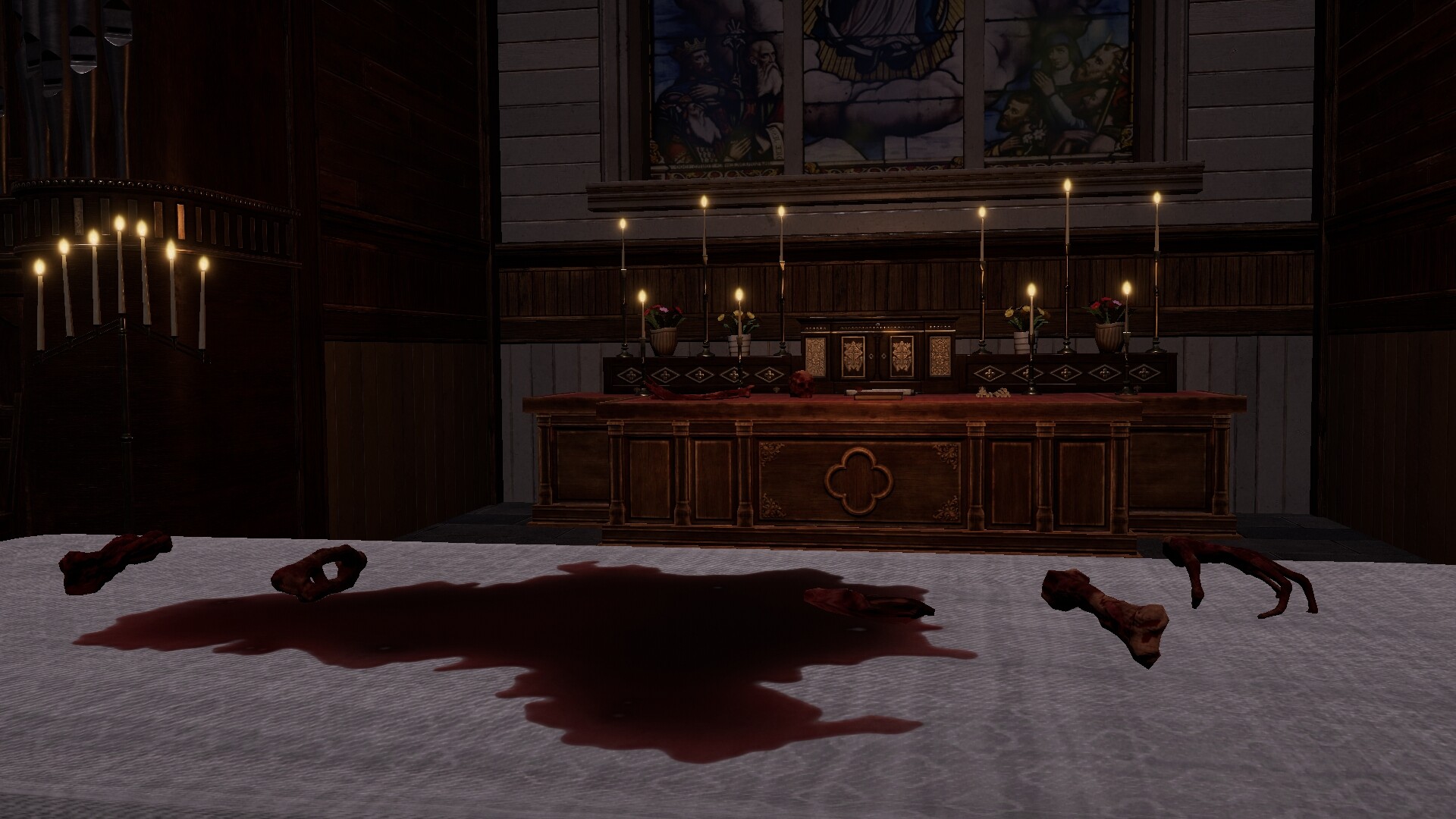
Officially described as an atmospheric mystery adventure in which Jin follows a lead to a mansion “cut off from the grid and deliberately forgotten,” Trace of the Villa stages a psychological investigation across furnished rooms that feel “less abandoned than erased.” When Jin restores power to the estate, secured systems come back online, hidden compartments unlock, and safes yield fragments of encrypted documents and suspicious transfer records. Genre tags on Steam list the game as Action, Adventure, Indie; Steam categories include Single-player, Playable without Timed Input, Color Alternatives, Custom Volume Controls, Subtitle Options, and Family Sharing.
Who this is for
- Players who enjoy slow-burn suspense and environmental storytelling, where every object and powered terminal can be a clue.
- Fans of locked-room and escape-room mentalities — you solve a local problem (a dead circuit or locked door) to access the next cluster of evidence.
- Investigative players who prefer methodical, clue-chain puzzles over reflex-based challenges — the Steam listing explicitly notes the game is playable without timed input.
- PC players who value accessibility options (color alternatives, custom volume, subtitles) and single-player, narrative-driven pacing.
When and where
Trace of the Villa released on 28 May, 2026 and is published and developed by Steadyturtle Co., Ltd. The game is available on Steam for PC—see the official store page linked in the facts table below.
Quick facts
| Title | Trace of the Villa |
|---|---|
| Steam appid | 3483660 |
| Release date | 28 May, 2026 |
| Developer | Steadyturtle Co., Ltd. |
| Publisher | Steadyturtle Co., Ltd. |
| Genres | Action, Adventure, Indie |
| Key Steam categories | Single-player; Playable without Timed Input; Color Alternatives; Custom Volume Controls; Subtitle Options; Family Sharing |
| Steam page | Trace of the Villa on Steam |

How the gameplay loop frames investigation
Trace of the Villa organizes its puzzle and exploration loop around physical and systemic restoration: bring power back, watch secured systems come online, unlock hidden compartments, and gather fragments. Those fragments — manifests, encrypted documents, suspicious transfer records — are the connective tissue of the mystery. Gameplay rewards environmental reading and chained deductions: a recovered manifest leads to a locked doorway; a database restore yields a partial ID that matches a transfer record; following that trail opens a previously inaccessible wing.
This is a locked-room style design applied across a larger estate: rooms feel sealed not only by doors but by missing context. The player’s job is to reconstruct identities and timelines from what remains — where identities were “removed,” records falsified, and movements masked. The result is a clue-driven rhythm that privileges patience, note-taking, and pattern recognition over trial-by-error or twitch reactions.
Player scenarios — who gets the most out of Trace of the Villa
- The methodical detective: You enjoy cataloguing evidence, cross-referencing manifests and encrypted fragments, and building an internal timeline before moving to the next area.
- The escape-room thinker: You like isolated puzzles that unlock layered spaces; each success reveals a tangible physical space rather than an abstract gate.
- The atmosphere-first player: You value a suffocating silence, furnished rooms that imply lives interrupted, and pacing that lets tension accumulate rather than resolve quickly.
- The accessibility-conscious PC player: You appreciate subtitle options, color alternatives, and the option to play without timed inputs while exploring narrative depth.
How it compares (editorial discovery)
The table below compares Trace of the Villa to a few reasonably adjacent titles on lawful editorial grounds: genre, atmosphere, puzzle focus, exploration style, story tone, and pacing. This is meant to help readers decide which of these fits their tastes rather than to pronounce any title better or worse.
| Title | Genre(s) | Atmosphere | Puzzle focus | Exploration style | Story tone & pacing | Player fit |
|---|---|---|---|---|---|---|
| Trace of the Villa | Action / Adventure / Indie | Decaying mansion; erased identities; slow-burn tension | Clue chains, restoring systems, reconstructing records | Room-to-room, power-restoration opens new areas | Investigative, atmospheric, methodical pacing | Players who like environmental storytelling and locked-room thinking |
| The Room | Adventure / Indie | Closely focused, mysterious attic/room | Mechanical puzzles, ornate safes and devices | Single-room, tightly constrained exploration | Intimate, puzzle-centric, steadily revealing | Players who enjoy tactile, object-based puzzles |
| The Room Two | Adventure / Indie | Expands to crypt-like environments and halls | Device-oriented puzzles that extend the first game’s design | Multi-room set pieces with a puzzle thread | Atmospheric and puzzle-driven, moderate pacing | Fans of object puzzles with a creeping narrative |
| Escape Simulator | Adventure / Casual / Indie / Simulation | Bright, interactive rooms — community-driven variety | Highly interactive physics, object manipulation | Room-focused with many community-made designs | Variable pacing depending on room; often fast problem-solving | Players who want interactive, often social escape-room mechanics |
| Hi‑Fi RUSH |
Leave a Reply