
Trace of the Villa — an atmospheric mystery adventure about one man’s search and the erased lives he uncovers
Jin has spent years searching for his missing sister. A fresh lead puts him in a remote, decaying mansion where manifests and hints suggest she may still be alive at the end of a trail the player follows.

Who this is for
Trace of the Villa targets players who prioritize story-rich adventure and mystery over twitch reflexes: those who want slow-burn suspense, environmental storytelling, and a detective rhythm of finding and interpreting clues. If you value character motivation and missing-person stakes — a central, personal reason to press forward rather than abstract curiosity — this is aimed at you. The Steam page lists the game as Action / Adventure / Indie and highlights single-player, subtitle options, color alternatives, and other accessibility-friendly categories that make it approachable for narrative-focused PC players.
What the game is
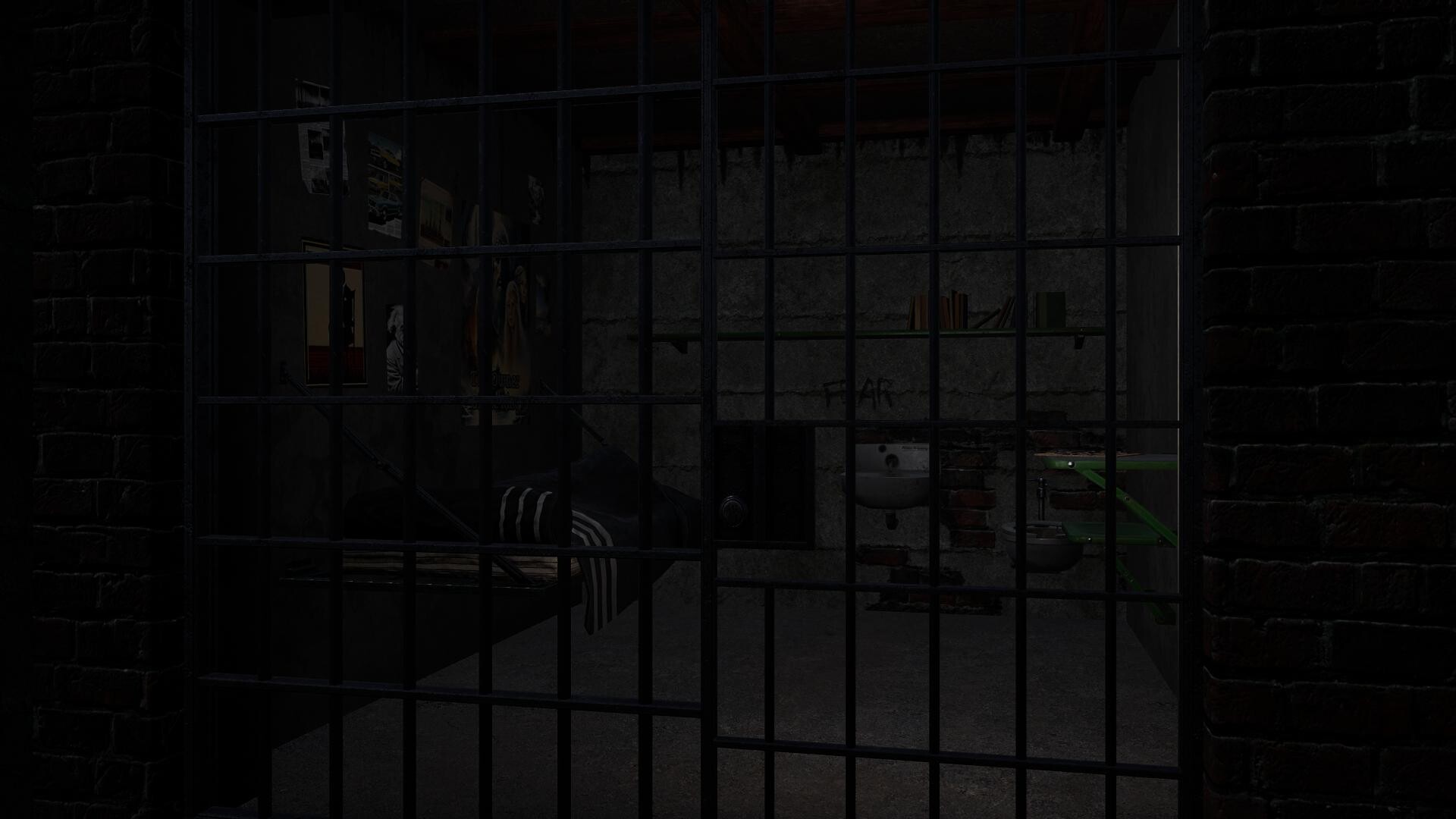
Officially described on Steam, Trace of the Villa follows Jin as he returns to a property deliberately removed from records — a mansion that feels “less abandoned than erased.” Rooms appear as if occupants vanished mid-routine, personal belongings sit undisturbed, and names or photographs are missing. When Jin restores power, the estate begins to reveal what it was hiding: secured systems come back online, hidden compartments unlock, safes yield fragments of encrypted documents and suspicious transfer records. Those discoveries point to falsified identities and financial trails — evidence that the mansion was part of a larger, carefully concealed operation.
When & where
Trace of the Villa released on Steam on 28 May, 2026. The developer and publisher listed on the Steam page are both Steadyturtle Co., Ltd. It appears in Action, Adventure, Indie genres on the Steam store and supports single-player play, subtitle options, color alternatives, custom volume controls, and other accessibility features noted in the store listing.
Why the theme matters — character motivation and missing-person stakes
The narrative engine is explicit: this is a personal search. Jin’s motivation — years of chasing leads for a missing sister — changes the stakes from academic curiosity to urgent, emotional responsibility. That matters because it affects how the game structures reveals: clues are rarely neutral; they either bring Jin closer to an explanation of his sister’s fate or deepen the sense that identities were erased deliberately. For players who respond to human stakes, the mansion’s erased evidence and encrypted fragments create an emotional through-line that grounds puzzle-solving in consequence.
How you progress — reading clues and unfolding the backstory
The Steam description makes clear the core progression loop: restore systems, open sealed spaces, then interpret fragmented documents and transaction records. Progress is clue-driven rather than enemy-driven — puzzles and unlocked systems reveal layers of a concealed operation: financial trails, falsified identities, and movements “masked” by missing records. That design suggests a gameplay flow focused on careful observation, logical reconstruction of events, and connecting disparate artifacts into a timeline. The inclusion of “Playable without Timed Input” and subtitle options on Steam supports a measured, investigation-first pace where reading and thinking win out over reflexes.
Concrete player scenarios
- Investigator pacing: You prefer methodical play sessions where each room yields a small, satisfying breakthrough — a restored circuit that reveals a hidden log, or a safe that gives one encrypted page you then decode.
- Character-driven players: If you want the protagonist’s personal stakes to steer your curiosity and you care about how discoveries affect Jin emotionally, the missing-sister premise keeps the narrative personal.
- Atmospheric explorers: If you play for mood and environmental storytelling — rooms that feel lived-in but erased — you’ll get value from the mansion’s design and the slow accumulation of hints.
- Puzzle-story hybrids: If you enjoy puzzles that unlock narrative fragments (encrypted documents, transfer records) rather than stand-alone mechanical challenges, this fits your taste.

Quick facts
| Title | Trace of the Villa |
|---|---|
| Developer / Publisher | Steadyturtle Co., Ltd. |
| Release date | 28 May, 2026 |
| Genres | Action, Adventure, Indie |
| Steam categories / accessibility | Single-player; Color Alternatives; Custom Volume Controls; Playable without Timed Input; Subtitle Options; Family Sharing |
| Steam page | Trace of the Villa on Steam |
How it stacks up — comparison table
| Title | Genre / Tone | Core focus | Exploration style | Player fit |
|---|---|---|---|---|
| Trace of the Villa | Action / Adventure / Indie — slow-burn, mystery-driven | Clue-driven investigation tied to a missing-person narrative | Room-by-room environmental reconstruction, systems restoration | Players who want emotional stakes + puzzle-led narrative |
| Inscryption | Adventure / Indie / Strategy — dark, metafictional | Card-based puzzles blended with psychological horror | Layered, modular reveals that shift genre expectations | Players wanting experimental structure and unsettling surprises |
| Outer Wilds | Action / Adventure — exploratory, cosmic mystery | Open-system exploration that rewards curiosity and inference | Open solar-system loops with emergent timelines | Players who prefer wide, systemic discovery and non-linear clues |
| Journey | Adventure / Indie — lyrical, minimalist | Mood-driven traversal and sparse narrative through environment | Linear but atmospheric progression across evocative locales | Players who seek aesthetic, emotional pacing over explicit puzzles |
| The Medium | Adventure — psychological, dual-reality investigation | Psychological horror with parallel-reality exploration | Interleaved real/otherworld exploration to solve narrative puzzles | Players wanting horror-tinged atmosphere with story-led puzzles |
| The Forgotten City | Adventure / Indie / RPG — narrative mystery, moral stakes | Dialogue- and consequence-driven investigation with time mechanics | Locale-focused, puzzle and dialogue-based unraveling | Players who like narrative puzzles with moral implications |
Decide whether to wishlist
Wishlist Trace of the Villa if you want a mystery that foregrounds character motivation — a missing-person habitus that turns each clue into a personal question — and if you prefer environmental and document-based storytelling that unspools by restoring systems, unlocking compartments, and reading fragments. Consider skipping or waiting if you want open-world, emergent systems (Outer Wilds) or mechanic-forward horror (Inscryption) rather than a focused mansion investigation.
YouTube discovery
Looking for trailers or gameplay footage? Search YouTube for Trace of the Villa trailers and gameplay here: Trace of the Villa trailer & gameplay search. This link is a discovery path — the Steam page lists a trailer thumbnail but does not explicitly identify a single official YouTube video in the data provided.
Leave a Reply