
Trace of the Villa — a story-first mansion mystery where reading the house is the gameplay
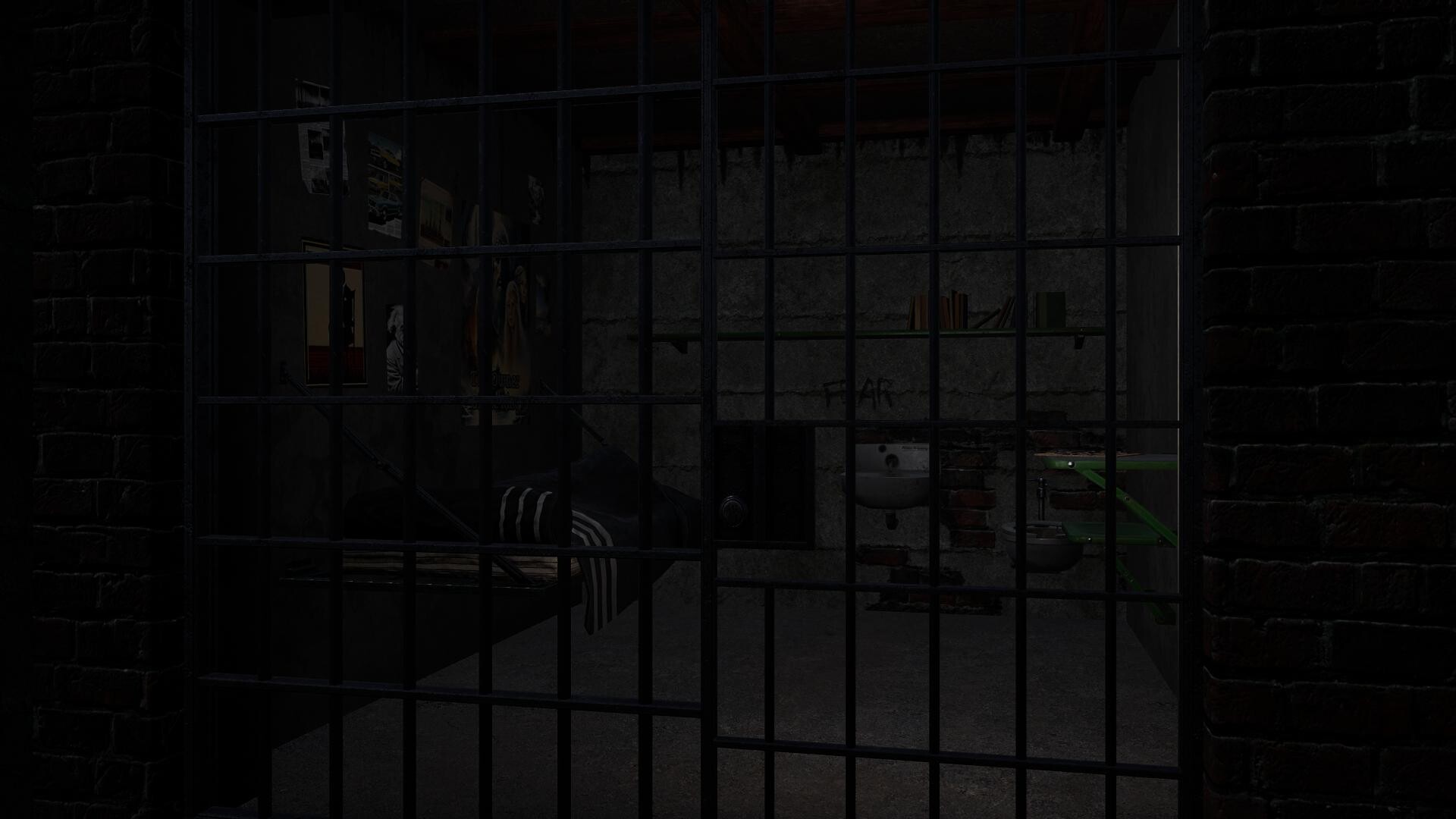
Trace of the Villa puts you in Jin’s shoes: a long search for a missing sister leads to a remote, decaying mansion that feels less abandoned than erased. The game layers environmental storytelling, locked systems and fragmentary documents so that piecing together the truth is the core puzzle loop.

Quick facts
| Title | Trace of the Villa |
|---|---|
| Release date | 28 May, 2026 |
| Developer | Steadyturtle Co., Ltd. |
| Publisher | Steadyturtle Co., Ltd. |
| Steam AppID | 3483660 |
| Genres | Action, Adventure, Indie |
| Categories | Single-player; Color Alternatives; Custom Volume Controls; Playable without Timed Input; Subtitle Options; Family Sharing |
| Premise (official) | “Jin has spent years searching for his missing sister… a remote, decaying mansion where he recovered manifests and hints that indicate his sister may still be alive, somewhere at the end of the trail he is about to follow.” |
What Trace of the Villa is — and how it tells story
Trace of the Villa is a story-first mystery built around environmental clues and procedural discovery rather than explicit exposition. The official description emphasizes that Jin finds a property “cut off from the grid” where rooms appear as though occupants vanished mid-routine. Gameplay progression is driven by restoring systems and unlocking physical caches: when Jin restores power the house “begins to reveal what it was hiding,” secured systems come back online, hidden compartments unlock, safes yield encrypted documents and suspicious transfer records. Those fragments form the breadcrumbs you follow.

Design-wise, this is classic clue-driven exploration: environmental storytelling (objects left in place, missing personal identifiers) pairs with locked systems and documents that require restoration and decryption. The mystery is deliberately fragmentary — identities erased, transfer records that “lead nowhere” — so the player’s job is not just to solve puzzles but to read the house as a text and build a timeline from partial evidence.
Who this is for
- Players who prefer story-first mystery design where narrative curiosity, not combat difficulty, motivates exploration.
- Fans of slow-burn suspense and environmental storytelling who like to assemble meaning from fragments.
- Players who enjoy investigative loops: restore a system, access new spaces, read documents, and revise your theory.
- Those who want a single-player, atmospheric adventure on PC — Trace of the Villa is listed on Steam with Single-player and accessibility categories like Color Alternatives and Subtitle Options.
When and where — Steam details
Trace of the Villa launched on Steam on 28 May, 2026. It’s developed and published by Steadyturtle Co., Ltd. The Steam store lists the game under Action, Adventure, Indie and includes accessibility and comfort features such as Color Alternatives, Custom Volume Controls, Playable without Timed Input, Subtitle Options and Family Sharing.
How you uncover meaning — the investigative loop
Official copy describes a sequence that players should expect: investigate rooms that appear “erased,” restore power to the estate, and watch secured systems come back online. That restoration unlocks hidden compartments and safes that yield fragments — manifests, encrypted documents, suspicious transfer records. Each recovered item alters the timeline you’re building. The narrative puzzle design privileges inference: evidence rarely gives a single answer; instead it nudges you toward hypotheses about who arrived, who left, and which movements were deliberately masked.
This is not a read-every-note-and-move-on game. The premise explicitly sets up a piecemeal detective rhythm: you read records, cross-reference manifests, and decide which leads are worth following. Progression is tied to exploration and the technical act of bringing the house back to life, so the gameplay loop mixes environmental puzzle solving with document analysis.
Player scenarios — who should wishlist this
Scenario A — You like slow-burn narrative mysteries
If you enjoy pacing that rewards patience and accumulation of small revelations — the sort of mystery where each unlocked drawer reframes your assumptions — this game matches that appetite. The manor’s “erased” quality makes every everyday object a potential clue.
Scenario B — You prefer detective work that leans on systems
Players who like mechanics tied to investigation — restoring power, decrypting fragments, leveraging in-game systems to access new areas — will find the progression intuitive and meaningful rather than purely cinematic.
Scenario C — You want atmospheric exploration with minimal twitch demand
Trace of the Villa’s Steam page lists “Playable without Timed Input,” and the emphasis on exploration and reading spaces suggests a focus on atmosphere over reflex-based challenges.
How it stacks up (editorial comparison)
| Title | Primary genre / vibe | Puzzle focus | Exploration style | Story tone / pacing | Who might prefer it |
|---|---|---|---|---|---|
| Trace of the Villa | Action / Adventure / Indie — mansion mystery | Clue-driven documents, restored systems, hidden compartments | Room-by-room environmental reading, systemic unlocking | Slow-burn, fragmentary, investigative | Players who want story-first mystery and investigative loops |
| Inscryption | Adventure / Indie / Strategy — card-based odyssey | Puzzle + deckbuilding + meta secrets | Layered, meta-narrative discovery rather than physical space exploration | Dark, psychological, and often confrontational | Players who like emergent secrets tied to mechanics and tone shifts |
| Outer Wilds | Action / Adventure — open-world mystery (time loop) | Environmental puzzles tied to physics and revelation | Open-system exploration across a solar system | Curious, patient, discovery-focused with a pacing built around loops | Players who want wide, physics-driven exploration and emergent narrative |
| Journey | Adventure / Indie — poetic exploration | Minimal traditional puzzles; focus on traversal and mood | Expansive, symbolic landscapes | Quiet, evocative, emotional | Players seeking contemplative exploration and mood over detective work |
| The Forgotten City | Adventure / Indie / RPG — narrative time-loop mystery | Logic-driven narrative puzzles and moral choices | Dialogue and location-based investigation in a contained setting | Deliberate, plot-forward
Steam pageView Trace of the Villa on Steam YouTube discoveryFor trailer and gameplay discovery, use YouTube search rather than relying on unverified embeds: Find Trace of the Villa trailer and gameplay searches on YouTube. CommentsMore posts |
Leave a Reply