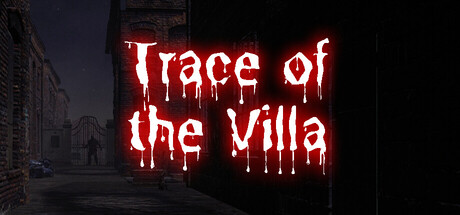
Quiet Dread: Why Trace of the Villa Prioritizes Uncertainty Over Shock
Trace of the Villa trades jump scares for slow, accumulating dread: you play Jin, a relentless searcher following traces in a decaying, deliberately forgotten mansion where clues suggest his missing sister may still be alive. The game leans on environmental storytelling, restored systems and locked-away manifests to make every quiet corridor feel like a question rather than an answer.

Quick facts
| Title | Trace of the Villa |
|---|---|
| Release date | 28 May, 2026 |
| Developer | Steadyturtle Co., Ltd. |
| Publisher | Steadyturtle Co., Ltd. |
| Genres | Action, Adventure, Indie |
| Notable Steam categories | Single-player, Color Alternatives, Custom Volume Controls, Playable without Timed Input, Subtitle Options, Family Sharing |
| Steam page | Trace of the Villa on Steam |
Who is this for?
If you prefer atmosphere to adrenaline, Trace of the Villa is aimed at players who like puzzle-driven exploration and psychological investigation over combat-heavy horror. People who enjoy reading environmental clues, reconstructing timelines from objects, and letting unease build across silent rooms will find the game’s approach satisfying. The Steam categories also flag accessibility-friendly touches—subtitle options, custom volume controls and ‘playable without timed input’—that suit patient, methodical players.
What the game is
Officially described on Steam as an investigation into a decaying mansion, Trace of the Villa centers on Jin’s search for his missing sister. The estate is “cut off from the grid and deliberately forgotten” with rooms that look as if their occupants vanished mid-routine. Mechanically, the game foregrounds environmental storytelling: restoring power, unlocking secured systems, and piecing together manifests and encrypted documents reveal a larger, concealed operation rather than straightforward supernatural beats.

When and where
Trace of the Villa is available on Steam with a release date listed as 28 May, 2026. The Steam page lists Steadyturtle Co., Ltd. as both developer and publisher, and the store entry shows typical PC-focused categories—single-player and indie—so expect a Steam/PC-first distribution model.
Why quiet tension and uncertainty matter
Psychological horror rooted in uncertainty exploits a different cognitive response than shock: it engages pattern recognition, memory, and the imagination. In Trace of the Villa, the absence of names, photographs and ordinary records converts rooms into prompts. Restoring power and systems doesn’t instantly explain what happened; it produces new partial data that forces the player to reinterpret earlier impressions. That slow conversion of ambiguity into a tangled hypothesis is what creates sustained dread—your brain keeps working after you stop playing.
How you progress (without spoilers)
According to the Steam description, progression hinges on investigation and restoration: Jin recovers manifests and hints, brings systems back online, and opens secured compartments and safes that reveal fragments of encrypted documents and transfer records. The gameplay loop is clue-driven: solve puzzles or locate key objects, use restored systems to access new areas or files, and assemble a timeline from disparate evidence. Expect exploration, puzzle solving and piecing together a deliberately obscured history rather than combat or fast-time event sequences.

Player scenarios — who should wishlist it
- The Investigator: You enjoy examining small details, cross-referencing logs or manifests, and slowly assembling a narrative from indirect proof. You prefer tension that lingers between each room rather than sudden scares.
- The Atmospheric Explorer: You prize environmental storytelling—lighting, sound design, staged scenes—and are drawn to games where the house itself feels like a character being interrogated.
- The Puzzle-First Player: You like puzzles that unlock narrative beats: restore power, access a hidden drive, then read a new set of documents that change your assumptions.
How Trace of the Villa compares (editorial comparisons)
Below is a compact editorial comparison focused on tone, puzzle emphasis and exploration style rather than quality rankings. These titles are mentioned as points of reference for players deciding whether Trace of the Villa matches their taste.
| Game | Release | Tone / Atmosphere | Puzzle focus | Exploration style |
|---|---|---|---|---|
| Trace of the Villa | 28 May, 2026 | Slow-burn dread; investigative mansion mystery | Clues, restored systems, locked compartments | Clue-driven, methodical room-to-room reconstruction |
| Amnesia: The Dark Descent | 8 Sep, 2010 | Deep immersion and helplessness | Environmental puzzles with survival tension | First-person, focused on immersion and horror endurance |
| SOMA | 21 Sep, 2015 | Existential sci-fi dread | Puzzles integrated with narrative question of identity | Exploration of confined, atmospheric environments |
| Layers of Fear (2016) | 15 Feb, 2016 | Psychological, shifting mansion of the mind | Story-driven environmental puzzles | Unstable, changing spaces that recontextualize objects |
| Poppy Playtime | 12 Oct, 2021 | Playful terror with set-piece threats | Puzzle gadgets mixed with hazard encounters | Factory-scale exploration with scripted encounters |
Trailer and more media
Search for gameplay footage and trailers on YouTube: Trace of the Villa — YouTube search results. This link is a discovery path; verify videos against official sources if you need a confirmed developer trailer.
Decision guide — should you wishlist it?
Wishlist Trace of the Villa if you want a story-rich, slow-burn investigation that rewards patience and attention to small environmental signals. If you prefer fast-paced scares or combat-driven horror, this one leans away from those expectations and toward puzzle-led narrative excavation.
Visit the Trace of the Villa Steam page
Leave a Reply