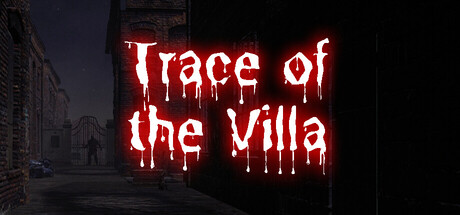
Trace of the Villa — how clue reading, object logic and story puzzles reveal evidence without spoiling the mystery
Trace of the Villa is an atmospheric mystery adventure about a man named Jin who follows leads to a remote, decaying mansion and recovers manifests and hints that suggest his missing sister might still be alive. The game blends environmental storytelling, inventory-based object logic and layered story puzzles so that every solved lock and recovered document functions as evidence rather than a plot dump.

Quick facts
| Title | Trace of the Villa |
|---|---|
| Developer / Publisher | Steadyturtle Co., Ltd. |
| Release date | 28 May, 2026 |
| Steam AppID | 3483660 |
| Genres | Action, Adventure, Indie |
| Categories | Single-player; Color Alternatives; Custom Volume Controls; Playable without Timed Input; Subtitle Options; Family Sharing |
| Store page | Trace of the Villa on Steam |
Who is this for?
Players who prefer slow-burn suspense and environmental storytelling will find the tone familiar: a mansion that feels “erased,” rooms frozen mid-routine, and a steady accumulation of small, concrete clues. If you enjoy inventory-driven puzzles that feel like forensic work—reading manifests, restoring systems, cracking safes—this is aimed at you. The categories list also notes subtitle options and accessibility items like playable without timed input, which helps players who value deliberate, unhurried puzzle solving.
What kind of game is it?
Trace of the Villa is presented as an Action/Adventure indie on Steam where narrative progress is tied to puzzle resolution. The official premise centers on Jin exploring a remote mansion and recovering manifests and hints that point toward the fate of his missing sister. Puzzle solutions unlock systems and compartments: when Jin restores power, secured systems come back online and safes yield fragments of encrypted documents and suspicious transfer records—pieces of evidence the player must assemble to form a timeline.
When and where to play
Trace of the Villa released on Steam on 28 May, 2026. It is listed as a single-player PC experience with standard Steam accessibility categories such as subtitle options and family sharing support. Use the Steam store link above to wishlist or purchase.
Why the puzzle design matters (without spoiling the plot)
What separates forensic, clue-driven adventures from straight narrative reveals is the way mechanics present evidence. Trace of the Villa uses object logic—manifests, locked systems, encrypted fragments—as incremental proof rather than exposition. Rather than a single revelation that explains everything at once, the game hands you artifacts and tools that let you test hypotheses about what happened in the house. That pacing keeps the emotional stakes intact: every unlocked safe and restored system feels like uncovering a small, corroborated fact rather than being told the story outright.
How you read clues and progress
Design signals on the Steam page describe several concrete mechanics: restoring power to the estate reactivates secured systems, hidden compartments unlock, and safes yield document fragments and transfer records. Those are the building blocks of the game’s investigative loop: find an interactable, apply an item or solve a device puzzle, receive a fragment of evidence, and use that fragment to open new paths. The result is a puzzle architecture where story and systems are tightly coupled—puzzles reveal corroborating details rather than summarizing the ending.

Player scenarios — which type of player should wishlist it?
- The methodical investigator: You prefer cataloguing evidence and assembling timelines. You’ll appreciate puzzles that feel like corroborating clues.
- The atmosphere seeker: If you enjoy slow-burn mansion mysteries with a suffocating silence and preserved rooms—this fits your taste.
- The mechanical puzzler: You like tactile object puzzles and restoring systems to open new mechanics; the game’s locked safes and power restoration segments will appeal.
- The patient narrative player: You want the story to emerge from artifacts and systems rather than being told in long expository scenes.
How it compares to other puzzle-adventure titles
Below is a compact editorial comparison focused on genre, atmosphere, puzzle focus, exploration style, story tone and pacing. These are editorial observations using public descriptions—intended to help you decide which feel you prefer.
| Title | Release | Primary genre & puzzle focus | Atmosphere / exploration | Player fit |
|---|---|---|---|---|
| Trace of the Villa | 28 May, 2026 | Action / Adventure — clue-driven inventory puzzles, system restoration | Decaying mansion, erased identities, slow-burn, forensic tone | Players who want story via evidence and methodical exploration |
| The Room | 28 Jul, 2014 | Adventure — tactile mechanical puzzles and safe/box puzzles | Intimate, sealed-room mystery focused on intricate devices | Players who like tight mechanical puzzles and tactile problem solving |
| The Room Two | 5 Jul, 2016 | Adventure — continued emphasis on mechanical puzzles with varied environments | Expands the scope beyond a single locked room into cryptic locations | Fans of mechanical puzzle evolution across varied set pieces |
| Unpacking | 1 Nov, 2021 | Casual / Simulation — object placement as puzzle, environmental storytelling | Domestic, intimate, story revealed through possessions rather than explicit documents | Players who prefer quiet, non-confrontational clues about character life |
| Escape Simulator | 19 Oct, 2021 | Adventure / Simulation — interactive escape-room puzzles, object interaction | Highly interactive rooms with physics and manipulation; often quicker puzzle loops | Players who want fast problem loops and high interactivity, solo or co-op |
Short YouTube discovery
If you want to see trailer or gameplay clips use this YouTube search path (search results may include trailers and community videos): Search Trace of the Villa on YouTube.
Final take
Trace of the Villa positions itself for players who value evidence-first narrative pacing. Its mix of manifests, restored systems and encrypted fragments makes puzzles function as corroborating clues, letting the player
Leave a Reply