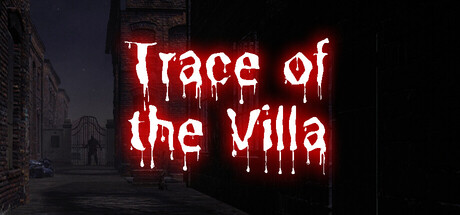
Trace of the Villa: Rooms as Puzzle Spaces and Story Containers
Trace of the Villa frames its mystery in tightly built rooms — each one both a riddle and a repository of erased lives — pulling Jin deeper into a trail that might lead to his missing sister. Released on 28 May, 2026 by Steadyturtle Co., Ltd., the game blends environmental storytelling, locked-room logic, and incremental systems restoration to shape a slow-burn, clue-driven investigation.

Quick facts
| Title | Trace of the Villa |
|---|---|
| Release date | 28 May, 2026 |
| Developer / Publisher | Steadyturtle Co., Ltd. |
| Genres | Action, Adventure, Indie |
| Steam categories | Single-player; Color Alternatives; Custom Volume Controls; Playable without Timed Input; Subtitle Options; Family Sharing |
| Premise | Jin investigates a decaying mansion after leads suggest his missing sister may still be alive; restoring power reveals secured systems, hidden compartments and encrypted documents. |
| Steam page | Trace of the Villa on Steam |
Who this is for
This is aimed at players who prefer atmospheric mystery adventures on PC: those who enjoy reading rooms as evidence, parsing object logic, and following narrative threads revealed through solved puzzles. If you value environmental storytelling and methodical progression over instant action, the premise — a decaying, deliberately forgotten mansion — will likely suit your tastes.
What the game is, in practical terms
Official descriptions present Trace of the Villa as a narrative puzzle-adventure where investigation drives progress. You play Jin, who has been searching for his missing sister for years; a new lead points to a mansion cut off from the grid. Rooms are staged as if occupants vanished mid-routine, and the house is structured to hide identities and systems. When Jin restores power, “secured systems come back online,” hidden compartments unlock, and safes yield fragments of encrypted documents and suspicious transfer records — each solved puzzle revealing another layer of a carefully concealed operation.
When and where
Trace of the Villa launched on Steam on 28 May, 2026. It’s listed on Steam as an Action / Adventure / Indie title and includes single-player and accessibility-oriented categories such as subtitle options and a “playable without timed input” tag.
Why the mansion-as-container matters
Rooms that look lived-in but “erased” make every drawer, ledger and powered system a potential plot beat. The mansion functions in two ways: spatially, it concentrates puzzles into contained, interrelated areas; narratively, it keeps evidence local — a safe in the study, a manifest in a kitchen drawer, an access terminal behind a bedroom panel. That containment amplifies the feeling that every solved lock is progress both mechanically and in Jin’s personal investigation.
How you read clues, use object logic and follow story puzzles
- Clue reading: Materials on desks and terminals act like micro-documents — manifests, transfer records and encryption fragments that require you to connect fragments across rooms.
- Object logic: The game rewards attention to detail; restoring systems and unlocking compartments are presented as mechanical puzzles with narrative payoff. Power restoration is explicitly part of progression, re-activating systems that then yield new paths or evidence.
- Story puzzles: Puzzles are not just mechanical gates but narrative layers. Each safe and encrypted document contributes to a timeline that suggests arrivals without records and departures without witnesses — the puzzles scaffold the plot rather than interrupt it.


Player scenarios — who should wishlist it
- Investigative slow-burn players: Prefer to piece together timelines and financial/identity trails rather than rely on combat or reflex challenges.
- Environmental storytellers: Enjoy reading lived-in spaces and reconstructing lives from small objects and redacted documents.
- Puzzle-first mystery players: Look for object logic and puzzles that reveal story beats — especially those who like locked safes, terminals and power-restoration mechanics.
- Accessibility-conscious players: Appreciate categories like subtitle options and “playable without timed input” that make investigative pacing flexible.
How it compares — a compact editorial table
| Title | Core focus | Atmosphere / tone | Puzzle & exploration style | Player fit |
|---|---|---|---|---|
| Trace of the Villa | Clue-driven mansion investigation | Decaying, erased-history, slow-burn suspense | Object logic, power restoration, encrypted documents, contained-room puzzles | Players who prize environmental storytelling and methodical narrative puzzles |
| The Room / The Room Two | Tactile puzzle boxes and atmospheric single-room mysteries | Mysterious, mechanical, intimate | Highly crafted multi-stage puzzle boxes; focused, contained riddles | Players seeking dense, tactile puzzles in isolated scenarios |
| Escape Simulator | Interactive escape rooms (solo or co-op) | Playful to tense, depends on room | Highly interactive physics and object manipulation; sandbox-y rooms | Players who want hands-on, often cooperative puzzle solving and community-made rooms |
| Unpacking | Zen, object-based life-story puzzles | Quiet, reflective, domestic | Spatial-fitting and object placement; story revealed through possessions | Players who prefer low-stress, emotional environmental storytelling |
YouTube discovery
If you want to see trailers or community gameplay, search for Trace of the Villa on YouTube: YouTube search: Trace of the Villa trailer & gameplay. This link is provided as a discovery path; it does not assert any particular video is official.
Editorial takeaway: Trace of the Villa leans into rooms as units of puzzle design and narrative revelation. Expect methodical exploration, object-based reasoning, and a pacing that privileges piecing together a hidden operation over immediate thrills. If you want a mansion mystery that treats each room like a document and each safe as a sentence in a larger confession, add it to your wishlist.
Referenced titles and trademarks belong to their respective owners. Comparisons are editorial discovery only and not endorsements.