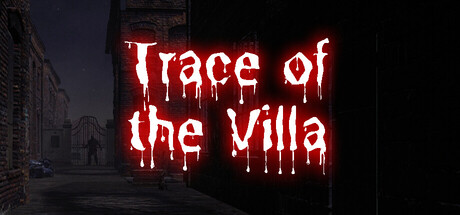
Trace of the Villa — a slow-burn mansion mystery built around clues, erasures, and one man’s search
Trace of the Villa drops you into Jin’s long hunt for a missing sister, guiding a careful investigation through a remote, decaying mansion that seems deliberately erased. The game trades jump scares for layered environmental storytelling: restore power, open sealed systems, and follow manifests and fragments that suggest the trail still ends somewhere — and that the truth is buried under falsified identities and missing records.

What Trace of the Villa is — in plain terms
Who: You play as Jin, a protagonist who has spent years searching for his missing sister. What: An action‑adventure indie that frames investigation as a personal, atmospheric quest. When/Where: Released on Steam on 28 May, 2026. Who made it: developed and published by Steadyturtle Co., Ltd. The Steam listing classifies it under Action, Adventure, Indie and lists single‑player and accessibility options like color alternatives and subtitle options.
Why the narrative hook matters
The premise is simple but precise: Jin follows a cold lead to a mansion “cut off from the grid,” where rooms look as if their occupants vanished mid‑routine and identities appear to have been removed. The investigative hook — restoring power, bringing systems back online, revealing encrypted fragments and suspicious transfer records — promises a puzzle structure that rewards patient reading of environmental clues. That setup targets players who prefer narrative curiosity over spectacle: the emotional stake is Jin’s sister, and each uncovered document or opened safe raises the personal cost of the investigation.
How you progress — the investigative loop
The Steam description emphasizes systemic discovery rather than combat setpieces: when Jin restores power to the estate, secured systems reactivate, hidden compartments open, and safes yield fragments of encrypted documents and transfer records. Progress looks to be driven by exploration, puzzle solving and document‑driven revelation — piecing together timelines and following financial and identity trails that point beyond the mansion itself.
Who should wishlist this on Steam
- Players who favor atmospheric mystery adventure and story‑rich exploration over fast action.
- Fans of investigation games that make evidence and documents the primary rewards.
- Players who like slow‑burn tension where emotional stakes (a missing family member) push you forward.
- Those who value accessibility options such as subtitle support, color alternatives, and playable without timed input.
Specific player scenarios — will this fit your evenings?
Scenario A: You enjoy quiet, document‑led mysteries
You like reading manifests, following financial trails, and reconstructing events from fragments. Trace of the Villa’s emphasis on encrypted documents, locked safes and falsified identities will feel rewarding: each discovery feeds the timeline Jin is trying to rebuild.
Scenario B: You want unsettling atmosphere more than horror shocks
If you prefer rooms that feel “erased” rather than haunted, Trace of the Villa’s premise — spaces furnished as if occupants vanished mid‑routine and an estate deliberately removed from records — creates creeping unease without needing constant jump scares.
Scenario C: You like investigative games with careful pacing
This is aimed at players who accept a deliberate rhythm: restore power, parse systems, open a compartment, read the next clue, repeat. If you want rapid action loops, this may be slower than you expect; if you want to savor each reveal, it’s aligned with that player profile.
Compact facts — Trace of the Villa
| Title | Trace of the Villa |
|---|---|
| Developer / Publisher | Steadyturtle Co., Ltd. |
| Steam AppID | 3483660 |
| Release date | 28 May, 2026 |
| Genres | Action, Adventure, Indie |
| Key categories | Single-player; Color Alternatives; Custom Volume Controls; Playable without Timed Input; Subtitle Options; Family Sharing |
How Trace of the Villa compares to nearby story‑rich mysteries
Below is a focused editorial comparison on structure, tone and player fit — not a ranking.
| Title | Genre / Focus | Atmosphere & Story Tone | Puzzle vs Exploration | Player fit |
|---|---|---|---|---|
| Trace of the Villa | Action / Adventure / Indie — investigation-driven | Slow-burn, erased identities, personal stake (missing sister) | Document- and system-driven puzzles; environmental clues | Players who want patient, narrative curiosity and evidence parsing |
| Inscryption | Adventure / Indie / Strategy — card-based odyssey | Inky psychological horror with metafictional revelations | Puzzle and deck mechanics blend with escape-room puzzles | Players who like emergent secrets tied to unusual mechanics |
| Outer Wilds | Action / Adventure — open-world mystery | Curious, cosmic — discovery through exploration and loops | Exploration-first; puzzles emerge from world systems | Players who enjoy non-linear revelation and systems thinking |
| Journey | Adventure / Indie — evocative exploration | Poetic, minimalist — emotion through environment | Exploration and movement-based discovery | Players seeking meditative atmosphere over investigative detail |
| The Forgotten City | Adventure / Indie / RPG — narrative puzzle in a time-loop | Moral and philosophical mystery with dialog-driven choices | Puzzles entwined with narrative mechanics (time loop) | Players who like story puzzles with branching implications |
| The Medium | Adventure — psychological investigation | Dual-reality psychological horror and trauma-focused themes | Puzzles that exploit dual-world perspectives | Players who want unsettling atmosphere and psychological themes |
Media & where to look for trailers

 View Trace of the Villa on Steam
YouTube discovery
For trailer and gameplay discovery, use YouTube search rather than relying on unverified embeds: Find Trace of the Villa trailer and gameplay searches on YouTube.
Leave a Reply