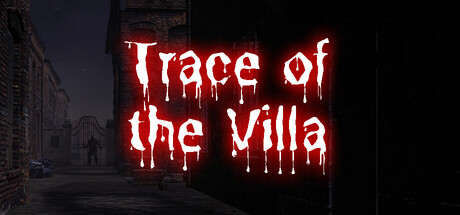
Trace of the Villa: how clue reading, object logic and story puzzles reveal evidence without spoiling the mystery
Trace of the Villa centers on Jin’s long search for his missing sister in a remote, decaying mansion; the game stages evidence across manifests, encrypted fragments and locked systems so players build the story from objects rather than being told it. Its puzzle design—restoring power, unlocking hidden compartments and decrypting documents—lets you gather proof and form hypotheses while keeping plot outcomes intact.

Quick facts
| Title | Trace of the Villa |
|---|---|
| Steam App ID | 3483660 |
| Release date | 28 May, 2026 |
| Developer | Steadyturtle Co., Ltd. |
| Publisher | Steadyturtle Co., Ltd. |
| Genres | Action, Adventure, Indie |
| Key categories | Single-player; Color Alternatives; Custom Volume Controls; Playable without Timed Input; Subtitle Options; Family Sharing |
Who it’s for
If you favor atmospheric mystery adventure and narrative puzzle design over fast action, Trace of the Villa is aimed at players who enjoy methodical investigation: clue-driven exploration, environmental storytelling, and slow-burn suspense. It’s also appropriate for players who prefer accessibility options (color alternatives, subtitle options, custom volume controls) and single-player pacing without forced timed inputs.
What the game is
From the official Steam description: Jin has spent years searching for his missing sister, following a lead to a decaying, off-grid mansion where he recovers manifests and hints that indicate she may still be alive. Inside, rooms feel “erased” rather than abandoned; restoring power to the estate brings secured systems back online, hidden compartments unlock, and safes yield fragments of encrypted documents and suspicious transfer records. The gameplay ties investigative progression to these revelations: every puzzle solved uncovers another layer of a concealed operation.
When and where
Trace of the Villa released on 28 May, 2026 and is available on Steam for PC. It lists Steadyturtle Co., Ltd. as both developer and publisher and appears under Action / Adventure / Indie genre tags on its Steam page.
Why the theme matters
The mansion-as-evidence-lab premise shapes both atmosphere and mechanics. Rather than relying on dialogue-heavy exposition, the game uses objects—manifests, transfer records, encrypted fragments—and environmental states (powered vs. unpowered systems, locked compartments) to anchor narrative inference. That approach makes the player an investigator: you collect circumstantial proof and form a timeline from material traces, which preserves suspense by revealing facts piecemeal instead of summarizing outcomes.
How you read clues and progress
Trace of the Villa stages progress through interactions that are spelled out in the official description: restoring the estate’s power returns secured systems to life; hidden compartments and safes yield documents and encrypted fragments; puzzles and decryptions convert those fragments into usable leads. Object logic is central—items and documents are physical evidence, not abstract keys—so lateral thinking about placement, provenance and sequence matters. The design therefore signals story points through concrete artifacts and systems coming back online, making discoveries feel earned while limiting explicit spoilers about the broader plot.


Comparison: where Trace of the Villa sits among other puzzle-focused explorers
Below is an editorial comparison focused on genre, atmosphere, puzzle emphasis, exploration style and pacing to help decide fit. This is not a ranking—just a side-by-side look at design priorities.
| Game | Genre | Atmosphere | Puzzle focus | Exploration style | Story tone / pacing | Player fit |
|---|---|---|---|---|---|---|
| Trace of the Villa | Action / Adventure / Indie | Slow-burn mansion mystery; psychological investigation | Clue-driven: manifests, encrypted fragments, systems restoration | Environmental, object-based exploration in a single estate | Measured, evidence-first; reveals via documents and restored systems | Players who prefer narrative puzzles and atmospheric detective work |
| The Room | Adventure / Indie | Tactile, locked-box mystery | Mechanical puzzles on single-object puzzles and safes | Focused, scene-by-scene puzzle rooms | Gradual, tactile puzzle reveals | Fans of handcrafted, tactile puzzle boxes and close-up interaction |
| The Room Two | Adventure / Indie | Cryptic, atmospheric escape puzzle | Complex object puzzles with layered mechanisms | Linear progression through interconnected puzzles | Slow, cumulative unspooling of a central mystery | Players who like progressive mechanical complexity and mood |
| Escape Simulator | Adventure / Casual / Indie / Simulation | Bright, interactive escape room variety | Highly interactive object puzzles; physics and item combos | Room-by-room, often cooperative or community-made content | Variable pacing depending on room and group | Players who enjoy physics-based interaction and social play |
| Unpacking |
Leave a Reply