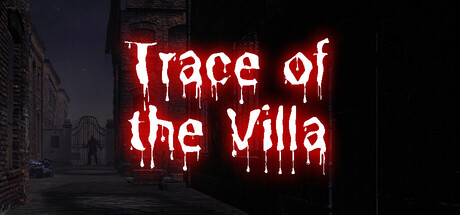
Trace of the Villa: reading clues, object logic, and story puzzles in a mansion mystery
Trace of the Villa (Steadyturtle Co., Ltd.) stages a slow-burn, clue-driven investigation inside a deliberately forgotten mansion where clues — manifests, encrypted fragments, and transfer records — are the story. Its puzzle systems foreground reading evidence and reasoning from objects so the narrative arrives as consequence, not exposition.

Who should wishlist this on Steam?
Players who prefer atmospheric mystery adventure and environmental storytelling over action spectacle will find Trace of the Villa suited to their tastes. If you enjoy narrative puzzle design that surfaces evidence gradually — reading manifests, restoring systems, unlocking safes — this game targets that investigative mindset. The Steam page lists it under Action, Adventure, and Indie and marks it as Single-player with accessibility options like Color Alternatives and Subtitle Options, which can be important for a text- and clue-heavy mystery.
What Trace of the Villa is
Officially, Trace of the Villa follows Jin, who has spent years searching for his missing sister and tracks leads to a decaying mansion where he “recovered manifests and hints that indicate his sister may still be alive.” The mansion is cut off from the grid and appears erased of normal identity markers. When Jin restores power, secured systems come online and safes yield fragments of encrypted documents and suspicious transfer records — the puzzles are the mechanism for revealing those facts rather than blunt exposition.

When and where
Trace of the Villa released on 28 May, 2026 on Steam. It is developed and published by Steadyturtle Co., Ltd. The Steam app page (app ID 3483660) lists platform and store metadata including categories like Playable without Timed Input and Subtitle Options — useful signals for players who need less reflex-based gameplay and accessible text.
Why the mansion theme matters here
The mansion setting is a natural vehicle for clue-driven design: furnished rooms that look lived-in but lack names or photos let environmental details double as evidence. According to the official text, locked doors, hidden compartments, and safes reveal fragments of encrypted documents and suspicious transfers. That framing makes every object and system you restore a potential narrative lead, so solving puzzles is how the player builds the timeline rather than being told it.
How the game reveals story without spoiling plot beats
Trace of the Villa uses three complementary puzzle strategies to reveal evidence while keeping larger plot beats intact:
- Clue reading: Manifests and recovered hints are presented as in-world documents. Reading them yields pieces of context — dates, movements, or discrepancies — which players must compile to form hypotheses.
- Object logic: Objects and systems behave like forensic props: restoring power unlocks systems, safes yield encrypted fragments, and personal items are notable for what they omit (no photographs, no names). The tension comes from interpreting absence as much as presence.
- Story puzzles: Rather than delivering exposition, story puzzles gate narrative evidence. Unlocking a cabinet or decoding a fragment produces an evidentiary reveal; the game trusts the player to link those reveals into the broader timeline.
That design allows the mansion’s history to be reconstructed gradually. If you prefer your mysteries to come from gathered evidence and deduction, rather than cutscenes that summarize events, Trace of the Villa leans into that investigative payoff.

Player scenarios — who will enjoy this, concretely
- The methodical detective: You like open notes, manifests, and systems that reward careful cross-referencing. You’ll appreciate reconstructing timelines from documents and object relationships.
- The atmospheric explorer: You savor slow-burn suspense and reading space: furniture, locks, and abandoned rooms that feel like testimony. Pacing that favors gradual revelations fits you.
- The puzzle-first narrator: You want puzzles that matter to story progression, where each solved puzzle is an evidentiary reveal rather than an isolated mechanical gate. The game’s safes, encrypted fragments, and restored systems are intersections of mechanic and narrative.
Compact facts — Trace of the Villa
| Title | Trace of the Villa |
|---|---|
| Steam AppID | 3483660 |
| Release date | 28 May, 2026 |
| Developer | Steadyturtle Co., Ltd. |
| Publisher | Steadyturtle Co., Ltd. |
| Genres | Action · Adventure · Indie |
| Key categories | Single-player; Color Alternatives; Custom Volume Controls; Playable without Timed Input; Subtitle Options; Family Sharing |
How it compares (editorial discovery)
Below is a compact editorial table comparing Trace of the Villa with nearby puzzle/adventure titles based on genre, atmosphere, puzzle focus, exploration style, and pacing. These are comparative editorial observations meant to help readers decide which fit their preferences.
| Title | Genre/Focus | Puzzle emphasis | Exploration / interaction | Atmosphere & pacing |
|---|---|---|---|---|
| Trace of the Villa | Action / Adventure / Indie | Clue-driven documents, safes, restored systems; object logic reveals evidence | Environmental investigation inside a decaying mansion; system restoration unlocks story | Slow-burn mystery, investigative tone |
| The Room | Adventure / Indie | Mechanical, tactile puzzle boxes and safes | Single-room/series of elaborate puzzle objects | Focused, intimate, puzzle-centric; creeping mystery |
| The Room Two | Adventure / Indie | Continued emphasis on physical puzzle devices and layered mechanisms | Progressive environments with isolated puzzle encounters | Cryptic, atmospheric, puzzle-first pacing |
| Escape Simulator | Adventure / Simulation / Casual | Highly interactive escape-room puzzles; object manipulation | Room-scale, physics/interaction heavy; community content | Variable pacing (fast for escape rooms), playful tone |
| Unpacking | Casual / Indie / Simulation | Block-fitting and inventory organization reveal life-story clues | Calm, spatial puzzle of placing items into new spaces | Zen, reflective, narrative revealed through possessions |
YouTube discovery
If you want trailers or gameplay clips, search results for “Trace of the Villa trailer gameplay” can be found here: YouTube search: Trace of the Villa
Leave a Reply