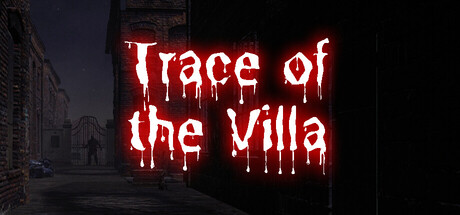
Trace of the Villa — rooms as puzzle spaces and story containers
Jin arrives at a remote, decaying mansion chasing a lead that might finally explain his sister’s disappearance. Trace of the Villa treats each room as both a compact puzzle and a narrative chamber: manifests, locked systems and fragments of encrypted documents convert domestic spaces into a slow-burn, clue-driven investigation.

What Trace of the Villa is
Trace of the Villa is an Action / Adventure / Indie title from Steadyturtle Co., Ltd., released on Steam on 28 May, 2026. The official premise centres on Jin, who has spent years searching for his missing sister and follows a trail to a deliberately forgotten mansion. Inside, rooms feel “erased” rather than simply abandoned — furniture and personal items remain, but ownership and identity have been stripped away. Restoring power and accessing secured systems reveals fragments of manifests, falsified identities and encrypted documents that link into a larger, concealed operation.
When and where — Steam context
Trace of the Villa is available on Steam (release date: 28 May, 2026). The store page lists the developer and publisher as Steadyturtle Co., Ltd., and shows the game under genres Action, Adventure, Indie. The Steam page also includes subtitles and accessibility categories such as Color Alternatives, Custom Volume Controls, Playable without Timed Input and Subtitle Options.
Who should wishlist or buy this
If you prefer atmospheric mystery adventure and environmental storytelling delivered room-by-room, this is aimed at you. Players who enjoy methodical clue-reading, decrypting small chains of evidence, and extracting narrative from objects and logs will find the mansion’s structure rewarding. It’s a fit for story-focused PC mystery gamers who value slower pacing and puzzle-led reveals rather than rapid action setpieces.
Why the mansion matters: rooms as containers of story
Rooms in Trace of the Villa do more than hold puzzles: they archive the absence of people. The official description emphasises furnishings left mid-routine, locked doors and missing personal identifiers — design signals that the house itself is a record of erasure. That pushes a puzzle design philosophy where solving a safe or restoring power isn’t only a mechanical victory, it’s an act of historical recovery. In practical terms, each chamber answers two questions simultaneously: what mechanism will let me progress, and what did this space witness?
How clue reading, object logic and story puzzles shape progression
According to the official Steam text, progression in Trace of the Villa leans on restoring estate systems and unlocking secured compartments. Concrete puzzle inputs include manifests, transfer records, encrypted fragments and falsified identities. That set of artefacts encourages a particular investigative rhythm: observe an object or log, infer its role in the house’s systems or timeline, and apply that inference to the next locked layer.


Player scenarios — what gameplay feels like in practice
- Detail-driven investigator: You methodically scan a study, cross-referencing a ledger entry with a locked ledger case and a room’s wiring panel to restore power to a wing.
- Patience-first puzzle solver: You value piecing together a timeline from scattered transfer records and encrypted fragments rather than fast reflex challenges; progress feels like assembling an archive.
- Atmosphere seeker: You play for the sense of unease and discovery — rooms that look lived-in-but-erased, where each object raises questions about the people who once passed through.
Compact facts: Trace of the Villa
| Title | Trace of the Villa |
|---|---|
| Steam AppID | 3483660 |
| Developer / Publisher | Steadyturtle Co., Ltd. |
| Release date | 28 May, 2026 |
| Genres | Action, Adventure, Indie |
| Notable Steam categories | Single-player; Color Alternatives; Custom Volume Controls; Playable without Timed Input; Subtitle Options; Family Sharing |
How Trace of the Villa compares — editorial discovery
Below is a compact editorial comparison with a few nearby puzzle/room-focused titles. The intent is to help readers judge fit on atmosphere, puzzle focus and pacing rather than to claim any title is “better.”
| Title | Core focus | Atmosphere / tone | Exploration & puzzle style | Player fit |
|---|---|---|---|---|
| Trace of the Villa | Clue-driven investigation inside a decaying mansion | Slow-burn mansion mystery, erasure of identity | Room-by-room object logic, manifests, encrypted documents, restoring systems | Players who want environmental storytelling tied to investigative puzzles |
| The Room / The Room Two | Tactile mechanical puzzles in contained spaces | Concentrated, mysterious and occasionally occult | Intricate tactile safes and mechanical contraptions in single rooms | Players who enjoy handcrafted, isolated puzzle boxes and tactile problem solving |
| Escape Simulator | Highly interactive escape-room gameplay (solo or co-op) | Varies by room—often playful to tense | Physical interaction with nearly everything; community-made rooms expand styles | Players who like interactive objects, sandbox puzzle solving and co-op options |
| Unpacking | Zen block-fitting and domestic storytelling | Quiet, everyday emotional discovery | Non-consequential object placement used to reveal a life story |
Leave a Reply