Trace of the Villa — a premise-first guide for players who want story context without spoilers
Trace of the Villa opens on a simple but unnerving premise: Jin has spent years searching for his missing sister and follows a lead to a remote, decaying mansion where manifests and hints suggest she may still be alive. If you prize atmospheric mystery, clue-driven exploration, and a slow-burn personal investigation, here’s what to expect from the set-up—no plot reveals, just enough context to decide whether it fits your tastes.

Quick facts
| Title | Trace of the Villa |
|---|---|
| Release date | 28 May, 2026 |
| Developer / Publisher | Steadyturtle Co., Ltd. |
| Genres | Action · Adventure · Indie |
| Notable Steam categories | Single-player, Color Alternatives, Custom Volume Controls, Playable without Timed Input, Subtitle Options, Family Sharing |
| Steam page | Open Trace of the Villa on Steam |
Who it’s for
This is for players who prefer environmental storytelling and investigation over broad action set-pieces. If you enjoy slowly reconstructing a family’s or location’s past from found documents, encrypted fragments, and reactivated systems, Trace of the Villa is aimed at that temperament. It’s also a fit if you appreciate accessibility options (subtitles, color alternatives, custom volume) and a single-player, non-time-pressured investigation experience.
What the game is (premise-first)
Officially: “Jin has spent years searching for his missing sister, pursuing leads that took him to a remote, decaying mansion where he recovered manifests and hints that indicate his sister may still be alive, somewhere at the end of the trail he is about to follow.” Inside the estate, the house feels “less abandoned than erased”: rooms left mid-routine, locked doors concealing hastily secured secrets, and identities deliberately obscured.
Mechanically and narratively, the mansion responds as you interact with it. Restoring power brings systems back online, hidden compartments open, and safes yield fragments of encrypted documents and suspicious transfer records. Each solved puzzle is described as a layer peeled back from a carefully concealed operation, meaning the story advances by collecting and interpreting physical evidence rather than forced exposition.
When & where (Steam / PC context)
Trace of the Villa released on 28 May, 2026. It’s listed on Steam as an Action / Adventure / Indie title and categorized for single-player play with several accessibility and comfort features. Use the Steam page to wishlist, check system requirements, or follow news from the developer/publisher, Steadyturtle Co., Ltd.
Why the theme matters
Thematically, the game trades jump-scare horror for a psychological investigation: the tension comes from erasure, falsified identities, and the idea of a place designed to hide people in plain sight. That tone changes what you look for as a player—you’re tracking paperwork, power systems, and movement logs rather than chasing monsters. If narrative curiosity is your primary play driver, the premise promises rewards for careful reading and inference.
How you read clues and progress (spoiler-free)
- Exploration is clue-driven: manifests, transfer records, and encrypted fragments are the core signals you’ll use to build a timeline.
- Environmental interaction matters: restoring power and reactivating systems is explicitly tied to revealing new locations, safes, or unlocked compartments.
- Puzzle resolution is investigative rather than reflex-based: the Steam listing emphasizes options like “Playable without Timed Input,” suggesting a slower, more contemplative pace.
- Progression is cumulative: every decrypted file or reopened system can point to another lead, and the narrative emerges through assembled fragments instead of long cutscenes.
Visual sampling

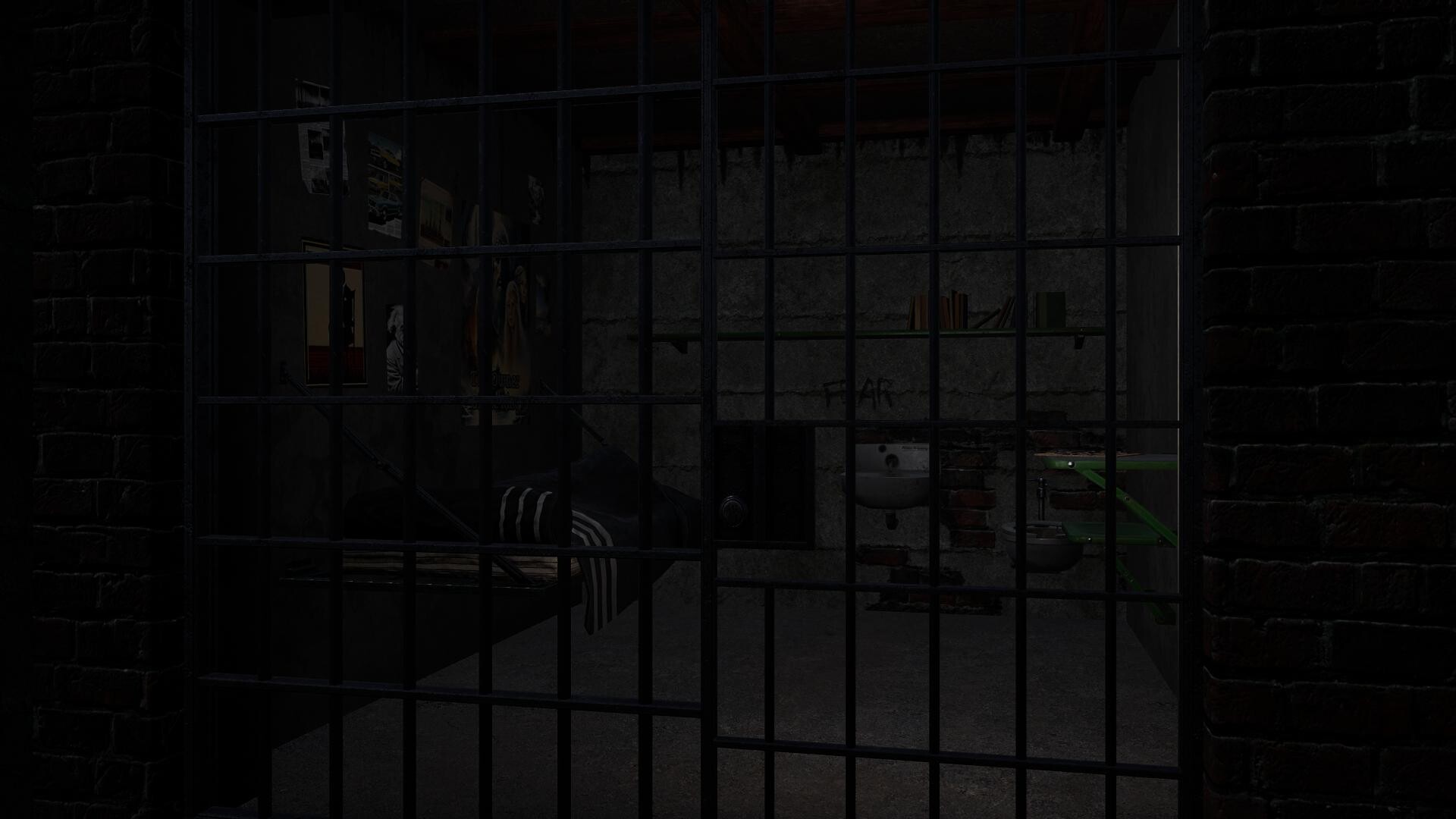
Comparison: Where Trace of the Villa sits among story-rich indie mysteries
| Title | Genre / Overlap | Atmosphere & Story Tone | Puzzle / Exploration Focus | Best for players who… |
|---|---|---|---|---|
| Inscryption | Adventure / Indie / Strategy (card-based) | Dark, meta-horror with performative tension | Puzzle systems built into card mechanics; layered secrets | Like unraveling secrets through novel mechanics and meta layers |
| Outer Wilds | Action / Adventure | Curiosity-driven cosmic mystery, wonder + melancholy | Exploration-focused, physics/time-based puzzles across a solar system | Prefer open exploration and orbital-scale discovery over confined investigation |
| Journey | Adventure / Indie | Poetic, minimalist, emotional exploration | Travel and atmosphere carry the “puzzles” — minimal explicit puzzle systems | Want meditative, visual storytelling rather than document-driven clues |
| The Forgotten City | Adventure / Indie / RPG | Moral mystery with time-loop mechanics and conversational puzzles | Dialogue and time-manipulation puzzles shape cause-and-effect discovery | Enjoy branching narrative experiments and moral consequence puzzles |
| The Medium | Adventure | Psychological horror with dual-reality exploration | Puzzles revolve around interacting with two realms; atmosphere-heavy | Like supernatural, psychological tones and parallel-realm mechanics |
How Trace of the Villa differs: it centers a grounded, document- and system-driven investigation inside a single estate rather than relying on meta-gamecard systems, open-world loops, or dual-reality mechanics. If you prefer evidence reconstruction—manifests, encrypted documents, and reactivated estate systems—to overt supernatural mechanics, Trace of the Villa leans into that specific investigative texture.
Player scenarios (specific)
- Scenario A — You enjoy methodical investigation: Play when you want to read documents, cross-reference manifests, and let a location slowly reveal its past. Trace of the Villa is tailored to this kind of detective patience.
- Scenario B — You value accessibility and pacing control: The Steam categories list subtitle options and “Playable without Timed Input,” so expect a player-friendly pace suitable for focused, unhurried examination.
- Scenario C — You prefer varied puzzle mechanics: Expect puzzles tied to estate systems—power, safes, and encrypted records—rather than reflex challenges or heavy platforming.
- Scenario D — You want a personal story hook: The protagonist’s search for a missing sister is the emotional throughline; if personal stakes in mystery stories matter to you, that’s central to the premise.
YouTube discovery
YouTube discovery
For trailer and gameplay discovery, use YouTube search rather than relying on unverified embeds: Find Trace of the Villa trailer and gameplay searches on YouTube.
Leave a Reply