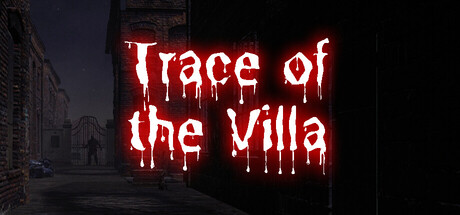
Trace of the Villa — when puzzles are evidence and narrative logic
Trace of the Villa frames puzzle-solving as investigative labor: you piece together manifests, restore power, and coax secrets out of a decaying mansion to follow a trail that may lead to the protagonist’s missing sister. Released on 28 May, 2026 by Steadyturtle Co., Ltd., the game leans on environmental storytelling and object-driven logic to turn each solved mechanic into a new piece of evidentiary context.

Quick facts
| Title | Trace of the Villa |
|---|---|
| Steam AppID | 3483660 |
| Release date | 28 May, 2026 |
| Developer / Publisher | Steadyturtle Co., Ltd. |
| Genres | Action, Adventure, Indie |
| Categories | Single-player; Color Alternatives; Custom Volume Controls; Playable without Timed Input; Subtitle Options; Family Sharing |
| Short premise | Jin follows a lead to a remote, decaying mansion where manifests and hints suggest his missing sister may still be alive. |
Who this is for
If you prefer puzzle adventures where each solved challenge expands the dossier instead of just opening a new door, Trace of the Villa is aimed squarely at you. Players who enjoy slow-burn suspense, environmental storytelling, and puzzles that act as cumulative evidence—rather than isolated lock-and-key tests—will find the tone familiar and purposeful. The Steam page lists accessibility options like color alternatives, subtitle options, and “playable without timed input,” which also makes the title approachable for players who favour methodical, non-rushed investigation.
What the game is — mechanics as narrative proof
The official Steam description describes a mansion that feels “erased” rather than simply abandoned: rooms frozen mid-routine, identities removed, and locked doors hiding “hastily secured secrets.” Mechanically, Trace of the Villa ties puzzle outcomes to documentary evidence: restoring power brings systems back online; hidden compartments and safes yield fragments of encrypted documents and suspicious transfer records; each solved puzzle uncovers another layer of a wider operation. That design turns object logic into narrative logic—items and systems don’t just gate progress, they corroborate a timeline and suggest motives.

When and where — Steam / PC context
Trace of the Villa launched on Steam on 28 May, 2026. The Steam store entry lists the game as Action, Adventure, Indie and includes single-player and accessibility categories that help players match the experience to their preferences. The developer and publisher are listed as Steadyturtle Co., Ltd.
Why the theme matters: puzzles as evidence
Many puzzle adventures treat challenges as abstract tests; Trace of the Villa explicitly treats them as investigative tools. When a safe yields a fragment of an encrypted manifest or a restored terminal reveals a suspicious transfer record, the player is reading clues that function like courtroom exhibits. That shifts the emotional register: you are not only unlocking a gameplay resource but also constructing a chain of inference about what happened to the mansion’s occupants and why identities were suppressed. For players invested in narrative causality, this approach rewards careful note-taking and deductive pattern recognition.
How you read clues and progress
According to the official description, key progression beats come from restoring systems (power, access) and unlocking secured compartments. Expect puzzles to be embedded in the estate’s infrastructure—power switches, secured systems, safes, hidden compartments—and for solved puzzles to provide tangible artifacts: manifests, encrypted document fragments, and financial traces. Object logic here matters: an item’s position, state, and the systems it connects to are the evidence you will use to make narrative leaps. That design privileges analytical players who keep a mental (or physical) notebook of links between documents, locations, and dates.

Player scenarios — who should wishlist it
- Evidence-focused puzzler: You enjoy puzzles that leave physical traces and shift the narrative when solved—keep it on your wishlist.
- Mansion mystery fan: You like atmospheric, slow-paced exploration of a single location with layered secrets—this fits the bill.
- Accessibility-conscious players: You need subtitle options, no-timed-input play, or color alternatives—the Steam page lists those categories.
- Players who dislike frantic action: Although tagged Action and Adventure, the emphasis in the store description is investigative and methodical—expect puzzle-driven progression rather than twitch reflex tests.
How it compares (editorial discovery)
Below is a focused comparison on lawful editorial criteria—genre, atmosphere, puzzle focus, exploration style, story tone, pacing, and likely player fit. These comparisons are intended to help you decide whether Trace of the Villa matches your preferences.
| Title | Genre / Atmosphere | Puzzle focus | Exploration style | Pacing / Tone | Who it suits |
|---|---|---|---|---|---|
| Trace of the Villa | Action / Adventure / Indie — atmospheric mansion mystery | Object-driven puzzles that reveal documents and system evidence | Single-location estate, investigative, environmental storytelling | Slow-burn, evidence-based, tense | Players who like narrative puzzles that serve as proof |
| The Room | Adventure / Indie — tactile mystery box atmosphere | Mechanical, tactile puzzles centered on locks and safes | Contained puzzle chambers with layered devices | Focused, curiosity-driven, puzzle-centric | Players who prefer handcrafted mechanical puzzles |
| The Room Two | Adventure / Indie — broader locales with the same tactile tone | Mechanical and environmental puzzles with narrative prompts | Sequence of linked rooms and scenes | Methodical, still puzzle-first but with more variety | Those who enjoyed The Room and want more scene variety |
| Escape Simulator | Adventure / Casual / Indie — interactive escape-room feel | Highly interactive puzzle objects; physics and item manipulation | Room-by-room scenarios, often overt puzzle design | Faster-paced, co-op-friendly or solo problem solving | Players who like tactile, breakable, experimental puzzles |
| Unpacking | Casual / Indie — zen, domestic environmental story | Block-fitting and placement puzzles that narrate a life | Everyday spaces reveal character through objects |
Leave a Reply