
Trace of the Villa — an escape-room style mystery that makes power and place into your primary tools
Trace of the Villa casts you as Jin, a man whose years-long search for his missing sister brings him to a remote, decaying mansion where the house itself hides answers. The game’s loop centres on restoring power, unlocking sealed spaces and reconstructing fragments of evidence to pull a buried operation back into light.

| Title | Trace of the Villa |
|---|---|
| Release date | 28 May, 2026 |
| Developer / Publisher | Steadyturtle Co., Ltd. |
| Genres | Action, Adventure, Indie |
| Steam categories | Single-player; Color Alternatives; Custom Volume Controls; Playable without Timed Input; Subtitle Options; Family Sharing |
| Platform / Store | PC — Steam (store page available) |
| User reviews (Steam) | No user reviews at the time of inspection |
Who this is for
If you enjoy slow-burn, story-rich adventure with an emphasis on environmental storytelling and clue-driven exploration, Trace of the Villa targets that playstyle. Players who prefer reading spaces as evidence—spotting the off-kilter object, tracing a utility line, or following the sequence of a locked safe—will find the game’s design oriented around thoughtful, investigative pacing rather than twitch reflexes.
What the game is
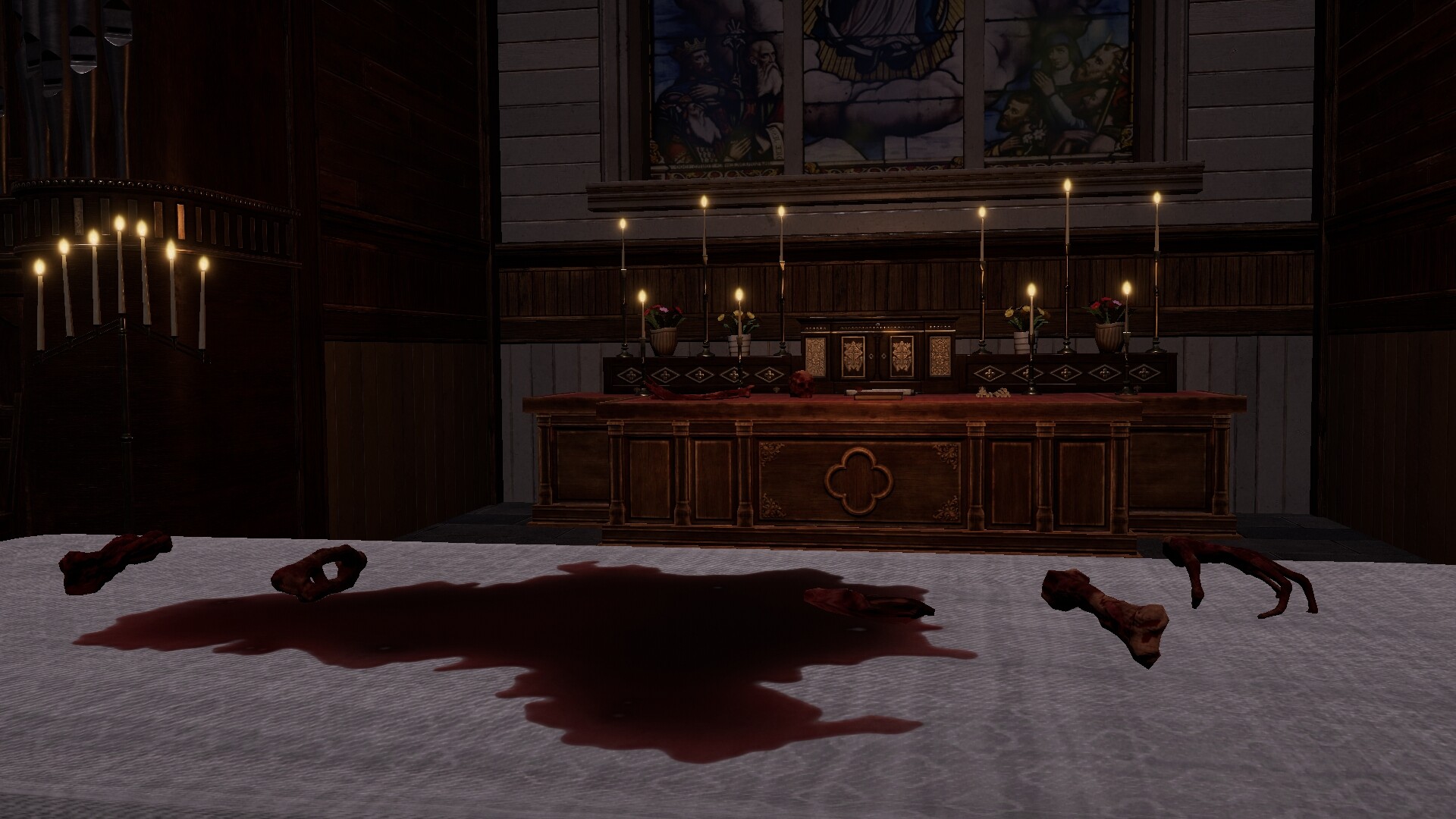
Officially described on Steam, Trace of the Villa puts you in Jin’s shoes as he pursues a lead to a property “cut off from the grid and deliberately forgotten.” The mansion is furnished as if occupants vanished mid-routine; locked doors and secured systems hold fragments of a concealed operation. The core loop is investigative: recover manifests and hints, reconstruct timelines from physical traces, and decide where the trail goes next.

When and where to buy / wishlist
Trace of the Villa released on Steam on 28 May, 2026. You can view or wishlist the Steam page directly: Trace of the Villa on Steam.
Why the theme matters — power, erasure and evidence
Thematically the game leans on the idea of erasure: identities removed, arrivals without records, departures without witnesses. That tone matters because it makes the environment itself the primary witness. Restoring the mansion’s systems is not just a mechanical gate; it’s the narrative act that lets the house tell its story. In practical terms that means puzzles often behave like forensic work: a flipped breaker reveals camera logs, a repaired generator powers a locked door’s actuator, safes yield fragmented documents that must be stitched together into a timeline.
How you progress — restoring power, unlocking spaces, reconstructing evidence
The official Steam description frames progression around restoring the estate’s infrastructure: “When Jin restores power to the estate, the house begins to reveal what it was hiding. Secured systems come back online. Hidden compartments unlock. Safes yield fragments of encrypted documents and suspicious transfer records.” Expect a gameplay loop where systems unlock access to new layers of environmental information. That chain—repair a circuit, access a terminal, decrypt a document, follow a lead to another locked room—is the game’s version of clue chaining.
What that loop feels like in play
- Detect: inspect a room and mark items that seem out of place or deliberately concealed.
- Restore: bring a subsystem online (power, networked locks, safes) to expose new interactables.
- Reconstruct: assemble fragments—manifests, transfer records, encrypted notes—into a coherent timeline.
- Move: the reconstructed evidence points to a new area or mechanic; unlock and repeat.
Player scenarios — who will enjoy it and how to approach it
- The methodical detective: You take notes, map connections and enjoy the satisfaction of lining up disparate details. Treat rooms as files to be opened in sequence.
- The atmospheric explorer: You prioritise mood and pacing. Let the mansion’s set dressing suggest narrative beats before you chase every document—you’ll be rewarded by a slow build of context.
- The puzzle assembler: You like systems that interlock—power grids, locks, encrypted fragments. Focus on the mechanics of restoring systems and how each mechanic acts as a key to another.
How Trace of the Villa compares to nearby mystery/puzzle games
Below is a concise editorial comparison based on genre, atmosphere, puzzle focus and player fit.
| Game | Puzzle focus | Atmosphere / tone | Player fit |
|---|---|---|---|
| The Room | Mechanical safes and tactile puzzles; single-room progression | Mysterious, tactile, intimate | Players who love handcrafted physical puzzles and tactile detail |
| The Room Two | Expanded environmental puzzles across linked spaces | Cryptic, atmospheric, puzzle-first | Those who want a broader spatial puzzle sequence with a cryptic tone |
| Escape Simulator | Highly interactive escape rooms, physics interactions and community levels | Playful to tense depending on room; sandbox potential | Players who prioritise interaction and co-op or community-made content |
| Trace of the Villa | Clue chains driven by restoring systems and reconstructing evidence | Slow-burn, investigative, mansion mystery | Players who prefer environmental forensics and narrative puzzle design |
Editorial note: these comparisons focus on design and tone rather than claims of quality or endorsement.
YouTube discovery
For trailers and player-captured footage, search YouTube using this query path (useful for trailer and gameplay clips): Trace of the Villa trailer & gameplay (YouTube search).
Final take — who should wishlist it
Wishlist Trace of the Villa if you want an investigative PC mystery where the act of restoring the house is the engine of discovery. If you prefer fast action
Leave a Reply