
Trace of the Villa: why quiet uncertainty matters more than one-off shocks
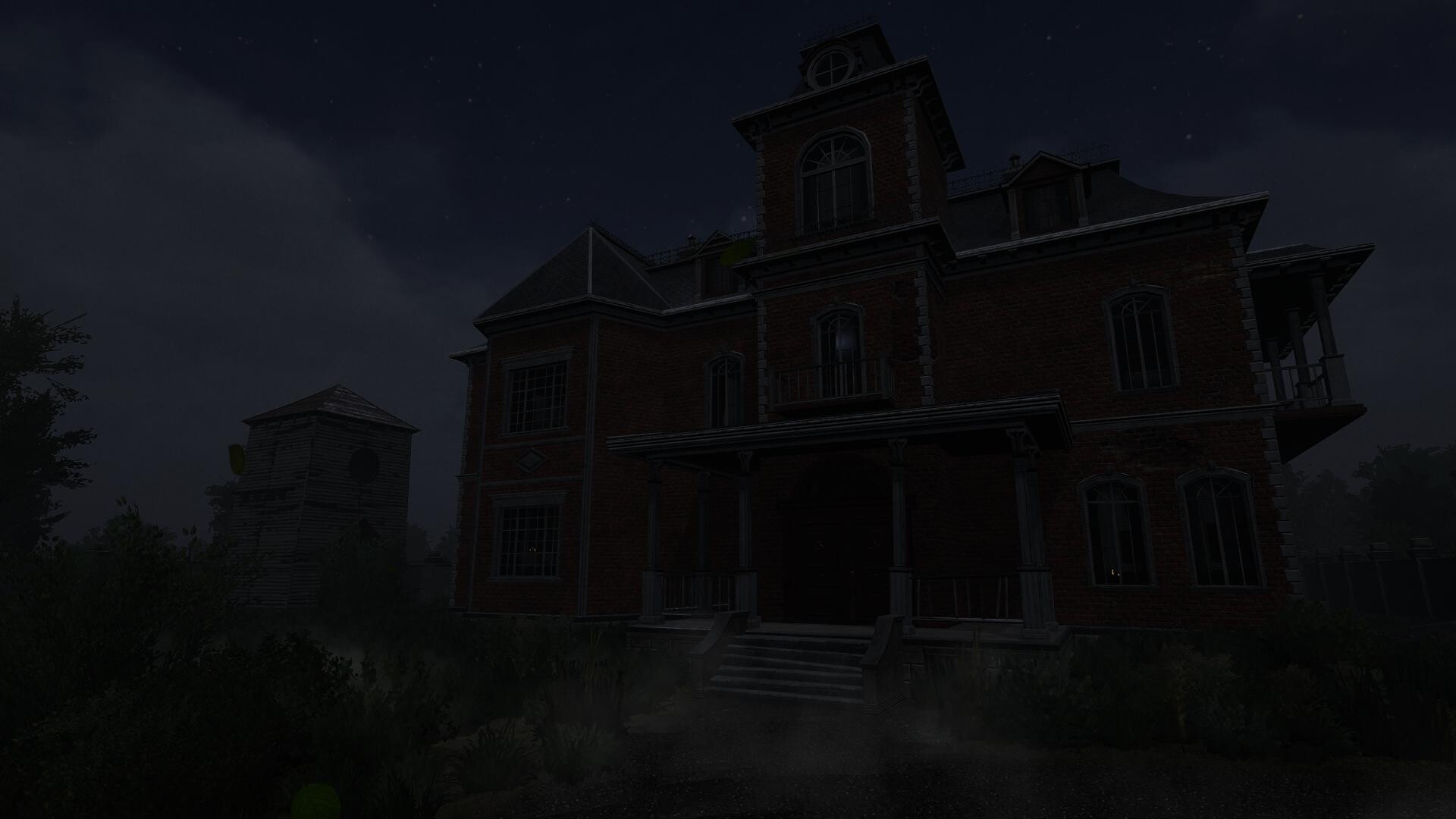
Trace of the Villa trades jump-scares for the slow collapse of certainty: a decaying mansion, erased identities, and a protagonist piecing together a trail that may lead to a missing sister. The game makes questions and absence the engine of dread—so the moments you expect to be loud instead feel corrosive because they redraw what you trust.

At a glance — what Trace of the Villa is
Trace of the Villa is a story-rich, clue-driven exploration game set in a deliberately forgotten mansion. Official copy frames it as Jin’s investigation into a missing sister, where restored power, unlocked safes, and encrypted documents gradually reveal a pattern of identity erasure and institutional secrecy.
Compact facts
| Title | Trace of the Villa |
|---|---|
| Release date (Steam) | 28 May, 2026 |
| Developer / Publisher | Steadyturtle Co., Ltd. |
| Genres | Action, Adventure, Indie |
| Key Steam categories | Single-player; Color Alternatives; Custom Volume Controls; Playable without Timed Input; Subtitle Options; Family Sharing |
| Steam appid | 3483660 |
Who should wishlist or play this
- Players who prefer atmosphere and slow-burn dread over frequent jump-scares.
- Fans of environmental storytelling and investigative pacing—where finding manifests, restoring systems, and decrypting fragments are the core satisfactions.
- Those who value accessibility options that reduce sensory friction: subtitle options, color alternatives, custom volume, and no forced timed inputs.
When and where — Steam context
Trace of the Villa released on Steam on 28 May, 2026. The Steam page lists Steadyturtle Co., Ltd. as both developer and publisher and classifies the game under Action, Adventure, Indie with single-player and accessibility-related categories. You can view the Steam store entry directly for wishlisting and system details.
Why the theme matters: unexplained spaces and identity erasure
On its Steam page the mansion is described as “less abandoned than erased”: rooms frozen mid-routine, personal items with deliberate omissions, and arrivals or departures that leave no official trace. That absence—missing names, no photographs, falsified transfer records—turns the environment into the antagonist. Instead of a single monster or sudden shock, the threat is epistemic: you cannot trust records, faces, or the idea that a place preserves a past identity.
That thematic choice amplifies tension because suspense lives in not-knowing whether an unlocked safe will reveal salvation or another layer of obfuscation. This is the kind of psychological horror that leans on uncertainty to keep you uneasy long after you stop playing.
How progression and investigation work (from official details)
According to the official description, Jin’s investigation progresses by restoring the mansion’s power and bringing secured systems back online. Restored systems and searches yield hidden compartments, safes, encrypted documents, and suspicious transfer records. Each recovered manifest or hint refines the timeline and exposes patterns—arrivals without records, departures without witnesses, and identities that appear to be fabricated or erased.
Mechanically this reads as a mix of environmental puzzle-solving and clue interpretation: power restoration toggles new areas and systems; puzzle solutions unlock data; decrypted fragments change the meaning of previous clues. That means the player advances least by reflex and most by patience—re-reading notes, revisiting unlocked systems, and piecing together an institutional pattern from small, dispersed evidence.

Player scenarios — who will get the most from Trace of the Villa
Scenario A: The investigator
You enjoy reconstruction: revisiting rooms after a system is powered, cross-referencing manifests with physical evidence, and slowly forming a chain of events. The game’s promise of encrypted documents and safes needing to be opened aligns with patient, detective-style play.
Scenario B: The atmosphere-first player
You prefer building tension through setting and implication. You’ll appreciate the “erased” mansion aesthetic—rooms furnished but scrubbed of personal markers—because it sustains a steady disquiet rather than brief bursts of fear.
Scenario C: The accessibility-minded explorer
If forced reflex challenges or timed inputs are a turn-off, the Steam listing’s “Playable without Timed Input,” “Subtitle Options,” and “Custom Volume Controls” make Trace of the Villa a better fit than more twitch-focused horror titles.
How it compares to nearby psychological horror and tension games
Below is a compact comparison on editorial criteria—genre, atmosphere, puzzle focus, exploration style, story tone, and pacing. These comparisons are descriptive and intended to help you match the game to your tastes, not to suggest endorsement.
| Title | Genre / Tone | Puzzle / Investigation | Exploration style | Pacing | Best for |
|---|---|---|---|---|---|
| Trace of the Villa | Action / Adventure / Indie — mansion mystery; identity erasure | Clue-driven: manifests, encrypted docs, safes, systems restored | Room-based, environmental with unlocked systems revealing new areas | Slow-burn, investigative | Players who prefer atmosphere, interpretation, and accessible pacing |
| Amnesia: The Dark Descent | Action / Adventure / Indie — immersive first-person horror | Puzzle-lite with heavy emphasis on survival and immersion | Continuous first-person exploration with physics puzzles | High-tension, sustained dread | Players seeking immersion and immediate vulnerability |
| SOMA | Action / Adventure / Indie — sci-fi existential horror | Narrative puzzles and systems that raise philosophical questions | Linear, world-building exploration in a contained setting | Slow-burn with existential beats | Players who want story-driven atmosphere and philosophical framing |
| Layers of Fear (2016) | Adventure / Indie — psychological, shifting mansion | Environmental puzzles tied to story and perception shifts | Hallway/room-based exploration with surreal changes | Variable—often escalating as reality warps | Players who like unreliable spaces and narrative unreliability |
| Poppy Playtime | Action / Adventure / Indie — puzzle-horror in an abandoned factory | Gadget-driven puzzles (e.g., GrabPack) with platform elements | Level/factory area exploration with set-piece encounters | Moderate—mixes puzzle flow with scripted scares | Players who enjoy mechanical puzzles inside a stylized horror setting |
YouTube discovery
If you want to see trailers or footage, search results for Trace of the Villa (trailer / gameplay) are available here: YouTube: Trace of the Villa trailer / gameplay. This is a search path; individual videos should be verified as official before assuming publisher origin.
Purchase / wishlist
If the idea of slow-burn atmospheric mystery with investigative pacing appeals to you, you can visit the Trace of the Villa Steam page to wishlist or purchase:
Editorial note and disclaimer
Referenced titles and trademarks belong to their respective owners. Comparisons above are editorial discovery only and based on genre, atmosphere, puzzle focus, exploration style, story tone, and pacing as available in public sources.
Leave a Reply