
Trace of the Villa: a story-first mansion mystery that asks you to read between the rooms
Trace of the Villa drops you into Jin’s search for a missing sister and a remote, deliberately forgotten mansion whose rooms look as if their occupants vanished mid‑routine. The game—developed and published by Steadyturtle Co., Ltd.—frames investigation as a slow-burn, clue-driven unraveling: restore power, unlock systems, and follow fractured manifests toward an uncertain truth.

Who should consider wishlisting Trace of the Villa? What the game is, when and where it’s available, why its investigative tone matters, and how the design asks players to reconstruct backstory from objects and systems—this piece lays those answers out so you can decide if the game fits your story-first mystery tastes.
Quick facts
| Title | Trace of the Villa |
|---|---|
| Release date | 28 May, 2026 |
| Developer / Publisher | Steadyturtle Co., Ltd. |
| Steam appid | 3483660 |
| Genres | Action, Adventure, Indie |
| Steam categories | Single-player; Color Alternatives; Custom Volume Controls; Playable without Timed Input; Subtitle Options; Family Sharing |
| Premise (official) | Jin has spent years searching for his missing sister, following a lead to a remote, decaying mansion where manifests and hints suggest she may still be alive. |
What Trace of the Villa actually is
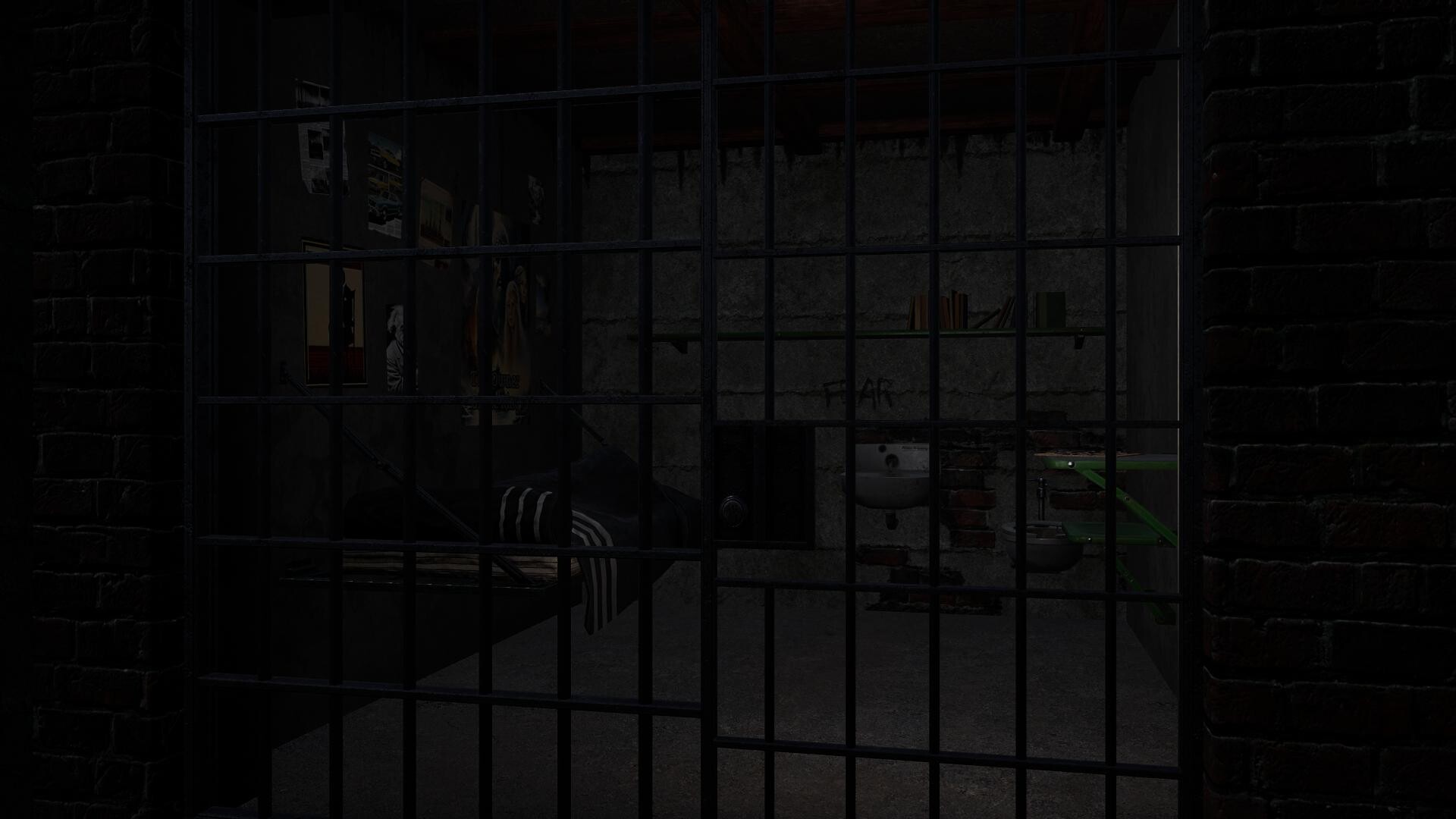
According to the Steam page, Trace of the Villa is an investigation-led adventure built around environmental storytelling and system-based discovery. You play Jin, who finds a cut‑off property with no recent records and no names on its belongings—rooms appear erased rather than abandoned. When power is restored, secured systems, safes, and encrypted documents begin to reveal a pattern of falsified identities and financial trails that were meant to go nowhere.
When and where
Trace of the Villa released on Steam on 28 May, 2026. It’s presented as a PC/Steam indie title with Steam categories indicating accessibility options (color alternatives, subtitles, custom volume controls) and single‑player focus.
Why the theme matters: erasure, identity, and slow-burn curiosity
The game’s official description highlights erasure as a thematic engine: rooms staged like lives interrupted, belongings without photos or names, and records engineered to disappear. For players who prize narrative curiosity—those who prefer assembling meaning from fragments rather than being told—the premise suggests a design that privileges reading context, tracing networks of documents and systems, and following procedural clues to reach emotional beats.
How you uncover meaning: systems, puzzles, and environmental clues
Trace of the Villa’s revealed systems include restored power, reactivated estate infrastructure, safes and encrypted documents, and manifests that hint at off‑site transfers. The official copy repeatedly points to layered discovery: solve puzzles to access hardware or records, then read the evidence—financial trails, falsified identities, and transfer logs—to reconstruct what happened. That places emphasis on narrative puzzle design and clue‑driven exploration rather than combat spectacle.

Who should wishlist it: concrete player scenarios
- Investigative players who prefer sifting documents, decrypting fragments, and following procedural trails to assemble narrative truth.
- Fans of atmospheric mystery adventures who value environmental storytelling and slow-burn suspense over fast-paced action.
- Players who want accessibility options (subtitles, color alternatives, adjustable audio) and a single‑player, story-first experience on Steam.
- Those curious about narrative design that frames a location as an information machine—restoring systems to reveal backstory—rather than as purely haunted décor.
How it compares (editorial comparison)
Below is a compact comparison on lawful editorial criteria—genre, atmosphere, puzzle focus, exploration style, story tone, and pacing—to help you match Trace of the Villa to similar story-rich mysteries.
| Title | Primary focus | Puzzle / discovery style | Exploration | Story tone | Pacing / player fit |
|---|---|---|---|---|---|
| Trace of the Villa | Investigation, environmental storytelling | System reactivation, safes, encrypted documents, manifests | Close-quarters mansion exploration, clue-driven | Slow-burn, erasure and identity | Slow, methodical; for players who read and piece together evidence |
| Inscryption | Card-based odyssey with meta-horror elements | Escape-room puzzles interwoven with deckbuilding mechanics | Mostly confined, vignette-like spaces supporting the card systems | Dark, psychological, often subversive | Pockets of intense puzzle and meta-reveal moments; for players who enjoy mechanical twists |
| Outer Wilds | Exploratory cosmic mystery | Observation and inference from environmental phenomena | Open solar-system exploration with nonlinear discovery | Melancholic, wonder-driven | Unfolding mystery over repeated loops; for explorers and patient synthesizers |
| Journey | Emotional traversal through ruins | Minimalist puzzles, symbolic discovery | Expansive, interpretive spaces | Quiet, contemplative | Short, meditative; for players who favor feeling over explicit plot |
| The Forgotten City | Time-loop narrative puzzle | Dialogue and consequence-driven puzzles that exploit time mechanics | Compact historical setting with focus on cause and effect | Investigative, moral weight | Puzzle-heavy with narrative stakes; for players who like branching consequences |
| The Medium | Dual-reality psychological investigation | Environmental puzzles tied to shifting perspectives | Linear but layered worldspaces | Psychological, eerie | Gradual revelations with atmospheric scares; for story-driven horror fans |
How Trace of the Villa stands apart
Where some mystery titles use systemic mechanics as a conceit, Trace of the Villa foregrounds the mansion itself as an engineered information system: the act of restoring power and accessing estate infrastructure is the primary engine for revelation. If you prefer clues that are procedural—financial trails, encrypted manifests, falsified identities—
Steam page
View Trace of the Villa on Steam
YouTube discovery
For trailer and gameplay discovery, use YouTube search rather than relying on unverified embeds: Find Trace of the Villa trailer and gameplay searches on YouTube.
Leave a Reply