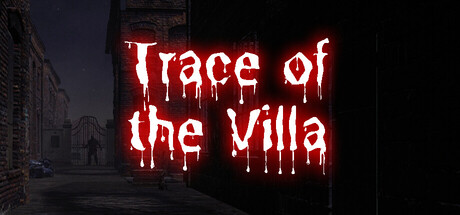
Trace of the Villa — why quiet dread and the empty mansion matter more than cheap shocks
Trace of the Villa asks players to sit with absence: a decaying, cut-off mansion where rooms feel less abandoned than erased, and the slow accrual of clues carries the weight. Released on 28 May, 2026 by Steadyturtle Co., Ltd., it’s a story-driven investigation wrapped in environmental puzzles that privileges tension and uncertainty over jump scares.

Who, what, when, where, why, and how
Who is this for?
If you prefer atmospheric mystery adventure, slow-burn suspense, and puzzle-driven exploration that rewards patience and reading the environment, Trace of the Villa is aimed at that player. It suits people who like investigative pacing and psychological investigation more than fast-paced action or frequent shocks.
What is the game?
Trace of the Villa (Steam appid 3483660) is an Action / Adventure / Indie title from Steadyturtle Co., Ltd. The official short description frames it plainly: “Jin has spent years searching for his missing sister… a remote, decaying mansion where he recovered manifests and hints that indicate his sister may still be alive.” The longer official description presents a mansion that feels “erased,” with rooms frozen mid-routine and identities deliberately removed. Restoring power begins to reveal hidden systems, safes, and encrypted fragments — a clue-led unspooling of a carefully concealed operation.
When and where?
Trace of the Villa launched on 28 May, 2026 and is available on Steam for PC. The Steam store page lists single-player support, subtitle options, custom volume controls, color alternatives, and other accessibility-friendly categories.
Why the theme matters: quiet dread versus shock value
Many horror games lean on peaks — sudden, loud events that produce a reflexive response. Trace of the Villa instead builds a cumulative anxiety: a house that has been scrubbed of personal history, financial trails that lead nowhere, falsified identities, and evidence of controlled movements. That absence becomes the antagonist. The core fear comes from uncertainty — what information is missing, who was moved through the estate, and what personal cost was paid. Psychologically, an empty room that hints at a life-but-not-lived forces the player’s imagination to supply missing pieces; imagination is often scarier than any scripted jump.
How you play and progress
Progression is clue-driven: Jin restores systems, unlocks compartments, solves puzzles, and interprets fragments of documents. The game frames investigation as piecing together encrypted documents, transfer records, and locked rooms — environmental storytelling and narrative puzzle design are central. Pacing comes from alternating careful exploration and puzzle sequences rather than constant action. The Steam categories note it is playable without timed input and supports subtitle options, which emphasizes reading and exploration over reflex-based mechanics.
Official screenshots


Quick facts
| Title | Trace of the Villa |
|---|---|
| Release date | 28 May, 2026 |
| Developer | Steadyturtle Co., Ltd. |
| Publisher | Steadyturtle Co., Ltd. |
| Genres | Action, Adventure, Indie |
| Key Steam categories | Single-player; Color Alternatives; Custom Volume Controls; Playable without Timed Input; Subtitle Options; Family Sharing |
| Steam store | Trace of the Villa on Steam |
Player scenarios — who should wishlist or buy
Scenario A — You want methodical unease
You enjoy slow-burn suspense where exploration and document-reading create dread. You’re happiest with environmental puzzles and long stretches of uncanny silence that let your imagination do the work.
Scenario B — You prefer narrative investigations over combat
If your primary joy is assembling timelines and tracing forged records, the game’s focus on manifests, encrypted fragments, and systems coming back online will be satisfying. The protagonist Jin’s search for his sister frames each discovery with personal stakes.
Scenario C — Accessibility and tempo matter
Steam categories indicate subtitle options and “playable without timed input,” so if you prefer reading and thinking at your own pace, Trace of the Villa’s design accommodates that style.
How it sits among similar titles
Below is a compact editorial comparison across lawful criteria: genre, atmosphere, puzzle emphasis, exploration style, story tone, pacing, and the kind of player who’ll likely enjoy each.
| Title | Genre / Setting | Atmosphere | Puzzle / Investigation Focus | Exploration Style | Story Tone / Pacing | Player fit |
|---|---|---|---|---|---|---|
| Trace of the Villa | Action / Adventure / Indie — decaying mansion investigation | Subtle dread; absence and erasure | Clue-driven environmental puzzles; document fragments and locked systems | Slow, careful room-by-room unearthing | Deliberate, investigative | Players who like slow-burn mystery and reading the environment |
| Amnesia: The Dark Descent | Action / Adventure / Indie — first-person survival horror | Immersive, oppressive | Exploration and survival mechanics that emphasize vulnerability | First-person, atmospheric wandering | Intense immersion with moments of high dread | Players seeking an immersive nightmare and visceral atmosphere |
| SOMA | Action / Adventure / Indie — sci-fi horror (underwater) | Existential, claustrophobic | Investigation into identity and systems; narrative puzzles | Exploratory, narrative-led environments | Slow-burn with philosophical weight | Players who want story-driven, thought-provoking horror |
| Layers of Fear (2016) | Adventure / Indie — first-person psychological horror (Victorian mansion) | Unsettling, surreal | Environmental and narrative puzzles focused on unraveling a mind | Room-to-room shifting mansion | Psychological, often disorienting | Players who enjoy unreliability and sensory distortion |
| Poppy Playtime |
Leave a Reply