
Trace of the Villa: an escape-room style mystery that asks you to read a house like a witness
Trace of the Villa drops you into a decaying mansion as Jin, who follows manifests and hints that may lead to his missing sister. The game leans on locked-room thinking, chained puzzles, and environmental clues as the house slowly yields its hidden systems and falsified records.

Quick facts
| Title | Trace of the Villa |
|---|---|
| Steam AppID | 3483660 |
| Release date | 28 May, 2026 |
| Developer / Publisher | Steadyturtle Co., Ltd. |
| Genres | Action, Adventure, Indie |
| Notable Steam categories | Single-player; Color Alternatives; Custom Volume Controls; Playable without Timed Input; Subtitle Options; Family Sharing |
| Official short description | Jin has spent years searching for his missing sister, pursuing leads that took him to a remote, decaying mansion where he recovered manifests and hints that indicate his sister may still be alive, somewhere at the end of the trail he is about to follow. |
What it is: premise and setup
Trace of the Villa casts you as Jin investigating a property cut off from the grid. Official materials describe rooms that look as if occupants vanished mid-routine, locked doors concealing secrets, and a villa that was “less abandoned than erased.” When Jin restores power, secured systems and hidden compartments begin to reveal encrypted documents, suspicious transfers, and falsified identities — fragments that push the story forward one discovery at a time.

When and where
Trace of the Villa released on Steam on 28 May, 2026 for PC players; it is developed and published by Steadyturtle Co., Ltd. The Steam page lists the game’s genres and accessibility options relevant to puzzle-focused players, including Playable without Timed Input and Subtitle Options.
Who should wishlist this
- Players who prioritize environmental storytelling and slow-burn suspense in a single-player setting.
- Fans of locked-room puzzles that unlock systems and documents incrementally rather than instant solutions.
- Investigation-first players who enjoy following forensic traces — manifests, transfer records, and falsified identities — to assemble a timeline.
- Those who prefer comfort options: the Steam listing notes color alternatives, custom volume controls, subtitle options, and that the game is playable without timed input.
How the puzzle design places locked-room logic and clue chains at the center
Trace of the Villa structures progression around layered discovery. Restoring power is a literal and design-level gate: secured systems come online, hidden compartments unlock, and safes yield fragments that point to the next location or puzzle. That setup encourages a particular reading of space — the mansion itself is a chain of clues where an object, document, or system state is both evidence and key.
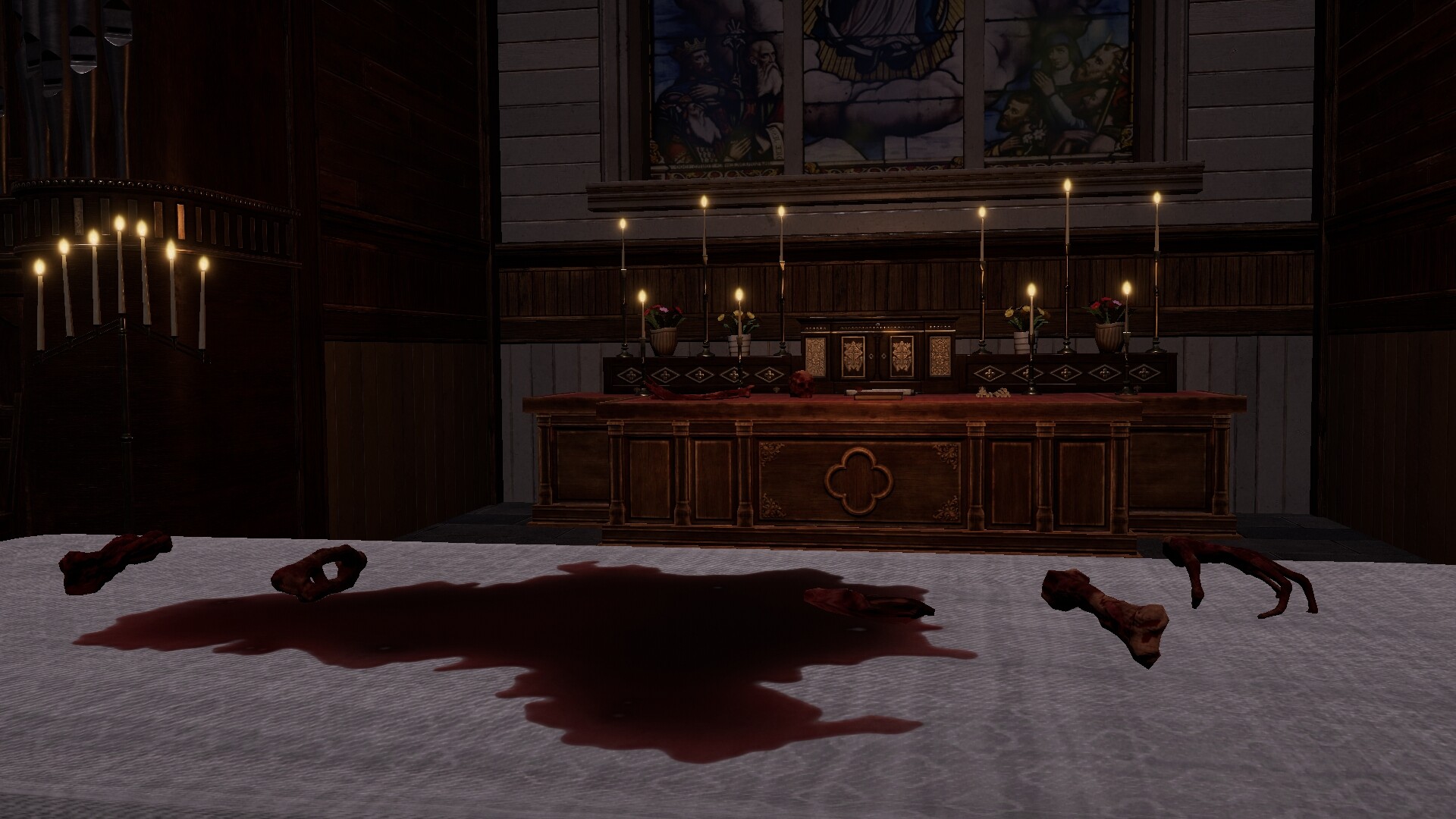
Locked-room thinking in this context means treating rooms as self-contained logic puzzles with traces you must reconcile: missing photographs, abrupt household arrangements, and encrypted fragments suggest sequences of events rather than isolated riddles. Players who enjoy linking small revelations into a coherent timeline — what this table in a study implies about a missing person, or how a transfer record changes the meaning of an unlocked safe — will find this momentum rewarding.
Player scenarios — how it will feel in play
Scenario A: The methodical investigator
You move room to room, cataloging oddities: a set of ledgers, an empty photo frame, a powered terminal that only boots after you find the breaker. Progress is puzzle-chain driven — one solved lock or decoded fragment opens the next puzzle node. Expect careful note-taking and pattern recognition rather than reflex tests.
Scenario B: The environmental reader
You pay close attention to staging — furniture placements, items left in mid-use, and atmospheric cues. The game rewards players who interpret mise-en-scène as narrative evidence and who stitch together clues across rooms to form hypotheses about what the mansion was used for.
Scenario C: The accessibility-minded player
If timed inputs or tense reflex sequences are a barrier, the Steam listing’s “Playable without Timed Input” tag indicates the experience is approachable. Custom volume and subtitle options further help players who need adjustments to focus on story and puzzles.
How it compares to other puzzle and escape-room style games
Below is a concise editorial comparison focusing on genre, atmosphere, puzzle focus, exploration, pacing, and the player profile each title tends to suit. This is an editorial discovery, not a ranking.
| Title | Genre / Tone | Puzzle focus | Exploration style | Pacing | Player fit |
|---|---|---|---|---|---|
| Trace of the Villa | Action / Adventure / Indie — mansion mystery, investigative | Clue chains, document fragments, system-based locks | Room-to-room, environmental reading; restored systems reveal new paths | Slow-burn; discovery builds momentum as secrets are revealed | Players who like narrative-driven, investigative puzzle progression |
| The Room | Adventure / Indie — intimate, tactile mystery | Mechanical safes and object puzzles with tactile interactions | Focused single-chamber puzzles; minimal open exploration | Measured and deliberate; puzzle solves feel self-contained | Players who enjoy tight, object-centric puzzle boxes |
| The Room Two | Adventure / Indie — atmospheric cryptic locations | Complex object puzzles, chained reveals across set pieces | Series of distinct, puzzle-focused locales rather than free roam | Slow to moderate; each locale unfolds its own mystery | Players who like ornate, layered mechanical puzzles |
| Escape Simulator | Adventure / Simulation / Indie — interactive escape rooms | Highly interactive object use, physics, and community-made puzzles | Modular escape rooms with both scripted and emergent interactions | Variable —
Steam pageView Trace of the Villa on Steam YouTube discoveryFor trailer and gameplay discovery, use YouTube search rather than relying on unverified embeds: Find Trace of the Villa trailer and gameplay searches on YouTube. CommentsMore posts |
Leave a Reply