
Trace of the Villa — why quiet tension and uncertainty beat cheap shocks
Trace of the Villa arrives on Steam as a slow-burn, clue-driven mystery that trusts silence and implication over loud surprises. Developed and published by Steadyturtle Co., Ltd., it places you in Jin’s shoes as he follows a lead to a decaying mansion where recovering power and scattered manifests gradually reveal a larger, carefully hidden operation.

Quick facts
| Title | Trace of the Villa |
|---|---|
| Developer / Publisher | Steadyturtle Co., Ltd. |
| Release date | 28 May, 2026 (Steam) |
| Genres | Action, Adventure, Indie |
| Steam categories | Single-player; Color Alternatives; Custom Volume Controls; Playable without Timed Input; Subtitle Options; Family Sharing |
| Steam page | View on Steam |
| Steam user reviews | No user reviews on Steam at time of writing |
Who should wishlist this
If you prefer psychological, atmospheric mystery adventures where tension is built by implication rather than constant jump scares, this is a natural fit. Trace of the Villa is aimed at players who enjoy:
- slow-burn suspense and environmental storytelling
- clue-driven exploration and narrative puzzle design
- investigative pacing—reading documents, restoring systems, and assembling timelines
- a single-player, story-rich adventure experience on PC
What the game is (and what it isn’t)
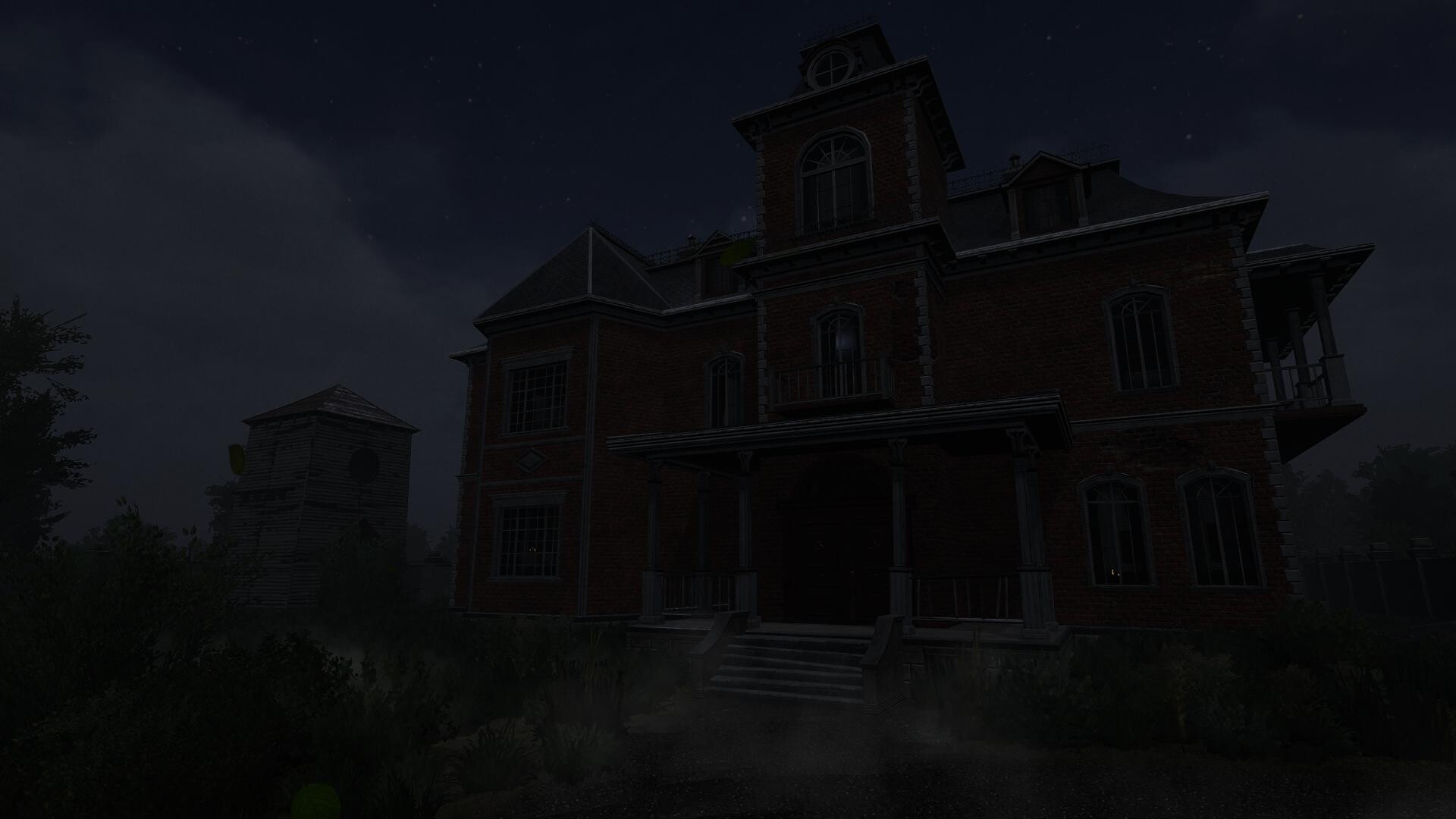
Officially described on Steam, the premise is simple and specific: Jin has spent years searching for his missing sister. A lead takes him to a remote, decaying mansion that appears deliberately forgotten. Inside, rooms feel “erased” of identity; restoring power reveals secured systems, safes, encrypted documents, and evidence of a controlled operation. The game frames investigation as the core mechanic: power restoration, puzzle solving, unlocking compartments, and piecing together financial and identity traces to understand what happened.
That emphasis—reconstruction of a timeline through physical and digital detritus—signals a pacing choice: atmospheric investigation over constant action. The Steam categories (including “Playable without Timed Input” and “Subtitle Options”) also underline an accessibility-friendly, contemplative design rather than twitch-heavy play.

When and where — Steam context
Trace of the Villa released on Steam on 28 May, 2026. It’s presented as an indie Action/Adventure title on the Steam store and is positioned for PC players who discover games through the Steam ecosystem.
Why quiet tension and uncertainty matter here
Psychological horror that relies on quiet tension asks players to fill gaps: incomplete records, absent faces, and systems that return only fragments of truth. That uncertainty amplifies dread because it activates a player’s imagination; the mansion’s “erased” personal histories make every object a possible clue and every silence an unanswered question. For players fatigued by repeated jump scares, Trace of the Villa’s approach offers a different reward: cumulative unease that comes from slow, consistent revelation.
How progression and clue reading work (from official descriptions)
The Steam description makes the systems clear: restore power and systems to bring secured areas back online; open safes and encrypted containers to recover fragments of documents and manifests; assemble financial and identity traces to map arrivals and departures. Progress is investigative and puzzle-driven: each solved lock or decoded file reveals another layer of the concealed operation, and piecing together those layers forms the narrative momentum.
Player scenarios — who this will click with
Scenario A — The patient investigator
You enjoy parsing log files, comparing fragmented timelines, and letting atmosphere do the heavy lifting. You’ll savor the mechanical loop of restoring systems and reading documents until a narrative pattern emerges.
Scenario B — The atmospheric explorer
Visual detail and environment-driven storytelling draw you in. You prefer to learn by watching a space and deducing context from props rather than from explicit exposition.
Scenario C — The puzzle-minded detective
You like puzzles that unlock narrative beats—safes, encrypted records, and environmental puzzles that directly reward story progression rather than purely mechanical challenge.
How it compares to nearby titles
Below is a concise editorial comparison based on genre, atmosphere, puzzle focus, exploration style, story tone, and pacing. These comparisons are meant to help readers decide if Trace of the Villa matches their tastes relative to well-known psychological/horror adventure experiences.
| Title | Atmosphere & Tone | Puzzle / Investigation | Exploration Style | Pacing |
|---|---|---|---|---|
| Trace of the Villa | Quiet, unsettling mansion mystery; identity erasure and administrative concealment | Document-driven puzzles, locked compartments, system restoration | Room-by-room environmental reading, focused on clues and records | Slow-burn, cumulative revelation |
| Amnesia: The Dark Descent | Claustrophobic, horror-first immersion (first-person survival) | Environmental puzzles with sanity mechanics and immediate threat management | Exploration with survival tension and more frequent scripted fear beats | Intense peaks with sustained fear cycles |
| SOMA | Existential sci-fi dread; philosophical and claustrophobic | Puzzle and narrative exploration tied to logs and audio files | Underwater facility exploration with strong story-driven sequences | Measured, narrative-led with thematic revelations |
| Layers of Fear (2016) | Psychological, hall-of-mirrors mansion horror focused on a fractured mind | Puzzle and scripted environment changes that reveal the story | Surreal mansion exploration with shifting architecture | Variable—often creeping and surreal, with crescendoing revelations |
| Poppy Playtime | Playful-turned-threatening toy-factory horror | Gadget-based puzzles (e.g., GrabPack) and escape sequences | Linear sections with puzzle chokepoints and set-piece encounters | Faster-paced, more set-piece driven than Trace of the Villa |
YouTube discovery
If you want to watch trailers or gameplay snippets before deciding, use the curated search path rather than assuming a specific official video:
YouTube discovery
For trailer and gameplay discovery, use YouTube search rather than relying on unverified embeds: Find Trace of the Villa trailer and gameplay searches on YouTube.
Leave a Reply