
Trace of the Villa — When Puzzles Act as Evidence in a Mansion Mystery
Trace of the Villa frames its investigation as a careful reading of objects and records: Jin arrives at a decaying mansion, recovers manifests and hints, and methodically restores systems that reveal layers of a concealed operation. Released on 28 May, 2026 by Steadyturtle Co., Ltd., the game positions puzzles as pieces of evidence that advance both gameplay and narrative logic.

Quick facts
| Title | Trace of the Villa |
|---|---|
| Steam AppID | 3483660 |
| Release date | 28 May, 2026 |
| Developer | Steadyturtle Co., Ltd. |
| Publisher | Steadyturtle Co., Ltd. |
| Genres | Action, Adventure, Indie |
| Categories | Single-player; Color Alternatives; Custom Volume Controls; Playable without Timed Input; Subtitle Options; Family Sharing |
| Short description | Jin has spent years searching for his missing sister, pursuing leads that took him to a remote, decaying mansion where he recovered manifests and hints that indicate his sister may still be alive, somewhere at the end of the trail he is about to follow. |
Who should wishlist it?
- Players who prefer atmospheric mystery adventures with a slow-burn, investigative tone rather than action-first thrills.
- Fans of story-rich exploration where solving puzzles reveals documents, systems, and timelines that shift your understanding of events.
- PC players who value accessibility options (color alternatives, subtitle options, no timed input) and a single-player, investigative experience.
What the game is (and how it stages evidence)
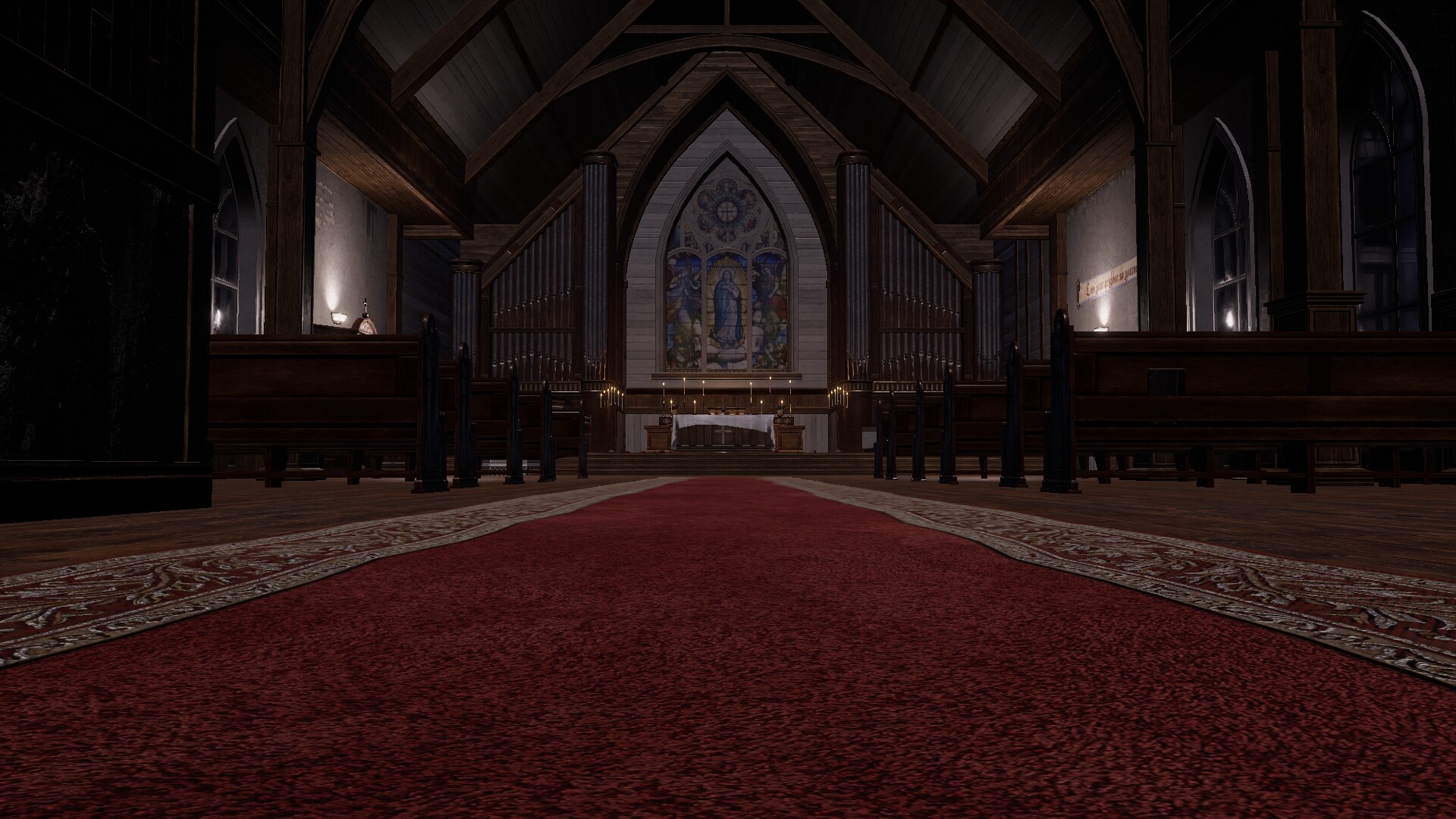
Trace of the Villa casts puzzles as pieces of a larger case file. According to the official description, Jin finds a property “cut off from the grid” whose rooms look as if occupants vanished mid-routine. When Jin restores power, “secured systems come back online,” “hidden compartments unlock,” and “safes yield fragments of encrypted documents and suspicious transfer records.” These are not abstract riddles; they are artifacts and systems that function as in-world evidence. The design intent, as presented on the Steam page, is that each solved puzzle provides a factual fragment—manifests, transfer records, encrypted documents—that the player must read and assemble into a coherent timeline.
When and where to play
Trace of the Villa launched on Steam on 28 May, 2026. It is presented on Steam as an Action/Adventure/Indie title and is available for single-player PC audiences with a range of accessibility and presentation options listed on its Steam page.
Why its theme matters: puzzles as narrative proof
Many puzzle adventures treat puzzles as abstract obstacles; Trace of the Villa, per its Steam description, uses puzzles as documentary evidence. Restoring infrastructure to the estate and decrypting files are gameplay actions that change what the player knows. That shift—from uncertainty to documented inference—repositions the player’s role from puzzle-solver to investigator assembling admissible facts. For players who enjoy environmental storytelling where objects and records carry the plot, that approach deepens immersion and keeps story beats grounded in evidence rather than exposition.
How clue reading, object logic, and story puzzles shape progression
- Clue reading: Manifests and hints recovered in the mansion are explicit story artifacts—each note or record aims to revise the timeline and suggest new leads.
- Object logic: Interaction with in-world systems (power, safes, secured compartments) ties mechanical problem solving to diegetic logic: you fix a circuit, a terminal reboots, a document becomes readable.
- Story puzzles: Rather than isolated brainteasers, puzzles are chained to narrative revelations; solving one often unlocks a new piece of evidence that reframes what came before.
Player scenarios — who will enjoy the experience
Scenario A: The Methodical Investigator
You enjoy slow, deliberate progression and the feeling of assembling a case file. You prioritize note-taking and relish when a decrypted document rearranges previously collected clues. Trace of the Villa’s evidence-first puzzles suit you.
Scenario B: The Atmospheric Explorer
You value mood and setting—rooms that feel lived-in and uncanny. If wandering a decaying mansion, poking at objects, and letting ambiance guide your curiosity appeals to you, this is aligned with that preference.
Scenario C: The Accessibility-Conscious Player
You want an investigative PC experience without harsh time pressures. Steam-listed features like “Playable without Timed Input,” subtitle options, and color alternatives make the game approachable for players who need those options.
How it compares to nearby puzzle-adventure titles
The following table is an editorial comparison on lawful criteria: genre, atmosphere, puzzle focus, exploration style, story tone, and pacing. These are editorial observations based on public descriptions.
| Title | Puzzle Focus | Atmosphere / Tone | Exploration & Pacing | Player fit |
|---|---|---|---|---|
| The Room | Single-object safe-and-mechanism puzzles, tactile puzzle boxes | Mysterious, tightly focused | Linear room-by-room puzzle progression | Players who like tactile, self-contained mechanical puzzles |
| The Room Two | Expanded mechanical puzzles with layered narrative hints | Cryptic, atmospheric | Linear but with evolving locales and puzzle complexity | Those who enjoyed the first game and want more intricate mechanisms |
| Escape Simulator | Highly interactive escape-room style puzzles, physics interactions | Varied—often playful or tense depending on room | Room-based, often short scenarios; supports co-op | Players who enjoy hands-on, physics-driven puzzles and community content |
| Unpacking | Object-placement as narrative device (non-traditional puzzles) | Zen, domestic, reflective | Low-pressure, vignette-based progression | Players who prefer gentle storytelling through objects rather than investigative mystery |
| hack_me | Hacker-sim, command and network-oriented tasks | Technical, simulation-focused | Task-driven, simulation pacing | Players interested in simulated hacking mechanics rather than environmental mystery |
YouTube discovery
If you want to see trailers or gameplay clips, search for Trace of the Villa trailers and gameplay here: YouTube search for Trace of the Villa. This link is provided as a discovery path; it does not assert any specific video as official.
Deciding checklist — should you wishlist Trace of the Villa?
- Wishlist it if you prioritize environmental storytelling where decrypted files and restored systems are the primary way the story advances.
- Consider other titles first if you want puzzle-box mechanics (The Room) or cooperative, physics-driven rooms (Escape Simulator).
- If you need accessibility features like no timed input and subtitle options, the Steam listing shows those are present.
Leave a Reply