
Trace of the Villa: why quiet tension and erased identities carry more weight than cheap shocks
Trace of the Villa trades loud surprises for slow-burn, atmospheric mystery: you play Jin, a man following fragile leads into a decaying mansion where belongings remain but names and photos do not. Released on 28 May, 2026 by Steadyturtle Co., Ltd., the game emphasizes environmental storytelling, clue-driven exploration and the unnerving sense that identities have been deliberately removed.

Quick facts
| Title | Trace of the Villa |
|---|---|
| Steam AppID | 3483660 |
| Release date | 28 May, 2026 |
| Developer / Publisher | Steadyturtle Co., Ltd. |
| Genres | Action, Adventure, Indie |
| Notable categories | Single-player; Subtitle Options; Playable without Timed Input; Color Alternatives; Custom Volume Controls; Family Sharing |
| Official premise | Jin has spent years searching for his missing sister and finds manifests and hints at a remote, decaying mansion that suggest she may still be alive. |
Who should wishlist Trace of the Villa?
- Players who prefer atmospheric mystery adventure and slow-burn suspense over jump-scare-heavy horror.
- Fans of environmental storytelling and puzzle-led investigations where context is built from found items, manifests and encrypted fragments.
- People who enjoy a story-rich adventure centered on a single protagonist and a compact location (a remote mansion) rather than sprawling, combat-heavy worlds.
- PC/Steam players who value accessibility options listed on the Steam page (subtitles, color alternatives, custom volume controls) and non-arcade pacing (playable without timed input).
What the game actually is
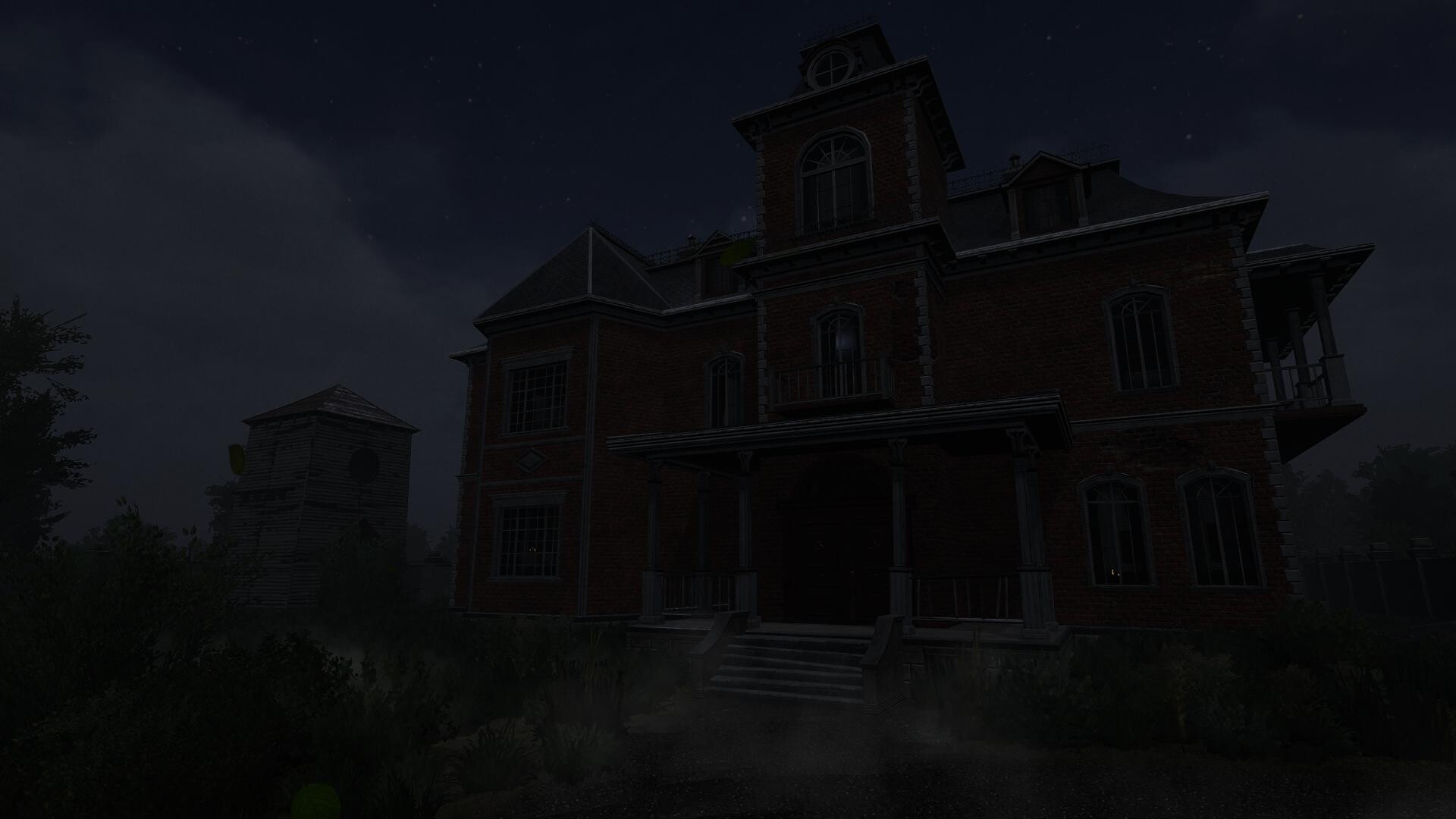
Trace of the Villa centers on Jin, whose search for a missing sister leads to “a decaying mansion, a property cut off from the grid and deliberately forgotten.” The house is furnished and lived-in in all the ways that matter—except for names, photographs and other markers of identity. As Jin restores power and unlocks systems, safes and hidden compartments, players assemble a narrative from manifests, encrypted documents and suspicious transfer records. That investigative loop—restore, read, solve, and then reveal another layer—is the game’s core.
When and where
Trace of the Villa released on Steam on 28 May, 2026. The Steam store page lists Steadyturtle Co., Ltd. as both developer and publisher; the store entry includes the game’s genres and accessibility-related categories described in the facts table above.
Why identity erasure and unexplained spaces matter more than shock claims
Psychological horror is often misunderstood as a string of shocks. Trace of the Villa prefers erasure: rooms that look lived-in but lack photographs or names, financial trails that lead nowhere, and arrivals “without records.” Those absences force a different kind of player work. You don’t simply react—you hypothesize, cross-check manifests, restore systems and watch how the mansion rearranges meaning around those small fragments.
That approach sustains tension. Rather than training the player to flinch at a sudden sound, the game creates unease through uncertainty: Who lived here? Why are traces of occupation present but intentionally anonymized? The answers (partial, fragmented, and bureaucratic) carry more psychological weight because they implicate systems and intention, not just a single monster hiding under a bed.
How progression and investigation work
- Restoring power is a gameplay and narrative fulcrum: when Jin restores power, secured systems come back online and hidden compartments begin to open.
- Puzzles reward reading and pattern recognition: decrypted fragments, suspicious transfer records and manifests are the primary clues that advance the timeline.
- Exploration is clue-driven: rooms are both set dressing and primary evidence—furniture, safes, and locked doors exist as puzzle anchors that reveal more of the concealed operation.

Player scenarios — who will get the most from this mansion mystery
- The patient investigator: you enjoy cataloguing documents, testing hypotheses against manifests and prioritizing narrative sense-making over reflexive combat.
- The atmospheric explorer: you value sound design, lighting and set dressing that quietly shift meaning as you restore systems and reveal secrets.
- The story-first player: you want a contained, character-centered mystery (Jin’s search for his sister) rather than an open-world detective sandbox.
- The accessibility-conscious player: you prefer titles that explicitly list subtitle options, custom volume controls and alternatives to color-dependent cues.
How Trace of the Villa compares to nearby titles
Below is a compact editorial comparison based on genre, atmosphere, puzzle focus, exploration style, tone and pacing. This is an editorial discovery exercise — not a claim of superiority or endorsement.
| Title | Release | Genre / Atmosphere | Puzzle / Exploration | Tone & Pacing | Player fit |
|---|---|---|---|---|---|
| Trace of the Villa | 28 May, 2026 | Action / Adventure / Indie — mansion mystery, slow-burn suspense | Clue-driven: manifests, encrypted documents, restoring power to reveal systems | Measured, investigative, tension from erasure and bureaucracy | Players who prefer atmospheric mystery adventure and narrative puzzle design |
| Amnesia: The Dark Descent | 8 Sep, 2010 | Action / Adventure / Indie — immersive, claustrophobic horror | Environmental puzzles and survival elements; immersion-focused discovery | Relentless dread, persistent vulnerability | Players who want immersion and anxiety-driven stealth/survival |
| SOMA | 21 Sep, 2015 | Action / Adventure / Indie — sci-fi existential horror (from the creators of Amnesia) | Exploration and narrative puzzles inside a confined, themed setting | Slow, philosophical, frequently unsettling | Players interested in existential questions and story-driven exploration |
| Layers of Fear (2016) | 15 Feb, 2016 | Adventure / Indie — psychological horror with shifting environments | Story-puzzle progression; the space itself changes to reveal narrative | Surreal, artistic, psychologically disorienting | Players who like narrative-driven, mutable environments and psychological tension |
Leave a Reply