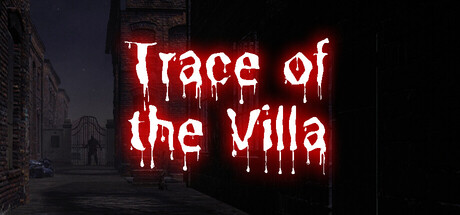
Trace of the Villa — how clue-reading and object logic let a mansion whisper its story
An atmospheric mystery adventure about a brother named Jin piecing together a vanished past, Trace of the Villa uses environmental puzzles and document fragments to disclose evidence without spelling out the plot. Its design centers on reading clues, solving object-based logic puzzles and following story puzzles that reveal the house’s operations and the traces they leave behind.

What Trace of the Villa is
Trace of the Villa (developer/publisher: Steadyturtle Co., Ltd.) is an Action / Adventure / Indie title on Steam that positions exploration and puzzle resolution as the primary means of narrative discovery. Official store text frames the premise simply: Jin has spent years searching for his missing sister and follows a lead to a remote, decaying mansion where manifests and hints suggest she may still be alive. Inside, restoring power and unlocking secured systems reveals encrypted documents, safes and hidden compartments — mechanics that explicitly tie puzzle solutions to new story evidence.


When and where
Trace of the Villa released on Steam on 28 May, 2026. It’s presented as a Steam PC title with the usual store context and discovery channels for new releases.
How the game communicates story without spoilers
The game’s official description highlights several design choices that determine how you learn: restoring power to estate systems, reactivating secured systems, and opening hidden compartments and safes that “yield fragments of encrypted documents and suspicious transfer records.” Those fragments function as evidence rather than explicit narration — each unlocked item is a piece of an archival trail you must interpret. That model keeps major plot turns off the page until players have assembled enough corroborating clues themselves.
Key puzzle approaches you should expect:
- Clue reading: manifests, encrypted document fragments and transfer records act as forensic breadcrumbs rather than one-sentence summaries.
- Object logic: manipulating objects, unlocking safes and restoring systems is used to gate narrative beats — gameplay progression reveals further evidence.
- Story puzzles: environmental arrangement and layers of access (locked doors, secured systems) create a chronology you reconstruct from artifacts and system outputs.
Accessibility and technical categories
On Steam the game’s categories include Single-player, Color Alternatives, Custom Volume Controls, Playable without Timed Input, Subtitle Options and Family Sharing — details that matter if you prefer slower, non-timed puzzle play and finer audiovisual adjustments.
Who it’s for (5W — Who)
- Players who prefer slow-burn mansion mysteries and puzzle-led evidence gathering over combat-focused action.
- Fans of environmental storytelling who enjoy assembling timelines and motivations from documents and staged spaces.
- Those who like puzzles that gate narrative rather than merely decorate it — unlocking safes or restoring systems directly yields new story fragments.
Why the theme matters (5W — Why)
The subject — a decaying, deliberately erased estate where occupants seem to have vanished mid-routine — creates a tone where absence is the central clue. That design choice places emphasis on inference and pattern recognition: you don’t only solve puzzles to open doors, you solve them to infer who moved where and why. For players who get satisfaction from assembling circumstantial evidence, that approach is the point.
How to decide if it fits you (practical signals)
Signals that Trace of the Villa will fit your tastes:
- You appreciate narrative reward tied to puzzle work: encrypted documents and manifests are unlocked as direct outcomes of problem-solving.
- You favour games that let the environment carry mood and plot — rooms “furnished as if occupants vanished mid-routine” suggests heavy environmental storytelling.
- You value accessibility options (subtitles, color alternatives, non-timed puzzles) that let you absorb clues at your own pace.
Compact facts
| Title | Trace of the Villa |
|---|---|
| Developer / Publisher | Steadyturtle Co., Ltd. |
| Release date | 28 May, 2026 |
| Genres | Action, Adventure, Indie |
| Key Steam categories | Single-player; Color Alternatives; Custom Volume Controls; Playable without Timed Input; Subtitle Options; Family Sharing |
| Steam appid / Store | 3483660 — available on Steam |
How it compares to nearby puzzle-adventure experiences
| Title | Genre / Focus | Puzzle focus | Exploration style | Story tone / pacing | Player fit |
|---|---|---|---|---|---|
| Trace of the Villa | Action / Adventure / Indie | Clue reading, object logic, safes & secured systems that yield evidence | Single-player mansion exploration with gated access | Slow-burn, forensic, atmosphere-driven | Players who want narrative revealed via puzzle-earned documents and environment |
| The Room | Adventure / Indie | Tactile, mechanical puzzles around a central safe | Contained-room, puzzle-box exploration | Mysterious, focused on enigmatic artifacts | Players who enjoy tactile puzzle boxes and intimate puzzle design |
| The Room Two | Adventure / Indie | Continuation of tactile, layered puzzle-box design | Expanded environments with interconnected puzzle stages | Mysterious and atmospheric, puzzle-led progression | Those who liked The Room and want broader locales with similar puzzle philosophy |
| Escape Simulator | Adventure / Casual / Indie / Simulation | Highly interactive escape-room mechanics; physics and item manipulation | Room-by-room escape scenarios, solo or co-op | Faster-paced puzzle rooms, often lighter tone | Players who enjoy object interaction, community rooms and variable pacing |
| Unpacking | Casual / Indie / Simulation | Item placement, spatial puzzles conveying life details | Domestic, non-linear vignette exploration | Zen, quiet, emotionally suggestive | Players who prefer low-pressure, story-by-environment through objects |
Specific player scenarios
Scenario A — You like detective work but dislike timed sequences: Trace of the Villa’s “Playable without Timed Input” tag and document-based evidence gathering lets you methodically reconstruct events without pressure.
Scenario B — You enjoy mechanical puzzle boxes and dense object interaction: if your preference is for small-scale, tactile puzzles (The Room series), Trace of the Villa shifts that energy into a larger environmental mystery where object logic opens narrative doors rather than serving only as standalone curiosities.
Scenario C — You want story implied by setting (not explicit cutscenes): the game’s furnished rooms and missing-identities conceit reward players who read items and manifests as testimony rather than relying on expository text.
YouTube discovery
If you want to see trailers or gameplay snippets, search YouTube for Trace of the Villa using this query path (results may include trailers and player videos; not all results are verified as official): https://www.youtube.com/results?
Leave a Reply