
Trace of the Villa — an escape-room mystery built on power, locks, and piecing together evidence
Trace of the Villa drops you into Jin’s decades-long search for his missing sister inside a remote, decaying mansion where every restored circuit, opened door, and decrypted fragment pushes the mystery forward. The developer Steadyturtle Co., Ltd. frames progression as a steady chain of environmental reveals: restore power, bring systems back online, unlock spaces, and reconstruct evidence that hints someone passed through this estate under strict control.

Quick facts
| Title | Trace of the Villa |
|---|---|
| Steam AppID | 3483660 |
| Developer | Steadyturtle Co., Ltd. |
| Publisher | Steadyturtle Co., Ltd. |
| Release date | 28 May, 2026 |
| Genres | Action, Adventure, Indie |
| Categories | Single-player; Color Alternatives; Custom Volume Controls; Playable without Timed Input; Subtitle Options; Family Sharing |
Who this is for
If you prefer atmospheric mystery adventure and slow-burn, story-rich investigation over twitch action, this will appeal. Players who like environmental storytelling, locked-room thinking and clue chains — readers of scenes, gadgets, and documents rather than rapidly changing combat arenas — should wishlist it on Steam.
What the game is
Trace of the Villa centers on Jin, a protagonist whose long search for a missing sister leads him to a cut-off mansion that feels “less abandoned than erased.” The official Steam description frames the experience around restoring the estate’s systems: when Jin restores power, secured systems come back online, hidden compartments unlock and safes yield encrypted documents and suspicious transfer records. Those fragments stitch together a picture of falsified identities, financial trails that lead nowhere, and people moved through the property under strict control.
When and where
The game launched on Steam on 28 May, 2026. It’s listed for PC through Steam and carries the standard single-player and accessibility category options shown on its Steam page.
Why the theme matters
Restoring power as a central loop turns exploration into a procedural discovery engine: each electrical reset is both a mechanical reward (lights, systems, locks) and a narrative one (new documents, new systems to interrogate). That coupling of environmental mechanics and evidence reconstruction makes the mansion itself feel like an investigative partner — rooms don’t simply open, they speak through returned systems and found records.
How progression works — locked-room thinking and clue chains
The Steam description lays out a clear flow you’ll be following in-play: find power or reroute circuits, bring dormant systems online, then follow what those systems reveal. That turns conventional puzzle progression into a chain of cause-and-effect: a switch re-energizes surveillance or safes; an unlocked cabinet yields a document that decodes another lock; decrypted manifests point to places in the estate you couldn’t access before. Expect slow, deliberate puzzle pacing where reading the environment and cross-referencing fragments of evidence matter as much as solving a single lock.

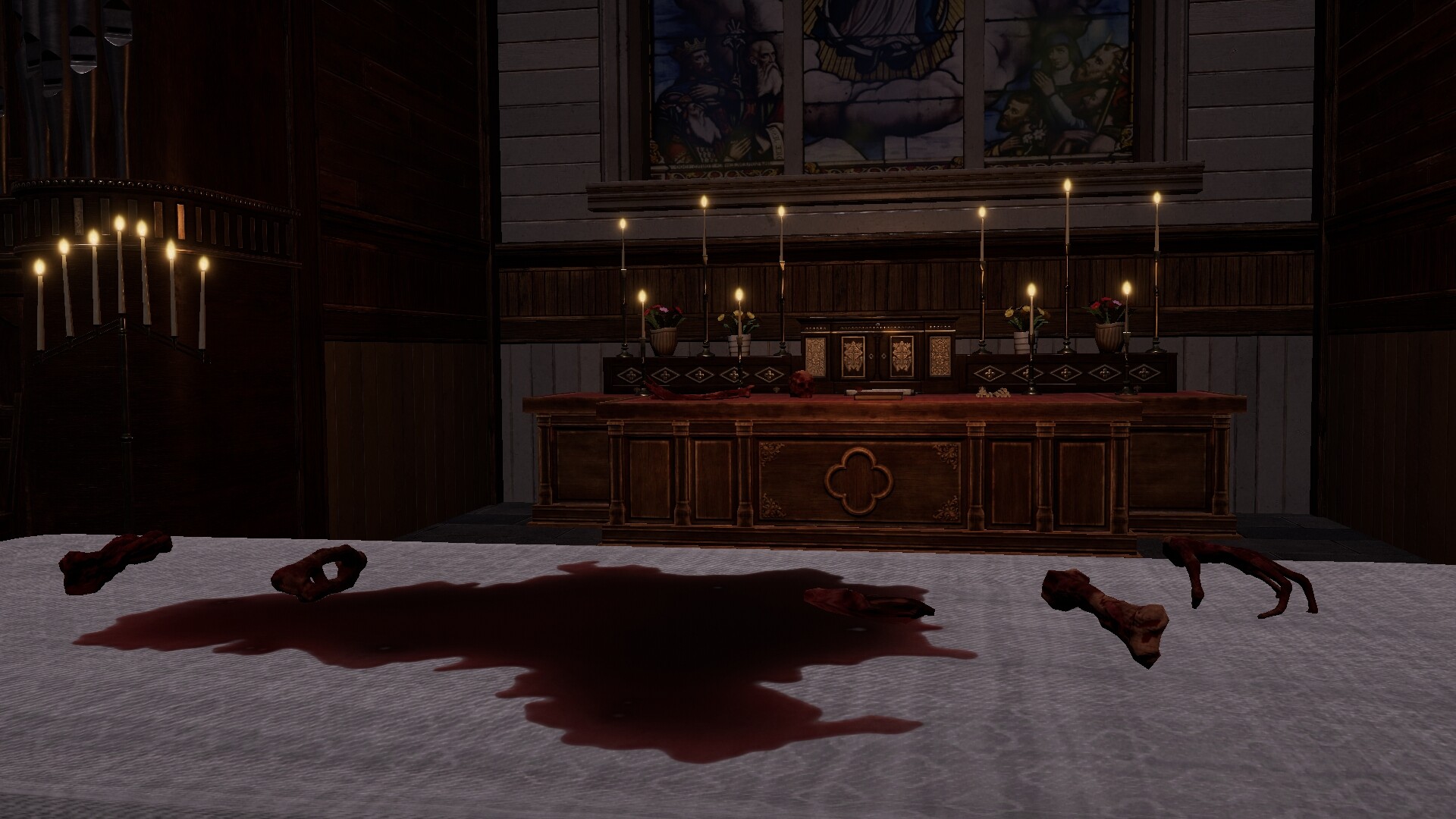
Player scenarios — how different players will experience the loop
The methodical detective
You’ll treat each restored circuit like a new lead: catalog logs, photograph documents, and map out which rooms suddenly offer new access. If you enjoy tracing timelines from scraps of evidence, this playstyle fits best.
The environmental reader
You’ll focus on furnishings, missing names, and staged routines the mansion suggests. The tension comes from atmosphere and implication — empty cups, paused radios, and secured doors that hint why identities were erased.
The puzzle-first player
Expect locked safes and encrypted fragments to present standalone puzzles that also feed the larger narrative. For players who prefer clear puzzle reward loops, the restore-unlock-decode cycle provides repeatable satisfaction.
How Trace of the Villa compares to nearby puzzle/mystery titles
Below is a compact editorial comparison focused on genre, atmosphere, puzzle focus, exploration style, story tone, and pacing to help you decide whether this mansion mystery suits you.
| Title | Genre / Focus | Atmosphere & Story Tone | Puzzle & Exploration Style | Pacing |
|---|---|---|---|---|
| Trace of the Villa | Action / Adventure / Indie — mystery-driven investigation | Slow-burn, decaying mansion; erasure of identities | Power-restoration loops, locked safes, encrypted documents, environmental reading | Deliberate, narrative-led reveal |
| The Room / The Room Two | Adventure / Indie — tactile puzzle boxes | Mysterious, intimate, mechanical occult undertones | Focused object puzzles and mechanical contraptions; close-up puzzle solving | Measured, puzzle-centric chapters |
| Escape Simulator | Adventure / Simulation / Indie — interactive escape rooms | Varied tone depending on room; playful to tense | Highly interactive scene exploration; physics, item combination, room-scale puzzles; co-op option | Variable — room-based bursts of activity |
Editorial note: these comparisons are intended to show differences in design emphasis — Trace of the Villa uses estate-wide systems and evidence chains, while The Room series emphasizes single-object mechanical puzzles and Escape Simulator emphasizes interactive room-scale problem solving.
YouTube discovery
If you want visual trailers or gameplay clips, search YouTube using this discovery path (results may include trailer and gameplay videos): Search Trace of the Villa on YouTube.
Steam link and wishlist
Check the Steam store page and wishlist Trace of the Villa here: Trace of the Villa on Steam
Disclaimer
Referenced titles and trademarks belong to their respective owners. Comparisons are editorial discovery only and not endorsements or claims of affiliation.
Leave a Reply