
Trace of the Villa: a locked‑room, clue‑chain mystery built around power, access, and evidence
Trace of the Villa casts you as Jin, a man whose years-long search for his missing sister brings him to a remote, decaying mansion where power restoration literally turns the investigation back on. The game stages a focused loop of restoring systems, unlocking spaces and reconstructing fragmented records so the environment itself becomes the detective’s primary witness.


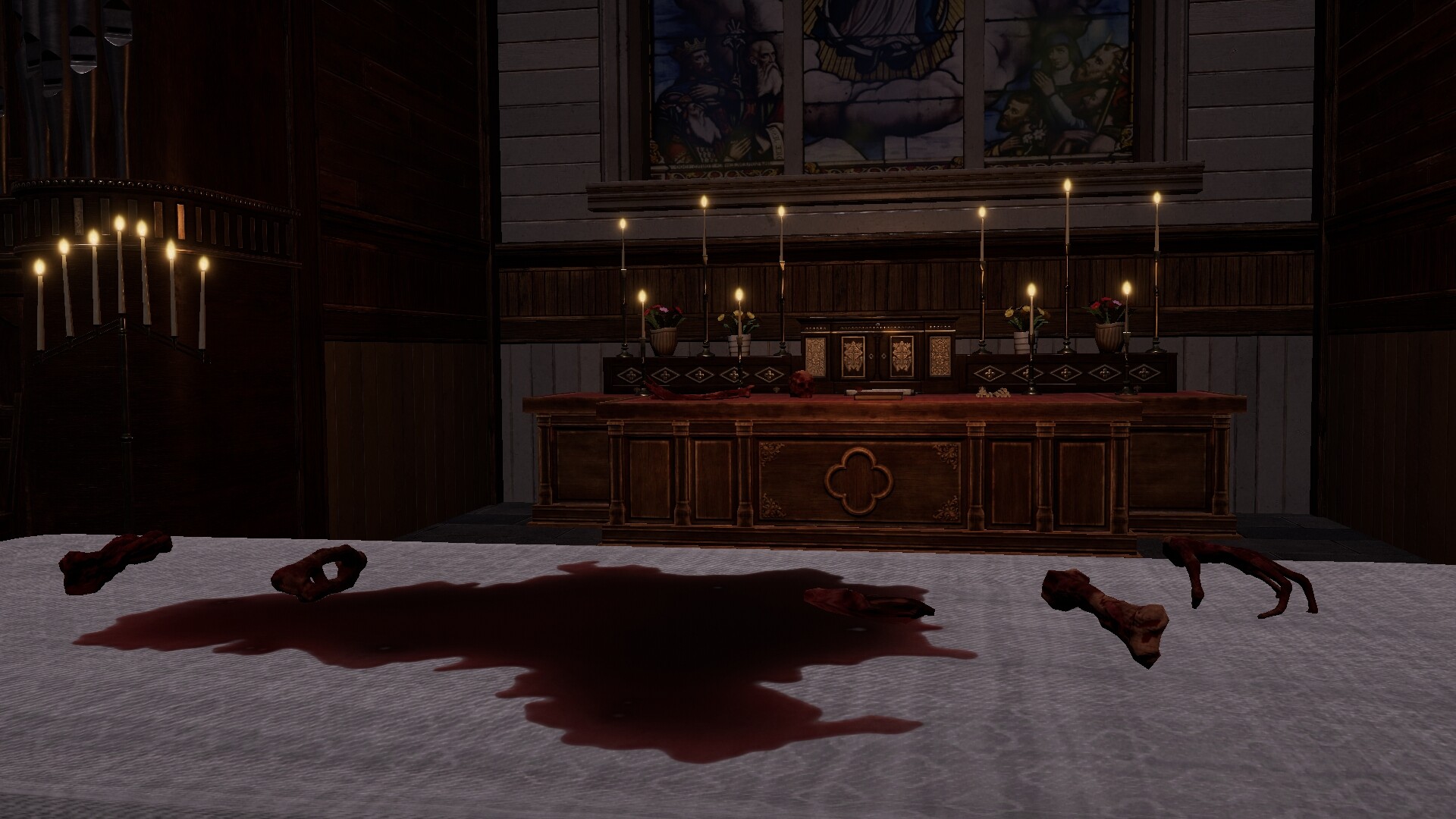
Quick facts
| Title | Trace of the Villa |
|---|---|
| Release date | 28 May, 2026 |
| Developer / Publisher | Steadyturtle Co., Ltd. |
| Genres | Action, Adventure, Indie |
| Steam categories | Single‑player, Color Alternatives, Custom Volume Controls, Playable without Timed Input, Subtitle Options, Family Sharing |
| Steam page | Trace of the Villa on Steam |
Who is this for?
- Players who prefer atmospheric mystery adventure and story‑rich investigation over reflex‑heavy challenge.
- Fans of locked‑room thinking and chained clues — people who enjoy reading an environment as cumulative evidence.
- Those who value pacing that rewards careful inspection: slow‑burn suspense rather than constant action setpieces.
- Single‑player PC players who want accessibility options (subtitles, custom volume, color alternatives) built into the Steam release.
What the game is
Trace of the Villa follows Jin, who discovers manifests and hints in a cut‑off mansion suggesting his sister may still be alive. The mansion’s preserved rooms, locked doors and erased identities set up a psychologically unsettling investigation: restoring power is both a mechanical and narrative trigger that reactivates systems, reveals hidden compartments and surfaces encrypted records. The result is an environmental puzzle loop where nothing is merely decoration — evidence and access are the primary rewards.
When and where
Trace of the Villa released on 28 May, 2026 and is available on Steam for PC. The Steam listing identifies Steadyturtle Co., Ltd. as both developer and publisher and classifies the game as Action, Adventure, Indie with the Steam categories listed in the facts table.
Why the theme matters
Using a power restoration loop to gate progress foregrounds the investigative themes: you don’t just open a drawer, you bring a house back to life and watch what it discloses. That structure turns the game into a series of deliberate reveals — secured systems coming online, safes yielding fragments, and falsified paperwork that must be assembled into a coherent trail. For players who enjoy environmental storytelling and detective work, this approach makes each recovered clue feel consequential rather than decorative.
How you read clues and progress
The Steam description lays out the central mechanics: as Jin restores power, secured systems return, hidden compartments unlock and safes yield fragments of encrypted documents and suspicious transfer records. Progress is built around sequence and context: a restored light or terminal can make a previously invisible code legible; a newly powered lock mechanism lets you access a next‑stage room; and small records combine into a chronology that rewrites the mansion’s apparent erasure. The game emphasizes chained puzzles and layered evidence rather than isolated riddles.
How Trace of the Villa fits among nearby mystery and escape titles
| Title | Primary genre | Atmosphere / tone | Puzzle focus | Exploration style / pacing | Player fit |
|---|---|---|---|---|---|
| The Room | Adventure / Indie | Mysterious, tactile puzzlebox (attic, safe) | Physics‑and‑mechanism based puzzleboxes | Isolated, chambered puzzles; tight, focused sessions | Players who like close‑up, tactile lock puzzles |
| The Room Two | Adventure / Indie | Cryptic, atmospheric (long‑forgotten crypt) | Layered puzzle sequences tied to atmosphere | Slow, cinematic puzzle progression | Players who enjoy slow reveals and mood |
| Escape Simulator | Adventure / Simulation / Indie | Playful, highly interactive escape rooms | Inventory and physics‑driven interactions; sandbox tools | Room‑by‑room, often faster paced; community levels | Players who want interactive object play and co‑op |
| Hi‑Fi RUSH | Action | Energetic, music‑sync combat and bright tone | Combat and rhythm systems rather than puzzle solving | Fast, arcade pacing | Players seeking action and rhythm rather than detective work |
Editorial takeaway: Trace of the Villa sits closer to The Room series in its reliance on environmental detail and chained discovery, but it frames those elements inside a mansion mystery with a narrative thread (Jin’s search) and an explicit mechanical loop — restoring power to reveal more than the light itself.
Player scenarios — who should wishlist this
- If you enjoy reconstructing a timeline from scattered documents and intermittent systems, wishlist this: the game rewards assembling fragments and reading context.
- If you prefer tactile lock puzzles and short, self‑contained puzzles, you may find it slower than The Room’s micro‑puzzle rhythm, but richer on narrative chain building.
- If cooperative or workshop content is essential to your play, note this is a single‑player Steam release with accessibility options listed on the store page.
- If you like a slow‑burn, atmospheric mansion mystery — where unlocking a room has narrative weight — this is designed around that experience.
YouTube discovery
Look for trailers and gameplay footage via YouTube search:
YouTube discovery
For trailer and gameplay discovery, use YouTube search rather than relying on unverified embeds: Find Trace of the Villa trailer and gameplay searches on YouTube.
Leave a Reply