
Trace of the Villa — an escape-room style mystery built around power, locks, and evidence
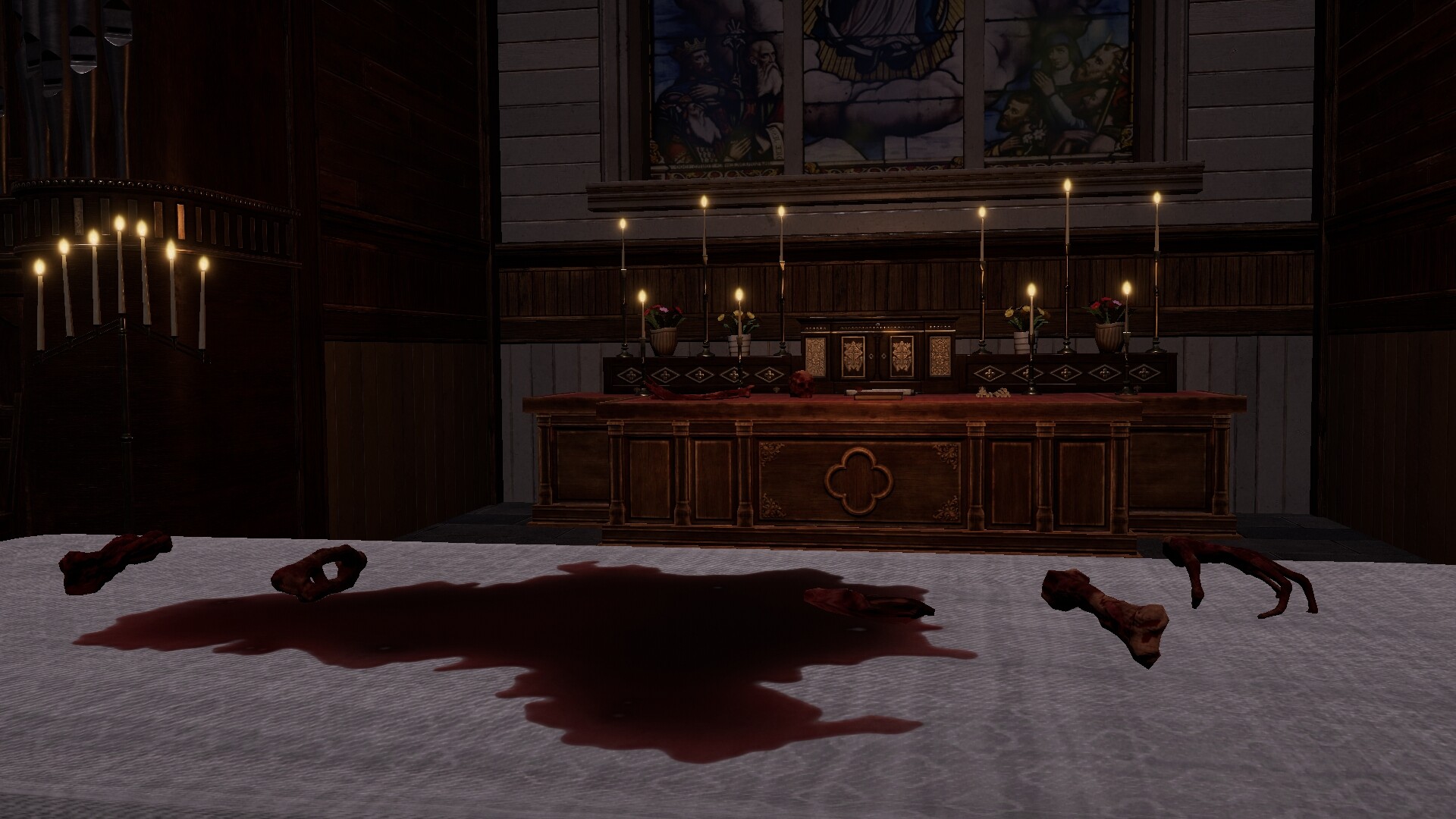
Trace of the Villa puts you in Jin’s shoes as he follows faint manifests and hints through a remote, decaying mansion in search of his missing sister. Released 28 May, 2026 by Steadyturtle Co., Ltd., the Steam listing frames the experience as an atmospheric mystery adventure where restoring power, unlocking sealed spaces, and reconstructing fragments of evidence drive the play loop.

Who, what, when, where: quick facts
| Title | Trace of the Villa |
|---|---|
| Steam AppID | 3483660 |
| Release date | 28 May, 2026 |
| Developer | Steadyturtle Co., Ltd. |
| Publisher | Steadyturtle Co., Ltd. |
| Genres | Action, Adventure, Indie |
| Categories | Single-player; Color Alternatives; Custom Volume Controls; Playable without Timed Input; Subtitle Options; Family Sharing |
What the game is — atmosphere, premise, and the editorial angle
Trace of the Villa is presented on Steam as a story-rich, slow-burn mystery adventure. The protagonist, Jin, has been searching for his missing sister for years; a lead brings him to a property “cut off from the grid and deliberately forgotten.” Rooms look as if their occupants vanished mid-routine, and the developers signal a psychological, investigative tone rather than overt action horror.
The Steam description emphasizes a particular gameplay rhythm: when Jin restores power, systems come back online, locked compartments open, and safes reveal fragments of encrypted documents and suspicious transfer records — small evidence pieces that link into larger chains. That loop—restore power, open space, recover trace evidence—organizes both puzzle pacing and narrative discovery.
How you progress: locked-room thinking, clue chains, and environmental reading
Progress in Trace of the Villa, per the official description, hinges on reactivating estate systems and letting the mansion reveal itself. Restoring power is not just illumination: it re-enables secured systems, unlocks hidden compartments, and yields fragments of records. Those fragments act like clues in a chain: a suspicious transfer here, a falsified identity there — each item is a node you must link to reconstruct a timeline.
This design rewards environmental reading. The mansion’s staged rooms, missing photographs, and unlabelled belongings are deliberately suggestive: clues are embedded in décor, in the state of furnishings, and in the outputs of reactivated mechanisms. Players who enjoy methodical inspection, assembling partial documents into a coherent narrative, and solving multi-step puzzles that unlock new areas will find that the gameplay loop amplifies investigative satisfaction.

Who should wishlist this on Steam?
- Players who prefer atmospheric mystery adventure and environmental storytelling over combat-driven pacing.
- Fans of clue-driven exploration who like assembling partial documents and following financial or identity trails.
- Those who appreciate a slow-burn, psychologically tinged investigation set in a single, sprawling location (a decaying mansion).
Trace of the Villa lists categories such as Single-player and Playable without Timed Input, which suggests a patient, deliberate investigation rather than reflex-heavy challenges.
How it compares — concise editorial table
| Title | Release date | Genre(s) | Puzzle focus | Exploration style | Story tone / pacing | Best for |
|---|---|---|---|---|---|---|
| Trace of the Villa | 28 May, 2026 | Action, Adventure, Indie | Restoring systems, unlocking spaces, reconstructing evidence | Single mansion, environmental reading | Slow-burn, investigative | Players who want narrative puzzle chains and methodical exploration |
| The Room | 28 Jul, 2014 | Adventure, Indie | Mechanical puzzle boxes and tactile puzzles | Isolated, single-room puzzle | Atmospheric, focused | Fans of tightly-contained, tactile puzzle design |
| The Room Two | 5 Jul, 2016 | Adventure, Indie | Sequential mechanical puzzles across connected chambers | Crypt-like halls and layered rooms | Atmospheric, deliberate | Players who enjoyed the first game but want broader environments |
| Escape Simulator | 19 Oct, 2021 | Adventure, Casual, Indie, Simulation | Highly interactive object manipulation, physics and community rooms | Modular rooms, variable scenarios, solo or co-op | Variable pacing depending on room | Players who like interactive objects, multiplayer or user-made content |
| Hi‑Fi RUSH | 25 Jan, 2023 | Action | Not puzzle-focused — rhythm/action gameplay | Linear, action-oriented levels | Fast-paced, music-driven | Players seeking action and rhythm rather than investigation |
Player scenarios — concrete examples
Scenario A — You like methodical investigation
If you enjoy reading notes, cataloguing documents, and following faint financial or identity threads until they form a narrative, Trace of the Villa’s described loop (power → unlock → evidence) aligns with that habit. The Steam description specifically calls out manifests, encrypted document fragments, and suspicious transfer records as core outputs of investigation.
Scenario B — You prefer tactile puzzle-box design
If your taste leans toward single-room, mechanical puzzles where the solution is a physical chain of interactions (as in The Room), you’ll find partial overlap in the locked-and-unlock rhythm here, but Trace of the
Steam page
View Trace of the Villa on Steam
YouTube discovery
For trailer and gameplay discovery, use YouTube search rather than relying on unverified embeds: Find Trace of the Villa trailer and gameplay searches on YouTube.
Leave a Reply