
Trace of the Villa — where locked-room thinking meets slow-burn clue chains
An atmospheric mystery adventure built around an eroding mansion and a personal search, Trace of the Villa asks you to read rooms as evidence and follow chained puzzles toward a troubling truth. The game frames its investigation through Jin’s hunt for a missing sister, giving environmental storytelling a forensic rhythm: find an object, interpret it, unlock the next locked secret.

Quick facts
| Title | Trace of the Villa |
|---|---|
| Steam AppID | 3483660 |
| Release date | 28 May, 2026 |
| Developer | Steadyturtle Co., Ltd. |
| Publisher | Steadyturtle Co., Ltd. |
| Genres | Action, Adventure, Indie |
| Key categories | Single-player; Color Alternatives; Custom Volume Controls; Playable without Timed Input; Subtitle Options; Family Sharing |
| Premise (short) | Jin follows leads to a remote, decaying mansion where recovered manifests and hints indicate his sister may still be alive somewhere at the end of the trail. |
Who should wishlist Trace of the Villa?
- Players who prefer puzzle-driven exploration and environmental storytelling over combat-forward action. The premise centers on investigation and reading the scene.
- Fans of slow-burn, atmospheric mystery adventures that use objects and room states as narrative clues.
- Those who appreciate accessibility options (subtitle options, custom volume controls, color alternatives, and playability without timed input).
What the game is
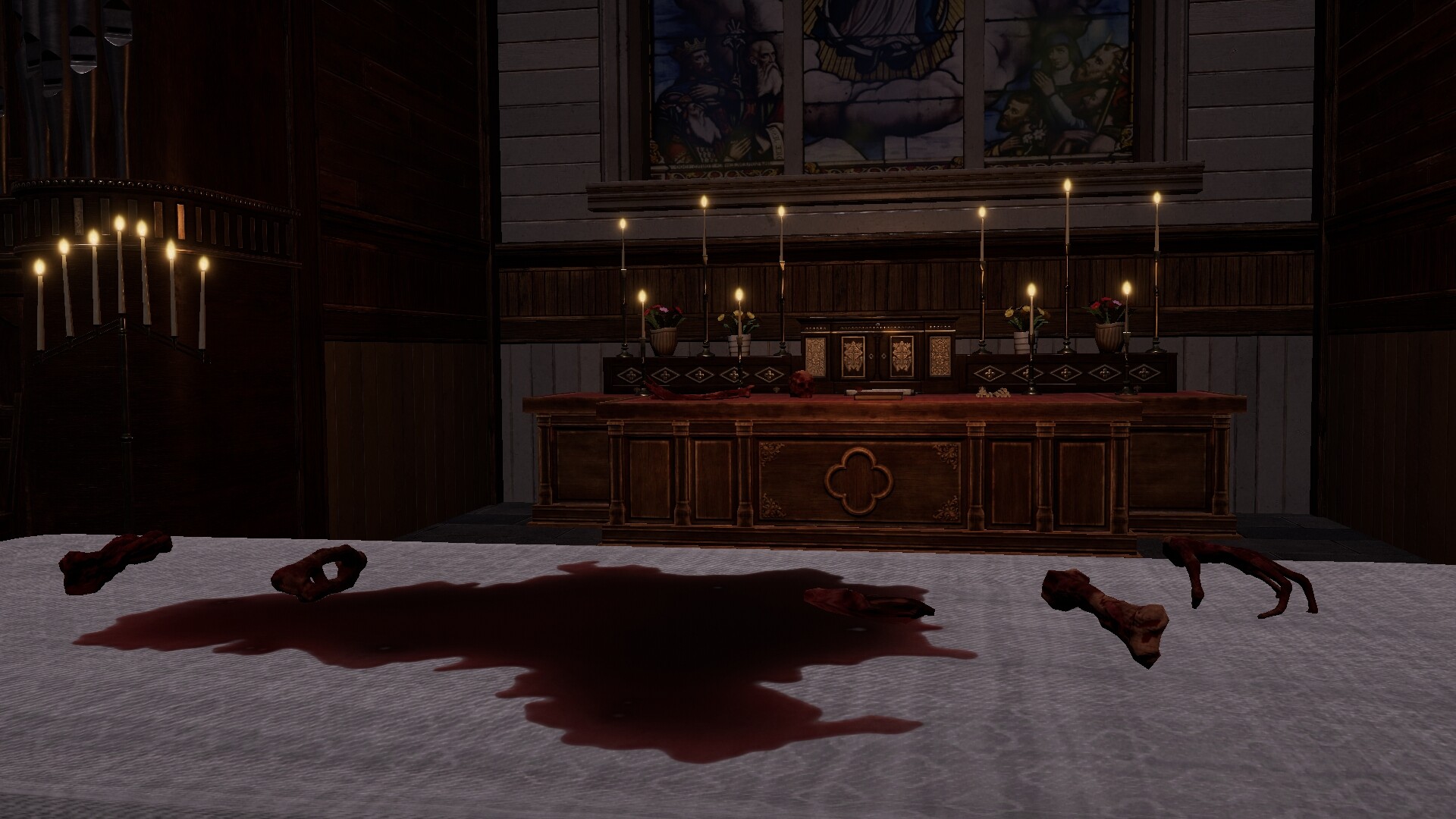
Trace of the Villa is presented as an atmospheric, story-rich adventure that positions the player as Jin, searching a remote mansion for evidence about his missing sister. The official descriptions emphasize a property “cut off from the grid” and rooms that feel “erased” rather than simply abandoned—a setup that naturally privileges locked-room logic and sequential clue reading. As power is restored, secured systems and hidden compartments reveal fragments of encrypted documents and transfer records, each solved item opening the next layer of the mystery.
When and where
Trace of the Villa launched on Steam on 28 May, 2026. It is a PC-focused Steam release listed under Action, Adventure, and Indie, and it supports single-player play with multiple accessibility and display categories noted on its Steam page.
Why the mansion premise matters (for puzzle and narrative design)
Mansion mysteries work well for locked-room thinking because rooms create natural boundaries for clue chains. Trace of the Villa’s premise—furniture left mid-routine, hidden files behind secured systems, and falsified identities—gives designers clear mechanical justification to chain puzzles: an unlocked cabinet yields a manifest; a manifest points to a system password; a password restores power to a wing with new physical clues. That rhythm is what players who enjoy methodical problem-solving and environmental reading want: each solved object should feel like evidence, not just a gate to the next locked door.
How you progress: object clues, chained puzzles, and environmental reading
Based on the official descriptions, progression in Trace of the Villa leans on three converging systems:
- Object examination — personal belongings and secured items act as immediate clues.
- System restoration — restoring power and secured systems reveals new compartments and encrypted fragments that must be interpreted.
- Document fragments and manifests — partial records and suspicious transfers form a breadcrumb trail that links rooms and characters together.
The gameplay loop described by the publisher implies a deliberate pace: inspect, hypothesize, unlock, and follow the evidence to the next locked locus. That model favors players who enjoy careful note-taking and persistent pattern recognition over twitch reflexes.

Player scenarios — who gets the most out of Trace of the Villa
- The methodical investigator: You like to pause and catalogue every clue, cross-referencing notes and documents. You’ll appreciate the manifest-and-fragment structure the game promises.
- The atmospheric explorer: You prioritize mood and story tone—rooms that look lived-in but erased, and a slow unspooling of context appeal to you more than fast action.
- The narrative-minded puzzler: You want puzzles that reward interpretation as much as mechanical dexterity; chaining documents to locations and systems to items is your preferred puzzle texture.
How it compares — nearby mystery and puzzle titles
Below is a compact editorial comparison on lawful criteria: genre, atmosphere, puzzle focus, exploration style, story tone, and pacing. This is intended to help readers decide whether Trace of the Villa matches their tastes.
| Title | Genre | Atmosphere | Puzzle focus | Exploration style | Typical pacing / player fit |
|---|---|---|---|---|---|
| Trace of the Villa | Action / Adventure / Indie | Mansion mystery, slow-burn suspense | Object and document-driven chained puzzles; system restoration | Room-by-room evidence reading | Methodical, narrative-first investigators |
| The Room | Adventure / Indie | Locked-room, tactile mechanical focus | Intricate mechanical puzzles centered on a single object | Contained, puzzle-box exploration | Players who enjoy tactile, compact puzzle challenges |
| The Room Two | Adventure / Indie | Cryptic, atmospheric sequel tone | Sequential puzzle-boxes with layered mechanical design | Contained to evolving puzzle environments | Those who liked the first and want expanded mechanical complexity |
| Escape Simulator | Adventure / Casual / Indie / Simulation | Bright, physics-driven, cooperative-friendly | Highly interactive objects, physics and community-made rooms | Room-scale, sandbox-like interaction | Players who like hands-on manipulation and co-op puzzle play |
| Hi-Fi RUSH | Action | Stylized, music-synced action world | Combat and rhythm-first systems, not object puzzles | Linear action stages with set-piece exploration | Players seeking fast-paced action and rhythmic combat |
Practical considerations
- Accessibility options listed on the Steam page (subtitle options, color alternatives, custom volume controls) suggest attention to player comfort.
- The game is single-player focused, so expect a primarily solitary investigation experience rather than cooperative puzzle design.
- If you like puzzle momentum that builds by connecting documents, systems, and room states, Trace of the Villa’s premise aligns with that design philosophy.
YouTube discovery
If you want to see trailers or gameplay clips, search YouTube using this query: Trace of the Villa trailer & gameplay. This link points to public search results for trailers and player content; it does not assert the presence of a verified official video in those results.
View Trace of the Villa on Steam
Referenced titles and trademarks belong to their respective owners. Comparisons above are editorial discovery, not endorsements or claims of affiliation.
Leave a Reply