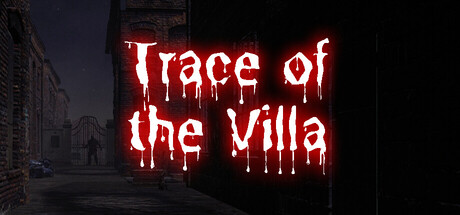
Trace of the Villa — how clue-reading, object logic, and story puzzles shape the mansion mystery
Trace of the Villa frames a slow-burn, atmospheric mystery around a decaying, deliberately erased mansion and a protagonist searching for his missing sister. The game asks players to read manifests, restore systems, and follow fragmentary leads to piece together a buried operation and possibly a way forward.
Who this is for
Players who prefer narrative puzzle adventures that emphasize environmental storytelling over twitch reactions will find Trace of the Villa appealing. If you enjoy methodical clue-reading, unhurried exploration, and puzzles that connect to a broader psychological or financial mystery rather than standalone contraptions, this is aimed at you.
What the game is
Trace of the Villa is an Action/Adventure/Indie title from Steadyturtle Co., Ltd., released on Steam on 28 May, 2026. The official short description lays out the premise: Jin has spent years searching for his missing sister, and a lead brings him to a remote mansion where recovered manifests and hints suggest she may still be alive at the end of the trail.



When and where — Steam / PC context
Trace of the Villa released on Steam on 28 May, 2026 and is listed under Action, Adventure, Indie. Steam page metadata shows it as a single-player experience with accessibility options such as Color Alternatives, Custom Volume Controls, Playable without Timed Input, and Subtitle Options. As of the available Steam summary data, there are no user reviews posted for the title yet.
Why the theme matters
The official description frames the mansion as a place where identities were removed and records erased — not simply an empty house but an environment that reads like a crime scene. That theme matters because it makes every recovered object and manifest a narrative breadcrumb. Restoring power and access turns environmental detail into active information: secured systems coming online, safes yielding encrypted fragments, and financial trails that refuse easy interpretation all feed into a larger thematic feeling of institutional obfuscation and disappearance.
How clue-reading, object logic, and story puzzles work together
From the description provided by the developer, Trace of the Villa structures progress around a chain of discovery rather than isolated puzzle-box mechanics. Players recover manifests and hints, restore estate systems, and open compartments and safes that deliver fragments of documents and transfer records. In practical terms this means:
- Clue-reading: text-based artifacts (manifests, encrypted documents, transfer records) are the primary sources of narrative information. Players must read and correlate entries to form timelines and hypotheses.
- Object logic: the mansion’s furnishings and locked hardware function as the game’s interaction vocabulary — restoring power or unlocking a cabinet doesn’t only grant an item, it reveals contextual evidence that reframes previous clues.
- Story puzzles: rather than stand-alone riddles, puzzles act as gateways to new story fragments. Solving one reveals systems and documents that change your interpretation of earlier discoveries.
Expect a detective-style loop: examine environment → recover text/object → infer a lead → restore or unlock a new area → gather more evidence. That loop is central to the pacing and satisfaction Trace of the Villa promises in its official materials.
Compact facts — Trace of the Villa
| Title | Trace of the Villa |
|---|---|
| Steam AppID | 3483660 |
| Release date | 28 May, 2026 |
| Developer | Steadyturtle Co., Ltd. |
| Publisher | Steadyturtle Co., Ltd. |
| Genres | Action, Adventure, Indie |
| Categories / Features | Single-player; Color Alternatives; Custom Volume Controls; Playable without Timed Input; Subtitle Options; Family Sharing |
| Official short description | Jin has spent years searching for his missing sister, pursuing leads that took him to a remote, decaying mansion where he recovered manifests and hints that indicate his sister may still be alive. |
| Steam user reviews (public summary) | No user reviews (0) |
How it compares — quick editorial table
| Title | Genre / Focus | Atmosphere | Exploration & Puzzle Style | Player fit |
|---|---|---|---|---|
| The Room | Adventure / Indie — tactile puzzle-box | Claustrophobic, mechanical mystery | Single-location, object-manipulation, tactile mechanical puzzles | Players who love precise puzzle mechanics and tactile contraptions |
| The Room Two | Adventure / Indie — extended puzzle-box | Cryptic, atmospheric, escalating curiosity | Sequential puzzle chambers with layered mechanical logic | Those wanting more of the same focused, handcrafted puzzle rooms |
| Escape Simulator | Adventure / Simulation — interactive escape rooms | Playful to tense, depends on room | Highly interactive, physics-driven puzzles; sandbox manipulation | Players who want tactile interactivity, co-op options, and community rooms |
| Unpacking | Casual / Indie — object-storytelling | Zen, reflective, domestic | Non-cryptic item-placement that communicates life-story via objects | Players who prefer quiet storytelling through everyday objects over cryptic puzzles |
Player scenarios — decide if it fits you
- You like slow-burn mansion mysteries: Trace of the Villa’s erased identities and gradual system restoration will reward patience and note-taking.
- You prefer puzzle-box mechanics: If you want hands-on mechanical puzzles like those
Steam page
View Trace of the Villa on Steam
YouTube discovery
For trailer and gameplay discovery, use YouTube search rather than relying on unverified embeds: Find Trace of the Villa trailer and gameplay searches on YouTube.
Leave a Reply