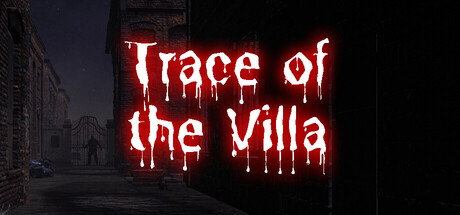
Trace of the Villa — When puzzles become evidence
Trace of the Villa is an atmospheric mystery adventure about Jin, a man tracking leads to a remote, decaying mansion after years searching for his missing sister. The game frames puzzles as fragments of a disappearing life: encrypted manifests, sealed safes, and household objects that act like testimony, each solved clue narrowing the timeline of what happened in the house.

Quick facts
| Title | Trace of the Villa |
|---|---|
| Steam AppID | 3483660 |
| Release date | 28 May, 2026 |
| Developer | Steadyturtle Co., Ltd. |
| Publisher | Steadyturtle Co., Ltd. |
| Genres | Action, Adventure, Indie |
| Categories / Features | Single-player; Color Alternatives; Custom Volume Controls; Playable without Timed Input; Subtitle Options; Family Sharing |
| Steam page | Trace of the Villa on Steam |
Who should wishlist this
Trace of the Villa targets players who prefer puzzle-driven, story-rich adventure over reflex tests. If you enjoy slow-burn suspense, environmental storytelling where objects and documents carry plot weight, or puzzle solutions that reinterpret a scene rather than unlock combat, this is aimed at you. The inclusion of subtitle options, color alternatives, and a lack of timed input make it accessible for players who want to carefully read and assemble evidence at their own pace.
What the game is — premise and puzzle DNA
The protagonist, Jin, follows a lead to a property deliberately cut off from the grid. Inside, the mansion’s furnishing and arrangements read like interrupted testimony: no photos, no names, but traces of recent occupancy. Restoring power and opening systems reveals hidden compartments, safes, encrypted documents, and transfer records. The puzzles are built from these artifacts — they act as pieces of evidence that, when linked, form a narrative chain pointing toward the sister’s possible fate.


When and where — Steam / PC context
Trace of the Villa released on Steam on 28 May, 2026. The Steam page lists the developer and publisher as Steadyturtle Co., Ltd., and the product is presented as a single-player indie title with accessibility options such as subtitles and color alternatives. The store page currently shows no user reviews.
Why the theme matters — puzzles as evidence
Games that treat puzzles as evidence change how players engage with worldbuilding. In Trace of the Villa, items aren’t decorative; they’re testimony that must be read, stitched together and cross-referenced. That approach fosters a detective rhythm: examine, hypothesize, test, and then revise. When puzzles are narrative logic rather than abstract locks, the act of solving becomes an act of interpretation—one that either confirms or destroys a working theory about what the mansion was used for.
How you progress — reading clues and object logic
Progress depends on attentive inspection and logical connection. Restoring power reactivates systems, locked doors hide secured secrets, and safes yield encrypted fragments and manifests. The game’s official description emphasizes encrypted documents and suspicious transfer records; solving environmental and inventory puzzles reveals these traces one by one. Because the game explicitly supports being playable without timed input, players can treat each object like a piece of evidence rather than a timed challenge.
Player scenarios — who will enjoy Trace of the Villa
- The methodical investigator: You like cataloguing clues, cross-referencing documents and evolving a timeline. You’ll value the game’s emphasis on manifests and transfer records.
- The atmosphere-first explorer: You play for mood and implication—rooms furnished as though people vanished mid-routine, and a house that feels intentionally erased.
- The accessibility-minded puzzle fan: You prefer no time pressure, clear subtitle support and visual options that let you focus on reading and logic.
- The narrative puzzle player: You want puzzles that carry story information, not just gates to the next room—each solved lock should change your understanding of events.
How it compares — nearby puzzle-adventure experiences
Below is a compact editorial comparison focused on genre, atmosphere, puzzle focus, exploration style, story tone and pacing.
| Title | Primary puzzle style | Atmosphere / Tone | Exploration style | Pacing / Player fit |
|---|---|---|---|---|
| Trace of the Villa | Evidence-driven environmental puzzles, safes and encrypted documents | Mansion mystery; slow-burn, unsettling | Linear house exploration tied to restoring systems | Deliberate, investigative players who value story over action |
| The Room | Mechanical puzzle boxes and tactile device puzzles | Mysterious, claustrophobic | Focused puzzle chambers; object-centric | Players who enjoy physically manipulating puzzle objects |
| The Room Two | Expanded device puzzles with broader set-piece environments | Cryptic, atmospheric | Sequential set-piece locations with strong object focus | Fans of tactile, mechanical puzzle escalation |
| Escape Simulator | Highly interactive escape-room puzzles; physics interactions | Playful to tense depending on room | Room-by-room, highly manipulable environments | Solo or co-op players who enjoy fiddly, interactive systems |
| Unpacking | Object-placement, implicit narrative through possessions | Zen, reflective | Non-linear, room-by-room domestic spaces | Players who like quiet, observational storytelling |
YouTube discovery
If you want to see trailer or gameplay clips, use this YouTube search for Trace of the Villa (trailer / gameplay):
YouTube discovery
For trailer and gameplay discovery, use YouTube search rather than relying on unverified embeds: Find Trace of the Villa trailer and gameplay searches on YouTube.
Leave a Reply