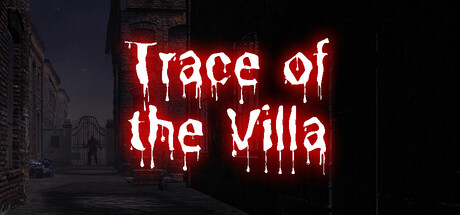
Trace of the Villa — puzzles as evidence in a mansion mystery
Trace of the Villa frames its investigation around fragments: manifests, encrypted documents and locked rooms that behave like witnesses. The game positions puzzles not as isolated hoops to jump through but as evidentiary steps that reorder what the player believes about who lived in the house and why identities were erased.



Quick facts
| Title | Trace of the Villa |
|---|---|
| Developer | Steadyturtle Co., Ltd. |
| Publisher | Steadyturtle Co., Ltd. |
| Release date | 28 May, 2026 |
| Genres | Action, Adventure, Indie |
| Categories | Single-player; Color Alternatives; Custom Volume Controls; Playable without Timed Input; Subtitle Options; Family Sharing |
| Steam | Trace of the Villa on Steam |
Who should wishlist this
If you prefer slow-burn mansion mysteries where every unlocked drawer, rebooted console and decrypted file feels like testimony, Trace of the Villa is aimed at you. It suits players who prize environmental storytelling and object logic over fast action or constant combat — people who enjoy piecing together a case from partial records and correlated clues.
What the game is
Officially, Trace of the Villa follows Jin, who has spent years searching for his missing sister. A lead takes him to a remote, decaying mansion where manifests and hints suggest she may still be alive. The estate is cut off from the grid and deliberately forgotten; rooms look as if occupants vanished mid-routine and identities appear to have been removed. Restoring power and solving puzzles reveal encrypted documents, suspicious transfer records and a timeline of arrivals and departures masked by falsified identities.
When and where
Trace of the Villa launched on 28 May, 2026 and is available on Steam for PC (see Steam store link in the facts table). The Steam page lists the developer and publisher as Steadyturtle Co., Ltd., and tags the game as Action / Adventure / Indie with single-player and accessibility options such as subtitle support and color alternatives.
Why the theme matters: puzzles as evidence
Many puzzle-adventure titles treat puzzles as set pieces. Trace of the Villa instead presents them as pieces of evidence. A safe opened by deciphering a pattern doesn’t merely grant a new key; it yields a fragment of the estate’s ledger or a transfer record that reframes what you already know. This is narrative logic: the game expects you to treat solved puzzles like exhibits in a case file, using their contents to infer motive, timeline and the politics of the estate’s operation.
How you read clues and progress
- Clue reading: manifests, manifests excerpts and encrypted documents are primary conveyors of backstory. The player must connect dates, names (or their absences) and transfer records to reconstruct movements through the mansion.
- Object logic: furnished rooms that appear “erased” force close inspection; objects gain meaning when placed against document fragments. Restoring power is a mechanical act that also opens narrative channels—systems going online reveals new puzzles and evidence.
- Story puzzles: solutions unlock narrative fragments rather than only mechanical access. Each unlocked compartment or decrypted file layers the timeline, turning puzzle-solving into an evidentiary methodology—solve, read, reinterpret, repeat.
Player scenarios — who will enjoy it most
- For methodical explorers: You catalog fragments and slowly map the estate’s social geography. If you like connecting disparate documents into a coherent timeline, the game’s pace supports patient reasoning.
- For atmosphere seekers: You value texture and mood. The mansion’s “erased” feel and the process of restoring systems supply steady reveals rather than shock-led beats.
- For mystery story fans: You care about implication more than explicit answers. The puzzles give evidence that nudges you toward hypotheses; you supply the interpretive work.
- Not ideal for players wanting nonstop action or multiplayer puzzles: The Steam page lists single-player and accessibility tags that emphasize narrative play over competitive or cooperative modes.
How it compares — editorial discovery
Below is a compact editorial comparison focused on puzzle focus, atmosphere and player fit. These comparisons are based on lawful editorial criteria such as genre, atmosphere, exploration style and puzzle emphasis.
| Title | Puzzle focus | Atmosphere / Tone | Player fit |
|---|---|---|---|
| Trace of the Villa | Clue-driven puzzles that reveal documents, encrypted data and hidden compartments — puzzles function as narrative evidence. | Mansion mystery, slow-burn, psychological investigation, erased identities. | Players who like environmental storytelling, logic-based reading of clues, and methodical reconstruction of timelines. |
| The Room | Mechanical, tactile puzzle boxes and intricate object-based solutions. | Enclosed, uncanny, puzzle-centric atmosphere. | Players who favor standalone puzzle challenges and tactile problem-solving. |
| The Room Two | Expanded mechanical puzzles in a sequence of vignettes; strong focus on device logic. | Mystery with a cryptic tone across varied locales. | Players who enjoyed The Room and want further device-oriented puzzles with layered set pieces. |
| Escape Simulator | Highly interactive escape-room style puzzles; object interaction and physics-driven solutions. | Playful, collaborative when co-op; variable tone depending on room. | Players who want interactive environments and solve-with-tools gameplay, solo or co-op. |
| Unpacking | Puzzle-like spatial and context reading through item placement; narrative emerges from possessions. | Zen, domestic, quietly narrative. | Players who prefer low-tension, narrative puzzles built from everyday objects and lives. |
YouTube discovery
If you want trailers or gameplay footage, search for Trace of the Villa on YouTube: search Trace of the Villa trailers & gameplay. This link is provided as a discovery path; videos found there may be official or community-sourced.
View Trace of the Villa on Steam
Disclaimer: referenced titles and trademarks belong to their respective owners. Comparisons are editorial discovery only and do not imply endorsement or affiliation. All factual details about Trace of the Villa — including release date, developer/publisher and store metadata — are sourced from the game’s Steam page.
Leave a Reply