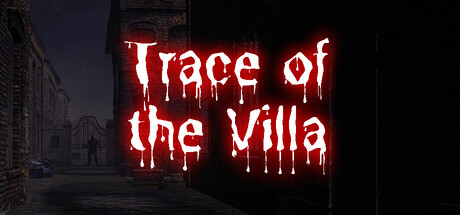
Trace of the Villa — puzzles as evidence and the logic of a disappearing past
Trace of the Villa casts puzzles as fragments of proof: objects, manifests and locked systems that together form a case file rather than a sequence of obstacles. You play Jin, following leads to a decaying, off‑grid mansion where reading clues and reconstructing identity become the primary engine of both story and gameplay.

Who this is for
This is aimed at players who treat puzzles like evidence: people who prefer reading an environment for meaning, parsing documents and patterns, and letting narrative inference — not timed reflexes — drive the experience. If you value atmospheric mystery adventure, slow-burn suspense, and story puzzles that reveal a timeline and motive, Trace of the Villa is pitched to that sensibility.
What the game is
Officially described on Steam as follows: “Jin has spent years searching for his missing sister, pursuing leads that took him to a remote, decaying mansion where he recovered manifests and hints that indicate his sister may still be alive, somewhere at the end of the trail he is about to follow.” Developed and published by Steadyturtle Co., Ltd., Trace of the Villa mixes exploration with discovery of physical and documentary traces inside a deliberately forgotten estate.
When and where
Trace of the Villa released on Steam on 28 May, 2026. It appears on PC via Steam and lists the developer and publisher as Steadyturtle Co., Ltd. on its store page. The Steam listing classifies the game under Action, Adventure, Indie and includes single‑player support and accessibility categories such as Color Alternatives, Custom Volume Controls, Playable without Timed Input, and Subtitle Options.
Why the theme matters: puzzles as evidence and narrative logic
Many puzzle adventures give you a sequence of challenges; Trace of the Villa frames puzzles as items of proof. Clues you find — manifests, encrypted fragments, suspicious transfer records — function like exhibits. Solving a lock or restoring a system is less about winning a mechanical contest and more about confirming or refuting the house’s story. That design choice turns object logic into narrative logic: each successfully interpreted clue changes how you read the next room and the people who once passed through it.
How you read clues and progress
The Steam description highlights concrete beats you can expect: restoring power to the estate brings secured systems back online; hidden compartments and safes yield fragments of encrypted documents; manifests and suspicious transfer records outline financial trails and falsified identities. Those artifacts are the game’s primary connective tissue — a chain of partial records and physical objects that let Jin piece together a timeline. Expect puzzle solutions to operate as explanatory gestures that unlock both new spaces and new hypotheses about who lived there and why identities were erased.


Quick facts
| Title | Trace of the Villa |
|---|---|
| Release date | 28 May, 2026 |
| Developer | Steadyturtle Co., Ltd. |
| Publisher | Steadyturtle Co., Ltd. |
| Genres | Action, Adventure, Indie |
| Steam categories | Single-player; Color Alternatives; Custom Volume Controls; Playable without Timed Input; Subtitle Options; Family Sharing |
How it compares — editorial discovery
Below is an editorial comparison focused on genre, atmosphere, puzzle focus, exploration style, story tone and pacing. This is intended to help readers decide whether Trace of the Villa fits their tastes relative to a handful of other puzzle‑driven titles.
| Game | Genre / release | Atmosphere | Puzzle focus | Exploration style | Player fit |
|---|---|---|---|---|---|
| Trace of the Villa | Action / Adventure / Indie — released 28 May, 2026 | Mansion mystery, slow‑burn, evidence‑driven | Document and object puzzles used as narrative evidence | Investigative, room‑by‑room reconstruction | Players who like clue‑reading and environmental storytelling |
| The Room | Adventure / Indie — released 28 Jul, 2014 | Mystical, intimate cabinet‑puzzle mood | Mechanical puzzle boxes and tactile object logic | Focused, single‑room to small‑scale environments | Players who enjoy tactile, self‑contained puzzles with a mysterious framing |
| The Room Two | Adventure / Indie — released 5 Jul, 2016 | Expanded mystical exploration with cryptic narrative | Layered mechanical puzzles that connect across scenes | Broader environments than The Room but still puzzle‑centric | Players who want progressive, linked puzzle design and atmosphere |
| Escape Simulator | Adventure / Casual / Indie — released 19 Oct, 2021 | Playful, interactive escape‑room variety | Highly interactive object manipulation; physics‑based puzzles | Room‑based, hands‑on exploration; supports co‑op | Players who like collaborative, interactive object puzzles and sandbox play |
| Unpacking | Casual / Indie / Simulation — released 1 Nov, 2021 | Zen, domestic, observational | Block‑fitting and clue reading about a life through objects | Nonlinear, room furnishing with narrative inference | Players who enjoy quiet, slice‑of‑life storytelling through items |
Player scenarios — who should wishlist this
- You’re a narrative‑first player who enjoys piecing together stories from documents and objects rather than through explicit cutscenes.
- You favour slow, investigative pacing and want your puzzle solving to modify your theories about characters and motive.
- You appreciate atmospheric mansion mysteries where restoring systems and opening safes reveal new narrative leads.
- You prefer accessibility options like subtitles and non‑timed input, which are present on the Steam page.
YouTube discovery
To find trailers or gameplay clips, search YouTube via: Trace of the Villa trailer & gameplay (YouTube search). This link is a discovery path; check publisher channels for verified videos.Steam page
Leave a Reply