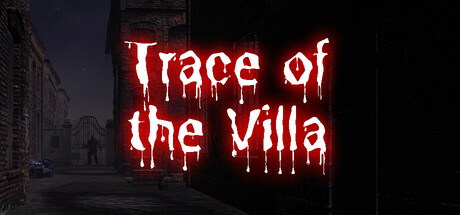
Trace of the Villa — a premise-first guide for story-first players
Jin has spent years searching for his missing sister, following a lead to a remote, decaying mansion where manifests and hints suggest she may still be alive. If you prize environmental storytelling, slow-burn suspense, and clue-driven exploration, this guide explains the narrative curiosity Trace of the Villa offers without spoiling the trail.
Who it’s for
Trace of the Villa is aimed at players who prioritize narrative context and discovery over blunt exposition. If you enjoy atmospheric mystery adventure titles where the plot is reconstructed from fragments — notes, locked safes, systems you reactivate, and traces of past occupancy — this is a clear fit. The Steam page lists the game as Action, Adventure, Indie and the product supports single-player play and accessibility options such as color alternatives, subtitle options, and custom volume controls, which is useful for players who want a paced investigative experience on PC.
What the game is
Officially, Trace of the Villa follows Jin as he investigates a derelict mansion after years of searching for his missing sister. The estate is described as “cut off from the grid and deliberately forgotten”; rooms are left furnished as if people vanished mid-routine and personal identifiers are conspicuously absent. When Jin restores power, locked systems and hidden compartments begin to reveal encrypted documents, suspicious transfer records, and other fragments pointing to a larger, concealed operation. The tone on the Steam page emphasizes psychological investigation and environmental storytelling rather than overt horror theatrics.
When and where
Trace of the Villa released on 28 May, 2026 and is available on Steam. It is developed and published by Steadyturtle Co., Ltd. — the Steam store lists its appid as 3483660.
Why the theme matters
The game’s core premise — identities removed, arrivals without records, and a house that seems “erased” rather than abandoned — sets up a specific kind of narrative curiosity. That curiosity isn’t about jump scares or linear cutscenes; it’s about assembling a timeline from artifacts and system traces. For players who enjoy slow-burn suspense and detective-style reconstruction of events, Trace of the Villa promises that investigative payoff comes from reading the space and piecing documents and systems together.
How you read clues and progress (without spoilers)
According to the official description, gameplay progression is tightly coupled to restoring the estate’s infrastructure and investigating what returns when power and systems are brought back online. Expect puzzle-oriented reveals: safes and hidden compartments that yield fragments of encrypted documents, manifests that expose suspicious transfers, and secured systems that unlock further areas. The narrative advances as you solve environmental puzzles and interpret financial and identity fragments — each solved puzzle unveils another layer of the operation that used the mansion.

Compact facts
| Title | Trace of the Villa |
|---|---|
| Steam AppID | 3483660 |
| Release date | 28 May, 2026 |
| Developer / Publisher | Steadyturtle Co., Ltd. |
| Genres | Action, Adventure, Indie |
| Key Steam categories | Single-player; Color Alternatives; Custom Volume Controls; Playable without Timed Input; Subtitle Options; Family Sharing |
Player scenarios — decide if it fits your mood
- You want story context up-front, not spoilers: The premise—searching for a missing sister at an erased mansion—gives a clear motivation and investigative framing without revealing outcomes. It’s suited to players who want a concrete narrative hook before they begin.
- You enjoy environmental puzzle progression: If restoring power, unlocking systems, and translating fragments is how you like stories to unfold, the official description signals that’s central to progression.
- You prefer methodical pacing: The descriptions emphasize slow reveal and layered discoveries rather than rapid action beats; players who prefer methodical, clue-by-clue advancement will likely be more satisfied.
- You need accessibility and control options: Steam categories list color alternatives, subtitle options, and custom volume controls — helpful if you require specific settings for comfort during a tense narrative investigation.
How it compares to other story-driven mystery/adventure titles
Below is a focused editorial comparison on lawful criteria: genre, atmosphere, puzzle focus, exploration style, story tone, and pacing. These entries are editorial discovery only and based on official descriptions.
| Title | Genres | Atmosphere | Puzzle focus | Exploration style | Story tone & pacing | Player fit |
|---|---|---|---|---|---|---|
| Trace of the Villa | Action / Adventure / Indie | Decaying mansion; erased identities; slow-burn suspense | Environmental puzzles, locked systems, encrypted documents | Interior, clue-driven exploration of a confined estate | Methodical reconstruction; layered reveals as systems return | Players who want investigative context and atmospheric mystery |
| Inscryption | Adventure / Indie / Strategy | Inky, psychological, card-table tension | Deckbuilding meets escape-room puzzles | Card-based vignette structure with meta layers | Dense, often surreal pacing with escalating reveals | Players who like roguelike mechanics and meta mystery |
| Outer Wilds | Action / Adventure | Open, cosmic curiosity; exploratory wonder | Observational puzzles; systems-based mysteries (time loop) | Open-world solar system exploration | Exploratory, iterative pacing centered on discovery | Players who prefer sandbox exploration and systemic puzzles |
| Journey | Adventure / Indie | Minimalist, elegiac, transcendent | Emergent, environmental rather than explicit puzzles | Open, traversable landscapes focused on flow | Slow, contemplative, mostly non-verbal progression | Players who favor mood and short-form emotional arcs |
| The Forgotten City | Adventure / Indie / RPG | Ancient, moral mystery with time-loop mechanics | Logical puzzles tied to time manipulation and consequences | Structured exploration across a compact ancient environment | Deliberate, narrative-driven with puzzle-linked endings | Players who like narrative puzzles with ethical stakes |
| The Medium | Adventure | Psychological horror; dual-reality atmosphere | Puzzles that exploit dual-world mechanics | Linear, scene-based exploration with parallel realms | Psychological, tension-led pacing | Players who want story and psychological atmosphere with puzzle mechanics |
 View Trace of the Villa on Steam
YouTube discovery
For trailer and gameplay discovery, use YouTube search rather than relying on unverified embeds: Find Trace of the Villa trailer and gameplay searches on YouTube.
Leave a Reply