Trace of the Villa: A mansion mystery for players who think in locked rooms
Trace of the Villa casts you as Jin, a lone investigator drawn to a remote, decaying mansion whose rooms look as if their occupants vanished mid-routine. Released on 28 May, 2026 by Steadyturtle Co., Ltd., it blends slow-burn atmospheric mystery with clue-driven exploration and narrative puzzle design.

Quick facts
| Title | Trace of the Villa |
|---|---|
| Release date | 28 May, 2026 |
| Developer / Publisher | Steadyturtle Co., Ltd. |
| Steam AppID | 3483660 |
| Genres | Action, Adventure, Indie |
| Key categories | Single-player; Color Alternatives; Custom Volume Controls; Playable without Timed Input; Subtitle Options; Family Sharing |
| Official short description | Jin has spent years searching for his missing sister, pursuing leads that took him to a remote, decaying mansion where he recovered manifests and hints that indicate his sister may still be alive, somewhere at the end of the trail he is about to follow. |
Who this is for
If you prefer mystery that asks you to slow down, map a mental chain of evidence, and treat rooms as text to be read, Trace of the Villa is written with you in mind. It suits single-player PC players who enjoy atmospheric mystery adventure and environmental storytelling rather than twitch reflex challenges. Accessibility categories like subtitle options, color alternatives and “playable without timed input” make it a reasonable fit for players who value pacing and careful observation.
What the game actually is
According to Steam’s official description, Trace of the Villa follows Jin as he restores power to a deliberately forgotten estate and uncovers layers of a concealed operation. Restoring systems brings back locked compartments, safes, and fragments of encrypted documents; each solved puzzle reveals further financial trails and falsified identities. The game positions itself as a narrative-led investigation inside a mansion whose very arrangements — furnished rooms, missing personal records — function as clues.
When and where you can play it
Trace of the Villa launched on 28 May, 2026 and is available on Steam for PC. If you’re evaluating it now, the Steam store page is the canonical source for system requirements, media, and updates: View Trace of the Villa on Steam.

How you read clues and progress — locked-room thinking, clue chains, and environmental reading
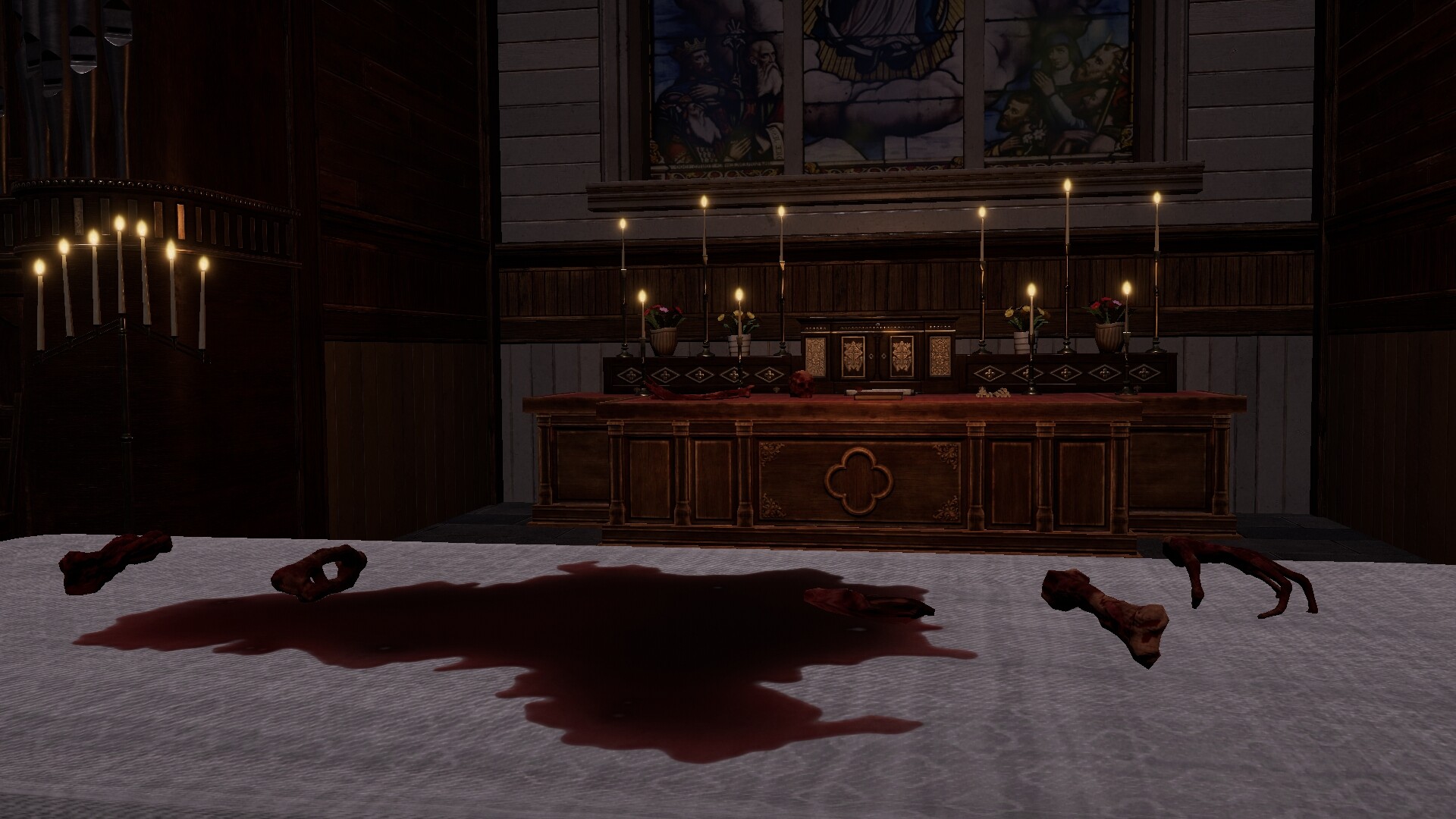
The official copy makes the game’s progression model clear: restoration and discovery. When Jin restores power, secured systems return online and previously hidden containers become accessible. That structure encourages a tight loop of observation → minor puzzle → new evidence → broader inference. For players, this translates to a form of locked-room reasoning: trace connections in a contained space, test a hypothesis on a localized puzzle, then follow the chain outward.
Expect puzzles to be narrative-weighted rather than abstract number mazes. Clues are embedded in personal effects, manifests, and the house’s wiring and systems. Environmental storytelling is the primary language: what’s missing (no photographs, no names) matters as much as what’s found. The payoff is cumulative — encrypted documents and suspicious transfer records gradually sketch a larger operation behind the mansion.
How it compares to nearby mystery & puzzle titles
Below is a concise editorial comparison on lawful criteria: genre, atmosphere, puzzle focus, exploration style, story tone, and pacing. These are intended to help you decide whether Trace of the Villa fits your tastes relative to familiar names in the space.
| Title | Genre & tone | Puzzle focus | Exploration style | Pacing |
|---|---|---|---|---|
| Trace of the Villa | Action / Adventure / Indie — mansion mystery, slow-burn, psychological investigation | Clue-driven, narrative puzzles tied to restoring systems, hidden compartments and encrypted documents | Single-player, room-to-room environmental reading inside a bounded estate | Measured, cumulative discovery |
| The Room | Adventure / Indie — tactile, mechanical puzzle box atmosphere | Highly focused on mechanical puzzles and tactile manipulation | Contained puzzle boxes and cabinets rather than a larger explorable estate | Puzzle-centric, intimate sessions |
| The Room Two | Adventure / Indie — similar to The Room with expanded environments | Mechanical-device puzzles with strong tactile presentation | Linear chapter progression through varied strange locales | Medium-length puzzle bursts |
| Escape Simulator | Adventure / Casual / Simulation — physics-driven escape rooms, community-made content | Highly interactive, physics and item-combination puzzles | Room-scale, often collaborative; sandbox-y level editor content | Variable, from short rooms to longer community scenarios |
Player scenarios — who should wishlist it
- You’re a player who enjoys environmental storytelling and want puzzles that serve a narrative arc rather than isolated contraptions.
- You prefer a deliberate pace and mental puzzles you can chew on without timed input or reflex demands (note: the Steam page lists “Playable without Timed Input”).
- You like investigations where restoring power or systems is a gameplay beat that unlocks new mystery threads and documentation.
- You value accessibility options such as subtitles and color alternatives when playing story-first mystery games.
YouTube discovery
If you want to see trailers or gameplay clips, search YouTube for Trace of the Villa trailer or gameplay: search Trace of the Villa on YouTube. This link is provided as a discovery path; it does not confirm a particular official video unless linked from the Steam page.
Final take
Trace of the Villa positions itself as a mansion mystery that prioritizes narrative clues and a slow, accumulating sense of unease. If you enjoy reading rooms like documents, following layered clue chains, and solving puzzles that unlock further investigative beats, it fits that profile. If your preference skews toward tactile device puzzles or highly social escape-room play, other titles like The Room series or Escape Simulator offer different emphases.
Referenced titles and trademarks belong to
Leave a Reply