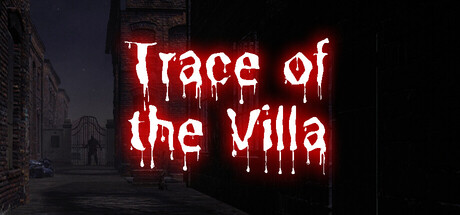
Trace of the Villa — a clue-driven mansion mystery for players who prefer puzzles to gunplay
Trace of the Villa (Steadyturtle Co., Ltd.) positions itself as a slow-burn, story-rich adventure where forensic reading of objects and documents replaces twitch reflexes. The game frames Jin’s search for his missing sister inside a decaying, off-the-grid mansion where recovered manifests, encrypted fragments and restored systems peel back a layered conspiracy.

Quick facts
| Title | Trace of the Villa |
|---|---|
| Steam AppID | 3483660 |
| Developer / Publisher | Steadyturtle Co., Ltd. |
| Release date | 28 May, 2026 |
| Genres | Action, Adventure, Indie |
| Categories | Single-player; Color Alternatives; Custom Volume Controls; Playable without Timed Input; Subtitle Options; Family Sharing |
Who is this for?
If you favor environmental storytelling and reading evidence over action-heavy pacing, this is aimed squarely at you. Trace of the Villa suits players who enjoy: methodical clue interpretation, inventory and document-based puzzles, atmospheric mansion settings, and narrative puzzles that reveal motive and timeline rather than instant combat set-pieces.
What the game is (and what it asks you to do)
Officially described on its Steam page, Trace of the Villa follows Jin, who arrives at a remote, deliberately forgotten mansion after a lead that suggests his missing sister may still be alive. The house appears “erased”: rooms frozen mid-routine, missing names and photographs, and locked areas that hide layers of falsified identities and suspicious transfer records. Gameplay centers on restoring systems and piecing together manifests, encrypted documents and other physical clues to reconstruct what happened.
When and where
Trace of the Villa launched on Steam on 28 May, 2026. It’s presented in a PC/Steam context with single-player support and a handful of accessibility and control options noted on the store page (color alternatives, custom volume controls, subtitle options, and “playable without timed input”).
Why the theme matters
The conceit — a mansion whose records and identities have been deliberately scrubbed — makes clue-reading the primary tool for narrative momentum. Instead of combat or action pushes, the game uses recovered manifests and financial traces to make the plot advance: each solved puzzle unlocks a system, a compartment, or a document fragment that reframes the mystery. For players who prefer psychological investigation and slow-burn suspense, that design choice deepens immersion and gives weight to each discovery.
How progression and puzzles are structured
According to the official description, Jin must restore power and secured systems, which in turn reveal hidden compartments, safes and fragments of encrypted documents. Manifests and “hints” recovered in the mansion point the player along a trail — a chain of small logical leaps rather than timed trial-and-error. That suggests a puzzle loop where observation → documentation → decryption/logic → new area access is the central rhythm, rather than reflexive combat or action sequences.


Player-fit scenarios — decide if you should wishlist
- You like pacing by puzzle discovery: If you enjoy reading manifests, cross-referencing records and letting a story unfold through documents, this fits your tastes.
- You prefer atmosphere over action: The mansion setting and the “erased” occupancy premise reward close attention rather than fast reactions.
- You want clarity and accessibility options: Steam metadata lists subtitle options, color alternatives and no timed-input requirements, which make the experience friendlier to careful, reflective players.
- You want a mystery that’s investigative, not supernatural spectacle: The official description emphasizes falsified identities, financial trails and encrypted documents — investigative elements rather than unexplained paranormal spectacle.
How it compares to nearby puzzle-adventure experiences
Below is an editorial comparison on lawful criteria: puzzle focus, atmosphere and pacing. These entries are offered to help readers decide which game fits their preferences; they are not claims of superiority.
| Game | Puzzle focus | Atmosphere / Tone | Pacing / Player flow | Player fit |
|---|---|---|---|---|
| Trace of the Villa | Document and object logic: manifests, encrypted fragments, restored systems | Decaying mansion, investigative, slow-burn suspense | Clue-driven, methodical; unlocking systems reveals next steps | Players who want narrative puzzle design and environmental storytelling |
| The Room | Mechanical puzzles and safes with tactile contraptions | Isolated, mysterious, tactile puzzle box tone | Incremental, puzzle-to-puzzle focus | Players who like tightly focused mechanical puzzles in contained locations |
| The Room Two | Expanded mechanical puzzles across more varied scenes | Cryptic and atmospheric, still puzzle-centric | Steady puzzle progression with scene transitions | Fans of extended, scene-based puzzle narratives |
| Escape Simulator | Highly interactive escape-room style puzzles, physics and object manipulation | Varied depending on map; often playful to tense | Fast or slow depending on room design; can be cooperative | Players who want tactile, interactive puzzles and community rooms |
| Unpacking | Puzzle as domestic object placement with narrative inference | Quiet, reflective, slice-of-life narrative | Low-pressure, zen pacing | Players who enjoy narrative implied through objects and gentle progression |
| hack_me | Hacker-simulator puzzle systems (simulation of hacking) | Technical, simulation-focused | Challenge-driven, simulation tasks | Players who enjoy simulated systems and command-style puzzle solving |
YouTube discovery
For trailers and gameplay searches, try this YouTube discovery link (search results): Search Trace of the Villa trailer & gameplay on YouTube. This URL is provided as a discovery path and does not assert a specific official video.
Ready to see the Steam page?
View Trace of the Villa on Steam
Disclaimer: referenced titles and trademarks belong to their respective owners; comparisons above are editorial discovery and not endorsements.
Leave a Reply