
Trace of the Villa: how puzzles whisper story without shouting spoilers
Trace of the Villa places you in Jin’s shoes — a lone investigator in a decaying mansion, following manifests and encrypted traces that suggest his missing sister may still be alive. The game’s puzzle systems are designed to reveal evidence as you interrogate objects and unlock systems, letting story emerge through deduction rather than cutscenes.

Quick facts
| Title | Trace of the Villa |
|---|---|
| Steam app | 3483660 |
| Release date | 28 May, 2026 |
| Developer / Publisher | Steadyturtle Co., Ltd. |
| Genres | Action, Adventure, Indie |
| Key categories | Single-player; Color Alternatives; Custom Volume Controls; Playable without Timed Input; Subtitle Options; Family Sharing |
Who should consider wishlist-ing Trace of the Villa?
- Players who prefer slow-burn atmospheric mystery and environmental storytelling over action-first pacing.
- Fans of clue-driven exploration where reading objects and piecing together manifests, logs, and encrypted fragments form the narrative backbone.
- Those who value accessibility options like subtitles, color alternatives, and gameplay that doesn’t force timed inputs.
- Single-player investigators who like detective-style logic puzzles embedded in a household-scale locale rather than open-world scavenging.
What the game is — the setup without spoilers
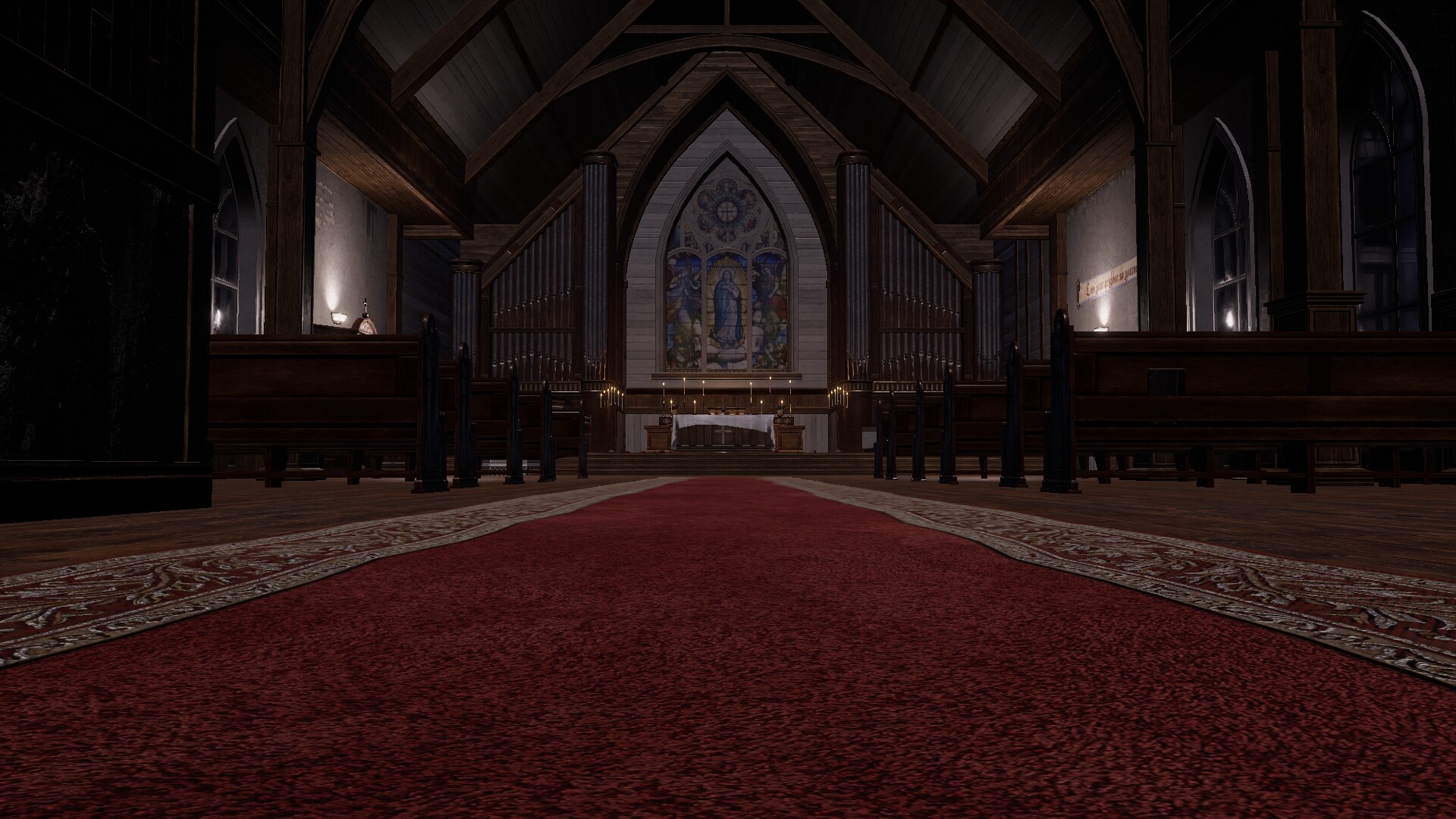
According to the official Steam text, Jin has been searching for his missing sister for years. A lead brings him to a remote, decaying mansion cut off from the grid. Inside, rooms appear as if occupants vanished mid-routine; locked doors, hidden compartments, and secured systems slowly yield fragments — encrypted documents, transfer records, and manifests — as Jin restores power and access. Every puzzle solved lifts another layer of a concealed operation and supplies the next piece of evidence.
When and where
Trace of the Villa launched on Steam on 28 May, 2026. It is listed on Steam as an Action / Adventure / Indie title developed and published by Steadyturtle Co., Ltd., with standard PC storefront presentation and the accessibility categories noted above.
Why the theme matters — evidence, identity, and slow revelation
The premise — vanished occupants, falsified identities, and a place that seems “erased” — is inherently suited to puzzles that are both mechanical and narrative. Rather than dumping exposition in text dumps or cinematic reveals, Trace of the Villa uses locked systems, safes, and encrypted fragments as storytelling gates: you must decode or access physical and digital objects to confirm hypotheses. That approach turns every solved puzzle into evidentiary gain: a ledger entry that narrows a timeline, a manifest that suggests a movement pattern, a log that reframes a relationship — all without stating the full plot up front.
How the puzzles reveal story (without spoiling)
Three intertwined puzzle practices steer the experience:
- Clue reading — small texts, manifests, and system logs are treated as primary evidence. Their placement and wording nudge you to form tentative narratives that you test against later finds.
- Object logic — items behave in consistent, believable ways: safes protect documents, power restores access to locked systems, and physical layouts suggest how people moved through the house. Solving a mechanical problem often opens a new narrative thread.
- Story puzzles — multi-step puzzles fuse both: a clue points to a mechanism; the mechanism yields a document that reframes the clue. The result is incremental storytelling by discovery rather than by large expository moments.
This design keeps revelations modular: you get evidence in fragments and must assemble meaning. That makes the mansion itself an investigative tool rather than a backdrop.

How it compares — a compact editorial table
| Title | Core puzzle focus | Atmosphere / tone | Exploration style | Player fit |
|---|---|---|---|---|
| Trace of the Villa | Clue reading, object logic, encrypted documents, power/restoration systems | Decaying mansion, slow-burn suspense, investigative | Mansion-scale, environmental puzzles that unlock story fragments | Players who want narrative revealed via evidence and pacing that favors deduction |
| The Room | Mechanical, tactile safe-and-box puzzles | Mysterious, tactile curiosity | Single-room to connected chamber puzzles with a strong focus on object interaction | Players who like precise mechanical puzzles and handcrafted devices |
| The Room Two | Extended mechanical puzzles across varied locales | Cryptic, atmospheric | Multi-stage puzzles that expand the original’s mechanical vocabulary | Those who enjoyed the first game and want broader puzzle scope |
| Escape Simulator | Highly interactive escape-room puzzles, physics interactions, community rooms | Fast-paced, playful to tense depending on room | Room-by-room, object interaction-heavy; supports solo or co-op | Players who like tactile interactions and user-made content |
| Unpacking | Object-placement and ambient storytelling through possessions | Zen, reflective, domestic curiosity | Room-by-room placement puzzles revealing life-stories | Players who prefer gentle, non-confrontational story puzzles |
| hack_me | Hacking simulation—command-line and software tools | Simulator/tech-oriented | Interface-driven puzzle flow rather than environmental exploration | Players wanting simulated hacking mechanics and problem-solving via code-like tools |
Player scenarios — will this suit your playstyle?
- The methodical detective: You enjoy reading manifests and logs, returning to earlier rooms with new hypotheses, and trusting small clues to build a timeline.
- The atmosphere-first explorer: You prioritize tone and setting; you like environments that feel like characters and want puzzles that deepen rather than interrupt mood.
- The accessibility-minded player: You appreciate subtitle options, color alternatives, and puzzle pacing without forced timed inputs.
- The mechanical-puzzle purist: If you
Steam page
View Trace of the Villa on Steam
YouTube discovery
For trailer and gameplay discovery, use YouTube search rather than relying on unverified embeds: Find Trace of the Villa trailer and gameplay searches on YouTube.
Leave a Reply