
Trace of the Villa — a locked-house mystery built around power, puzzles, and paper trails
Trace of the Villa casts you as Jin, a private searcher following a cold trail to a remote, decaying mansion where recovered manifests and hints suggest his missing sister may still be alive. Released on 28 May, 2026 by Steadyturtle Co., Ltd., the game centers its gameplay loop on restoring power, unlocking sealed spaces, and reconstructing fragmentary evidence to stitch together what happened inside.

Quick facts
| Title | Trace of the Villa |
|---|---|
| Steam App ID | 3483660 |
| Release date | 28 May, 2026 |
| Developer | Steadyturtle Co., Ltd. |
| Publisher | Steadyturtle Co., Ltd. |
| Genres | Action, Adventure, Indie |
| Categories / accessibility | Single-player; Color Alternatives; Custom Volume Controls; Playable without Timed Input; Subtitle Options; Family Sharing |
| Official short description | Jin has spent years searching for his missing sister, pursuing leads that took him to a remote, decaying mansion where he recovered manifests and hints that indicate his sister may still be alive. |
| Steam user reviews | No user reviews |
Who this is for
Trace of the Villa will most appeal to players who favour atmospheric mystery adventure and story-rich exploration where the central mechanic is investigation rather than combat spectacle. If you like methodical environmental storytelling, locked-room thinking, and building chains of clues from scattered documents, you’ll find the pace and tone familiar. Accessibility options such as subtitle support and “playable without timed input” suggest the team considered players who prefer careful, unhurried puzzle work.
What the game actually is
The official premise is straightforward and focused: Jin arrives at a mansion cut off from the grid and finds rooms left as if their occupants vanished mid-routine. The key loop described in Steam materials is mechanical and narrative at once — restore power to the estate, watch secured systems come back online, and follow the openings they produce. Safes and hidden compartments yield fragments of encrypted documents, suspicious transfer records, and manifests that form a paper trail. Those recovered traces become the connective tissue of the investigation: a chain of evidence that unlocks new areas, reveals falsified identities, and gradually clarifies who passed through the place and why.

When and where to play
Trace of the Villa is available on Steam as of 28 May, 2026. For direct access to the store page and to add the title to your wishlist or library, use the Steam listing link below.
How progression, clues, and locked-room thinking fit together
The design described on Steam ties the tactile act of restoring power to the intellectual work of piecing together a trail. That creates a predictable but satisfying loop:
- Environment-first puzzles: rooms are staged as evidence — objects, open ledgers, and sealed devices act as the primary sources of information.
- Power as a gating mechanic: reactivating estate systems literally and figuratively illuminates previously inaccessible layers — electronic locks, safes, and secured logs all come back online as you progress.
- Clue chains and reconstruction: fragmented manifests and encrypted document fragments must be combined into timelines and money-transfer trails; these fragments point to subsequent locations and unlocked compartments.
- Reading the scene: the mansion is written as “erased” rather than simply abandoned, so careful environmental reading — noting what is present, what is missing, and how items are arranged — is central to forming hypotheses about who was here and why.
That mix of tactile reactivation and slow accumulation of documentary evidence is closer to investigative, puzzle-focused titles than to action-first adventures.
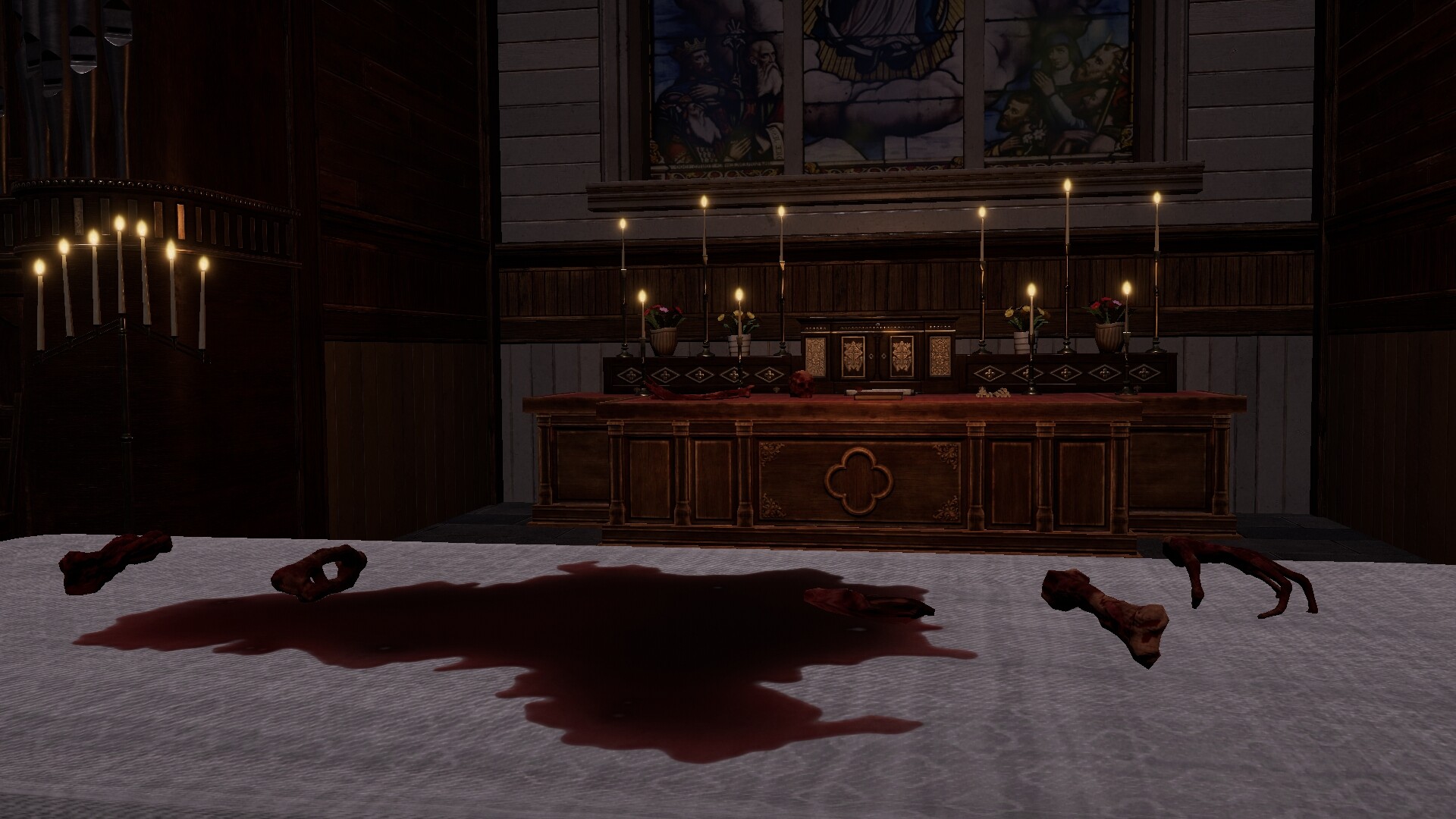
Player scenarios — who will enjoy Trace of the Villa and how they’ll play it
Below are three concrete player scenarios to help you decide if this matches your tastes.
- The Methodical Reader: You pause at every desk, cataloguing documents, cross-referencing dates and names. You value a slow-burn mystery where each recovered manifest or encrypted fragment changes your map of suspicion.
- The Environmental Detective: You pick apart scenes for narrative clues — missing photographs, oddly placed furniture, and sealed compartments — and you enjoy inferring motive from object placement as much as solving a coded lock.
- The Puzzle-First Explorer: You want puzzles with a tangible payoff: restore power, flip a breaker, and a new locked door becomes solvable. If you like the satisfaction of an unlock that changes the environment and unlocks more pieces of the story, this loop will feel gratifying.
How it compares (at a glance)
Here’s a concise editorial comparison to nearby titles on Steam and in the category to help set expectations. These comparisons focus on genre, atmosphere, puzzle focus, and pacing rather than qualitative ranking.
| Title | Primary genre / atmosphere | Puzzle & exploration focus | Story tone / pacing | Who this fits |
|---|---|---|---|---|
| Trace of the Villa | Action / Adventure / Indie — mansion mystery, investigative | Clue-chain reconstruction; restore power to access systems, safes, and documents | Slow-burn, investigative, environment-driven | Players who want document-led mysteries and locked-room problem solving |
| The Room | Adventure / Indie — locked-object puzzles | Focused, tactile puzzle boxes and mechanical locks | Contained, puzzle-centric, often intimate pacing | Players who love single-object puzzles and mechanical novelty |
| The Room Two | Adventure / Indie — extended locked-room puzzles | Multi-stage mechanical puzzles in atmospheric set pieces | Contained and escalating puzzle tension |
Leave a Reply