
Trace of the Villa — an escape-room style mansion mystery driven by power, systems and sealed documents
Steadyturtle’s Trace of the Villa casts you as Jin, a lone investigator whose search for a missing sister leads to an off-the-grid mansion where restoring power literally turns the house into a puzzle. The game privileges locked-room thinking, environmental reading and chained clues: bringing systems back online opens safes, reveals encrypted documents and pulls a tightly concealed operation into view.

Who: the cast and the intended player
Who you play is explicit in the official Steam text: Jin, searching for his missing sister. The developer and publisher are both Steadyturtle Co., Ltd. The game is aimed at players who prefer story-rich, atmospheric mystery adventure on PC — people who like to read environments, follow document trails and solve puzzles that depend on understanding in-game systems rather than quick reflexes.
What: the game and its core mechanics
Trace of the Villa is presented as an Action / Adventure / Indie title on Steam that frames its mystery around a decaying mansion cut off from the grid. The official premise highlights a mechanic emphasis: restoring power to an estate brings secured systems back online, hidden compartments and safes become accessible, and fragments of encrypted documents and suspicious transfer records appear. The editorial angle here is explicit — the game is built around systems, safes and documents as puzzle elements in an environment that reads like a locked-room investigation.
When / Where: release and Steam context
Trace of the Villa released on 28 May, 2026 and is available on Steam. The Steam page lists the developer and publisher as Steadyturtle Co., Ltd., and the title’s appid is 3483660.
Why this theme matters
Mansion mysteries that hinge on infrastructure — power, access control, archival records — change how you approach puzzles. Instead of isolated lock gadgets, clues arrive as system states: a generator restarted, a circuit completed, a terminal decrypted. That structure favors players who enjoy building understanding from chains of evidence and who like their reveal to come through interplay between physical safes and digital systems.
How you progress: reading the environment and chaining clues
The official text makes the progression clear in method if not every step: you restore power, secured systems come back online, and as systems reawaken they unlock compartments and safes that yield fragments of encrypted documents and financial trails. Progress appears to be clue-chain driven — you combine environmental reading (what the rooms and personal effects imply) with forensic examination of documents and system outputs to reconstruct timelines and identities. Expect slow-burn revelation rather than puzzle roulette: each unlocked element is described as leading logically to the next layer of concealment.
Official screenshots

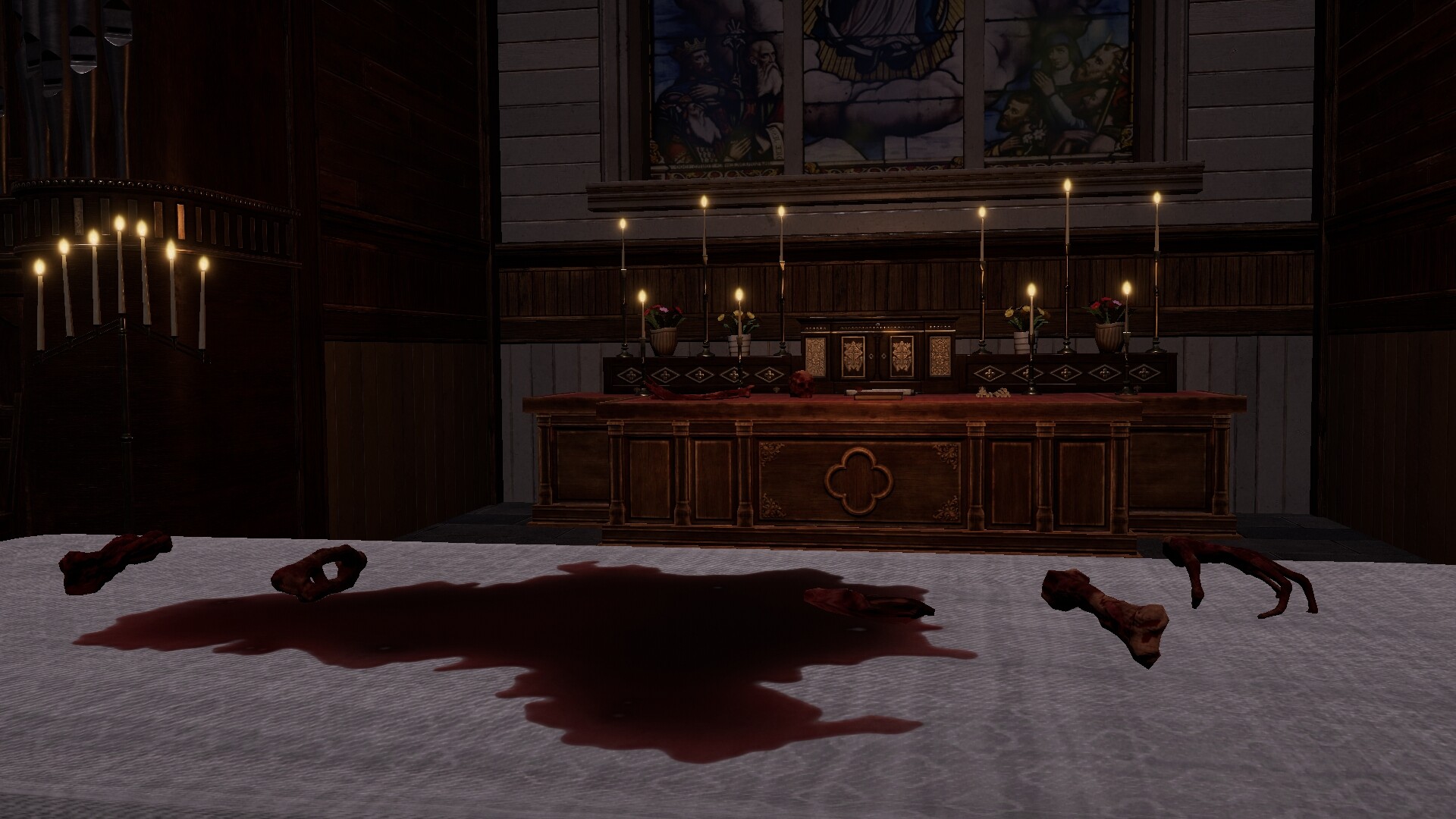
At-a-glance facts
| Title | Trace of the Villa |
|---|---|
| Steam appid | 3483660 |
| Release date | 28 May, 2026 |
| Developer / Publisher | Steadyturtle Co., Ltd. |
| Genres | Action, Adventure, Indie |
| Categories (Steam) | Single-player; Color Alternatives; Custom Volume Controls; Playable without Timed Input; Subtitle Options; Family Sharing |
| Official short description | Jin searches for his missing sister in a remote, decaying mansion where manifests and hints suggest she may still be alive. |
Who should wishlist it — three player scenarios
- The methodical reader: You want mystery delivered through documents, system outputs and chain logic. If unlocking a safe by restoring a circuit and then piecing together ledger fragments sounds satisfying, this is aimed at you.
- The atmospheric explorer: You prefer slow-burn suspense inside a single location. The mansion-as-archive design — rooms that feel “erased” rather than merely abandoned — supports players who enjoy careful environmental storytelling and pacing.
- The accessibility-conscious single-player: The Steam page lists features such as Playable without Timed Input, Subtitle Options and Color Alternatives. If you need those systems, the game’s Steam metadata suggests it includes them.
How it compares — a focused editorial table
Below are lawful editorial comparisons based on genre, atmosphere, puzzle focus, exploration style and pacing (sourced from the provided metadata and descriptions).
| Title | Puzzle/Mechanic Focus | Tone / Pacing | Player fit |
|---|---|---|---|
| Trace of the Villa | Locked-room systems: restoring power, secured systems, safes and encrypted documents form chained clues. | Slow-burn, mansion mystery with investigative emphasis. | Players who prefer environmental storytelling and evidence-driven progression. |
| The Room | Mechanical, tactile puzzles around safes and ornate lockboxes (cast-iron safe noted in description). | Compact, focused, puzzle-first atmosphere. | Fans of intricate single-location puzzle boxes and tactile puzzle design. |
| The Room Two | Sequential puzzle chambers with narrative prompts (crypt, stone pedestal noted). | Atmospheric and exploratory, puzzle-led. | Players who want a narrative scaffold wrapped around mechanical puzzles. |
| Escape Simulator | Highly interactive rooms with physical manipulation, co-op and community rooms. | Varied — from light puzzling to complex room scenarios; more playful interactivity. | Players who enjoy physics, object interaction and community-made content; supports solo or co-op play. |
| Hi‑Fi RUSH | Action and rhythm-syn
Steam pageView Trace of the Villa on Steam YouTube discoveryFor trailer and gameplay discovery, use YouTube search rather than relying on unverified embeds: Find Trace of the Villa trailer and gameplay searches on YouTube. CommentsMore posts |
Leave a Reply