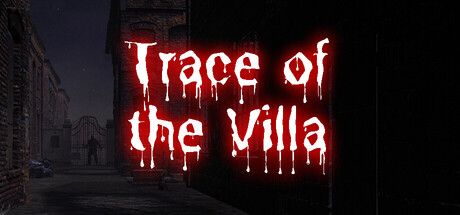
Trace of the Villa — a clue-driven, missing-person mystery set in a decaying mansion
Jin has spent years searching for his missing sister, and Trace of the Villa puts that personal stake at the center of its atmospheric mystery-adventure. Released on 28 May, 2026 by Steadyturtle Co., Ltd., the game asks players to read the estate itself as evidence — restoring power, unlocking hidden compartments, and following financial and identity fragments toward a final reveal.

Who is this for?
Players who prize narrative curiosity and investigation over combat spectacle: people drawn to environmental storytelling, slow-burn suspense, and puzzle-driven exploration. If you want a protagonist whose motivation is a missing-person search — not a generic “save the world” premise — Trace of the Villa’s Jin anchors every discovery in personal stakes.
What the game is
Trace of the Villa is an Action / Adventure / Indie title for single-player PC audiences on Steam. Its official premise: Jin followed a lead to a remote, decaying mansion and recovered manifests and hints that indicate his sister may still be alive somewhere at the end of the trail he is about to follow. Inside the estate, the house seems “less abandoned than erased”: furnished rooms frozen mid-routine, missing photographs and names, locked doors, and falsified records. Restoring power and solving puzzles makes secured systems reveal encrypted documents, suspicious transfer records, and the sense of a larger, concealed operation.


When and where
Trace of the Villa released on Steam on 28 May, 2026. It’s published and developed by Steadyturtle Co., Ltd. The Steam page lists the title’s genres as Action, Adventure, and Indie and includes accessibility and UX categories such as Color Alternatives, Custom Volume Controls, Playable without Timed Input, and Subtitle Options.
Why the missing-person theme matters
Missing-person stakes give the investigation emotional weight: every unlocked safe and recovered manifest is framed as a potential lead about a real, named person rather than abstract lore. That focus changes how puzzles read — clues are not just set-dressing but evidence that could point to a living person’s fate. The official description repeatedly emphasizes erased identities and falsified records; the emotional engine is curiosity plus dread, and the potential payoff depends on whether Jin’s persistence turns up a living sister or a darker truth.
How you progress (and what “reading” the world looks like)
- Investigative loop: restore power, bring systems back online, and see previously sealed areas or hidden UI elements unlock.
- Clue economy: manifests, encrypted documents, suspicious transfers, and personal effects form a breadcrumb trail across rooms and safes.
- Puzzle rhythm: environmental puzzles and locked containers reveal new evidence rather than arbitrary gates; solving one puzzle tends to recontextualize previous discoveries.
- Atmospheric payoff: the mansion’s staged interiors — furnished but missing names and photographs — are a narrative device. The house itself registers as a character whose secrets you coax into speech.
Quick facts
| Title | Trace of the Villa |
|---|---|
| Steam AppID | 3483660 |
| Release date | 28 May, 2026 |
| Developer / Publisher | Steadyturtle Co., Ltd. |
| Genres | Action, Adventure, Indie |
| Key categories | Single-player; Color Alternatives; Custom Volume Controls; Playable without Timed Input; Subtitle Options; Family Sharing |
Which players should wishlist it?
- Investigators: players who enjoy piecing together timelines from documents and environmental detail.
- Slow-burn fans: those who prefer measured, atmospheric pacing over constant action.
- Story-first players: people who want character motivation (Jin’s search) to shape every discovery.
- Accessibility-minded players: the Steam categories indicate options like subtitles, color alternatives, and no-timed-input play.
How it compares — a small editorial table
| Title | Core appeal | Atmosphere / Tone | Puzzle & exploration focus | Pacing / Player fit |
|---|---|---|---|---|
| Trace of the Villa | Missing-person investigation anchored by a decaying mansion | Slow, claustrophobic, erased identities | Clue-driven environmental puzzles, restoring systems, encrypted documents | Measured, investigative; for story-focused explorers |
| Inscryption | Card-based odyssey that blends escape-room puzzles and psychological horror | Inky, meta-horror | Deckbuilding plus escape-room style puzzles | Variable — roguelike loops and escalating reveals |
| Outer Wilds | Open-world solar system mystery | Curious, quietly epic | Exploration-first puzzles, causal discovery across a system | Exploratory, patient — systems-scale reveals |
| Journey | Wordless expedition across ancient landscapes | Meditative, elegiac | Environmental discovery rather than explicit puzzles | Very slow, emotionally driven; short-form experience |
| The Forgotten City | Time-loop narrative-mystery with moral stakes | Philosophical, tense | Puzzle and narrative consequences via time mechanics | Structured mystery with repeating loops |
| The Medium | Psychological horror that splits realities | Haunting, psychological | Dual-reality puzzles and investigation | Atmospheric and tense; horror-leaning |
Player scenarios — specific ways you might play
- If you like following forensic breadcrumbs, play with a notepad and focus on manifests and transfer records; the game rewards tracking small inconsistencies.
- If you prefer narrative payoff, concentrate on restoring systems — many story beats only appear after power and systems return online.
- If accessibility is important, the Steam page lists subtitle options, color alternatives, and no-timed-input gameplay; these let you slow the experience without penalty.
YouTube discovery
If you want to see trailers or gameplay clips, search YouTube for Trace of the Villa via this query link: Trace of the Villa — trailers and gameplay on YouTube. This is provided as a discovery path; confirm any specific video is official before relying on it.
Steam page: Trace of the Villa on Steam
Disclaimer: referenced titles and trademarks belong to their respective owners; the comparisons above are editorial discovery only and not endorsements.