
Trace of the Villa — an escape-room style mystery built around power, doors, and evidence
Trace of the Villa casts you as Jin, a searcher whose years-long hunt for a missing sister leads to a remote, decaying mansion where restoring power becomes the primary means of progress. Released on 28 May, 2026 by Steadyturtle Co., Ltd., the game strings locked-room thinking, environmental reading, and clue chains into an investigation-focused loop that rewards patient reconstruction of what happened inside the estate.

Who, what, when, where, why and how — the essentials
Who is it for?
Players who enjoy slow-burn suspense, investigative pacing, and environmental storytelling over twitch reflexes. If you like first-person mystery adventures that prioritize reading rooms and assembling timelines from scattered fragments, Trace of the Villa is targeted at you. The game is single-player and includes accessibility options such as subtitle options and color alternatives, which helps players who prefer a careful, contemplative approach.
What the game is
Trace of the Villa is an action/adventure indie on Steam where protagonist Jin explores a deliberately forgotten mansion. The house feels “erased”: furnished rooms with missing names or photographs, locked doors, and secured systems that only reveal evidence once power is restored. Puzzles revolve less around arbitrary lock-and-key mechanics and more around unlocking systems, finding manifests, and decrypting fragments that form a financial and identity-based trail.
When and where
Trace of the Villa launched on Steam on 28 May, 2026. It is available on the Steam store page for PC; the Steam entry lists the developer and publisher as Steadyturtle Co., Ltd.
Why the theme matters
The game’s thematic core—identity erased and movements hidden—rewards players who enjoy reconstructing motives and timelines. Restoring power acts as a narrative and mechanical pivot: systems come back online, hidden compartments unlock, and safes reveal encrypted documents and suspicious transfer records. That structure ties the emotional throughline (Jin’s search for his sister) to a gameplay loop that foregrounds evidence gathering rather than combat or platforming spectacle.
How you progress (the gameplay loop)
Progress is largely a chain of environmental interactions: locate and restore power to sections of the estate; access secured systems and appliances that reveal new leads; open locked spaces and safes to uncover manifests, falsified identities, and financial traces; then use those fragments to access the next room or system. The game positions “restoring power” as both a puzzle goal and a story device: each reactivated circuit can yield new physical puzzles, audio logs, or encrypted documents that push the investigation forward.
Quick facts
| Title | Trace of the Villa |
|---|---|
| Release date | 28 May, 2026 |
| Developer / Publisher | Steadyturtle Co., Ltd. |
| Genres | Action, Adventure, Indie |
| Key Steam categories | Single-player, Color Alternatives, Custom Volume Controls, Playable without Timed Input, Subtitle Options, Family Sharing |
| Protagonist / Premise | Jin searches for his missing sister in a decaying mansion where recovered manifests and hints suggest she may still be alive. |
| Steam reviews | No user reviews listed at time of writing. |
Visual cues: official screenshots

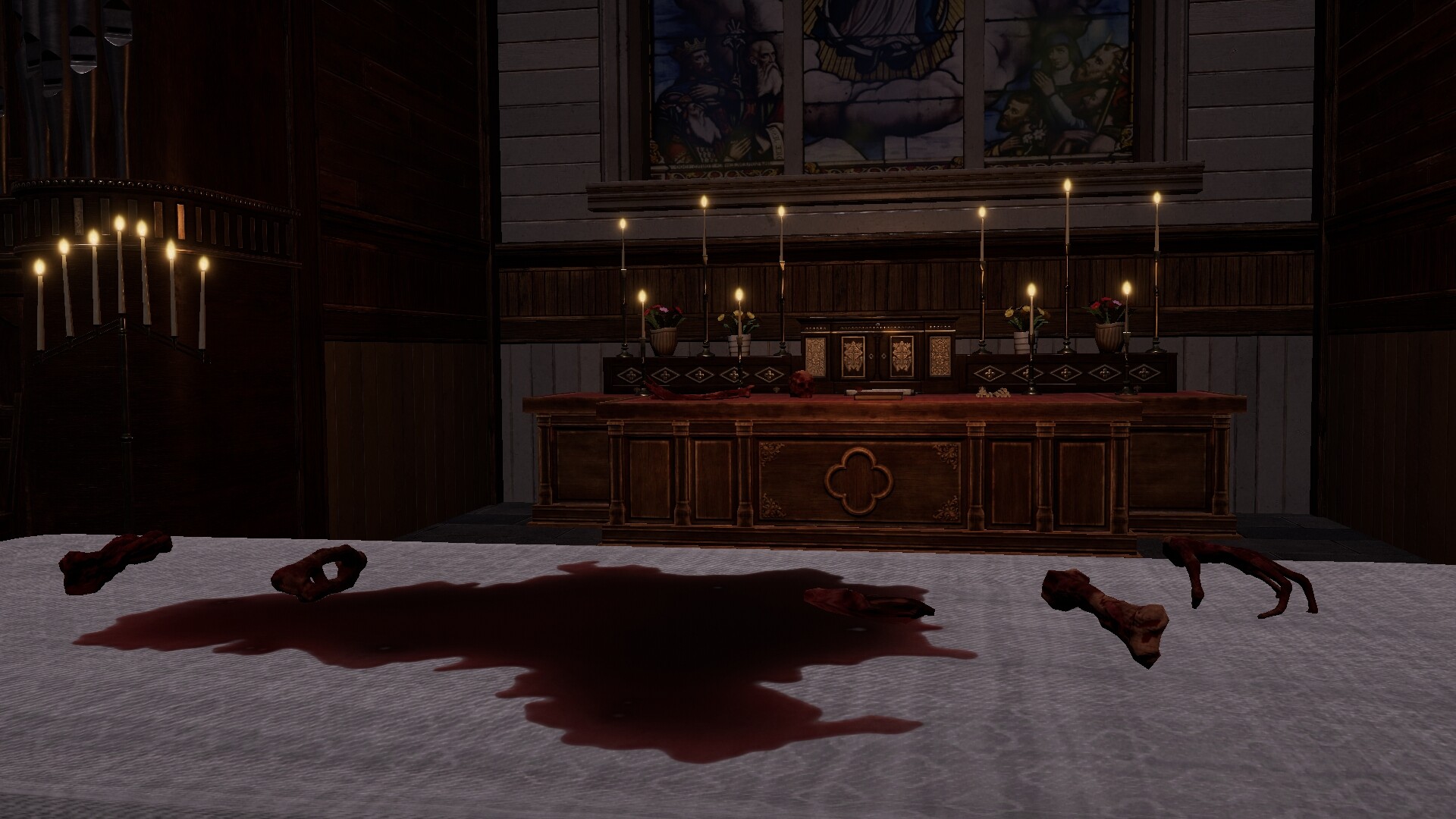
Who should wishlist this on Steam?
Wishlist Trace of the Villa if you prioritize atmospheric mystery adventure and environmental storytelling, enjoy methodical clue-chaining and reconstruction of timelines, and prefer gameplay that rewards reading the room over fast reflexes. If you dislike slow, investigative pacing or expect heavy combat, this may not match your preferences—the emphasis is on exploration, puzzle unraveling, and narrative inference.
Player scenarios
- Single-player detective: You want to follow a chain of physical evidence across rooms and systems, treating each restored circuit as a small revelation.
- Atmosphere-first explorer: You prefer mood, setting, and careful observation; you’ll take the time to notice small staging details that imply a larger operation.
- Puzzle minimalist: You appreciate puzzles that connect logically to story beats—restoring power to get a safe’s electronic lock functioning again, for example—rather than abstract riddles with no narrative tie.
How it compares to nearby mystery and puzzle fare
Below is a concise editorial comparison that focuses on genre, puzzle focus, atmosphere, exploration, tone and pacing—intended to help readers decide which experience fits their tastes.
| Title | Genre / Focus | Puzzle style | Exploration | Tone & pacing | Who might prefer it |
|---|---|---|---|---|---|
| Trace of the Villa | Action / Adventure / Indie — investigative mystery | Environmental puzzles tied to systems (restore power, unlock compartments, decrypt documents) | Single-player, room-by-room reading with narrative leads | Slow, atmospheric, methodical | Players who want narrative puzzle design and clue chains anchored in estate systems |
| The Room | Adventure / Indie — object-based mysteries | Intricate mechanical puzzles and tactile safes | Focused, single-room-centric puzzle box exploration | Dense, intimate, puzzle-first pacing | Players who enjoy close-up mechanical puzzles and tactile locks |
| The Room Two | Adventure / Indie — expanded mechanical puzzle worlds | Complex multi-stage puzzle devices | Wider set-piece locales but retains puzzle-box focus | Measured, often eerie, puzzle-driven | Fans of serialized puzzle-box evolution and escalating mystery |
| Escape Simulator | Adventure / Simulation / Indie — sandbox escape rooms | Highly interactive physics and object manipulation; user-created rooms | Room-scale, sometimes cooperative; lots of emergent solutions | Varied pacing
Steam pageView Trace of the Villa on Steam YouTube discoveryFor trailer and gameplay discovery, use YouTube search rather than relying on unverified embeds: Find Trace of the Villa trailer and gameplay searches on YouTube. CommentsMore posts |
Leave a Reply