Trace of the Villa — an atmospheric, clue-driven mansion mystery on Steam
A slow-burn investigative adventure about a man named Jin rebuilding a broken trail through a remote, decaying mansion—Trace of the Villa asks you to read rooms as evidence and to reawaken systems that were deliberately silenced. Released on 28 May, 2026 by Steadyturtle Co., Ltd., the game stitches together locked doors, safes, and encrypted documents into a chain of environmental puzzles that reveals a larger operation behind the property’s erased history.

Who, what, when, and where
Who: Trace of the Villa is developed and published by Steadyturtle Co., Ltd. and positions itself toward players who enjoy story-rich, investigative adventure experiences with puzzle emphasis.
What: An action/adventure indie on Steam centered on Jin, a protagonist searching for his missing sister by piecing together manifests, transfer records, and encrypted documents inside a deliberately forgotten estate.
When & where: The game was released on 28 May, 2026 and is available on Steam: see the official Steam page below.
Compact facts
| Title | Trace of the Villa |
|---|---|
| Steam AppID | 3483660 |
| Developer / Publisher | Steadyturtle Co., Ltd. |
| Release date | 28 May, 2026 |
| Genres | Action, Adventure, Indie |
| Categories (selection) | Single-player, Color Alternatives, Custom Volume Controls, Playable without Timed Input, Subtitle Options, Family Sharing |
| Official short description | Jin has spent years searching for his missing sister… a remote, decaying mansion where he recovered manifests and hints that indicate his sister may still be alive. |
Why the mansion theme matters here
The mansion in Trace of the Villa is presented not simply as a gothic backdrop but as an evidence-rich system: rooms appear “erased” rather than abandoned, and the world was purposely cut off from the grid. That framing shifts emphasis from jump scares to methodical reading—restoring power, reactivating sealed systems, and tracing falsified identities become the primary tools for narrative discovery. For players who prefer puzzles that evolve from systems and documents rather than purely mechanical riddles, this is a stylistic choice that shapes pacing and tone.
How progression, locked-room thinking, and clue chains are used
The official descriptions note three interlocking progression vectors: power and systems, safes and hidden compartments, and fragments of documents/transfer records. Practically speaking, that suggests a loop where restoring estate power reactivates secured systems; reactivated systems expose or unlock compartments and safes; safes yield fragments of encrypted documents and suspicious transfer records; those documents then point to other locations, identities, or systems to be re-enabled. The result is a chained, environmental puzzle design where each solved system unlocks the next piece of the timeline.

Player experience & pacing: what to expect
Expect a methodical, investigative pace rather than fast-action arcade sequences. The official narrative emphasises a personal mission that becomes an uncovering of a larger operation—arrivals without records, departures without witnesses, and movements masked behind falsified identities. If you enjoy slow-burn suspense and puzzle solutions that feel like forensic breakthroughs, the game is pitched to that audience.
Specific player scenarios — who should wishlist this
- Fans of environmental storytelling who prefer reading objects and logs over combat-driven progression.
- Players who like procedural clue chains: fix the power → access systems → extract documents → follow the next lead.
- Those who enjoy narrative mystery framed around identity, records, and institutional concealment rather than overt supernatural explanation.
- Single-player adventurers who value subtitle options, accessibility settings like custom volume controls and color alternatives.
How it compares to nearby mystery/puzzle games
Below is a focused editorial comparison using lawful data points—genre, atmosphere, puzzle focus, exploration style, story tone, and pacing—to help readers decide which players will prefer each title.
| Title | Primary genre / format | Puzzle focus | Atmosphere / tone | Exploration style | Player fit |
|---|---|---|---|---|---|
| Trace of the Villa | Action / Adventure / Indie (Single-player) | System-based: restore power and systems; safes and encrypted documents | Decaying mansion; erased identities; slow-burn investigation | Clue-driven environmental reading and chained progress | Players who want narrative-led, methodical investigation and document puzzles |
| The Room | Adventure / Indie (Single-player) | Mechanical, object-and-safe focused puzzles (cast-iron safe centerpiece) | Locked-chamber, curious and tactile; mysterious artifacts | Focused puzzle boxes and single-room mystery | Players who like tactile puzzle-box design and concentrated, mechanical riddles |
| The Room Two | Adventure / Indie (Single-player) | Sequential puzzle boxes centred around unique artifacts (stone pedestal) | Cryptic and exploratory; puzzle-led narrative progression | Room-to-room puzzle escalation with a strong sense of place | Fans of layered mechanical puzzles and atmospheric, tightly directed mysteries |
| Escape Simulator | Adventure / Casual / Indie (Single-player, co-op) | Highly interactive escape-room mechanics; move, pick up, and manipulate many objects | Playful and mechanical; sandboxed escape room design | Open interaction within rooms; community-made level variety | Players who want interactive escape-room mechanics and either solo or cooperative play |
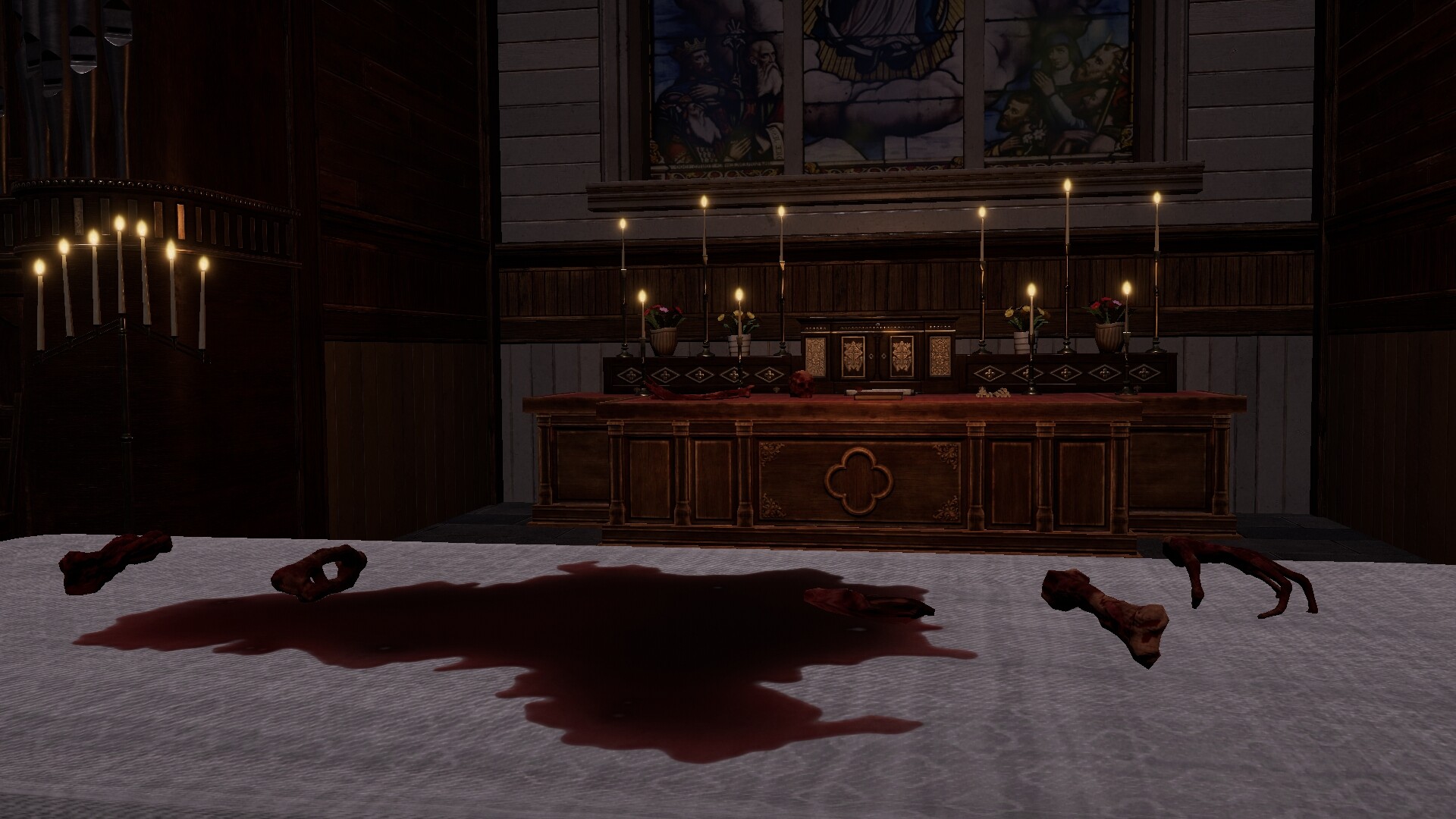
Screenshots
Where to look for trailer or gameplay clips
For trailers
Steam page
View Trace of the Villa on Steam
YouTube discovery
For trailer and gameplay discovery, use YouTube search rather than relying on unverified embeds: Find Trace of the Villa trailer and gameplay searches on YouTube.
Leave a Reply