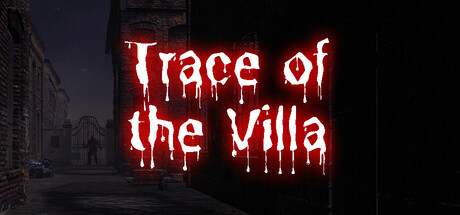
Trace of the Villa: how clue-reading, object logic, and story puzzles reveal evidence without spoiling the plot
Trace of the Villa puts you in Jin’s shoes as he follows a cold lead into a decaying, off‑grid mansion, piecing together manifests and encrypted fragments that suggest his missing sister may still be alive. Released 28 May, 2026 by Steadyturtle Co., Ltd., the game blends environmental storytelling and object-focused puzzles so the mechanics themselves act as the primary evidence readers of the story.

Who this is for
This is for PC players who favor atmospheric mystery adventure and methodical investigation over action spectacle: people who enjoy reading clues in the environment, assembling timelines from physical objects, and letting puzzles yield story fragments rather than blunt exposition. If you prefer puzzle design that communicates plot through found documents, powered systems, and locked safes instead of cutscenes, Trace of the Villa is directly aimed at you.
What the game is
Trace of the Villa is an Action / Adventure / Indie title on Steam from developer and publisher Steadyturtle Co., Ltd. Its premise—Jin searching for a missing sister—unfolds in a remote, deliberately forgotten mansion. The house contains furnished rooms, locked doors, and secured systems; restoring power and opening safes produces fragments of encrypted documents, transfer records, and other hints that form the investigative core.
Key Steam categories include Single‑player, Color Alternatives, Custom Volume Controls, Playable without Timed Input, Subtitle Options, and Family Sharing—features that matter if accessibility and a paced, non‑timed experience are priorities for you.
When and where
Trace of the Villa released on 28 May, 2026 and is available on Steam for PC. You’ll find its store page under appid 3483660 on Steam.
Why the thematic approach matters
Games that trust the player to read the world—through objects, power states, and fragmented documents—create a different kind of suspense than linear narrative beats. Here, the mansion behaves like evidence: power restoration unlocks systems; hidden compartments and safes yield partial records; the absence of names and photographs becomes a clue in itself. That restraint keeps revelations earned by puzzle work rather than handed down by narration, which keeps late-game twists meaningful without spoiling them early.
How the puzzles reveal story evidence (without spoilers)
Trace of the Villa interleaves three puzzle modes that shape how you interpret the plot:
- Clue reading: Objects and manifests are intentionally fragmentary; you infer timelines and relationships by assembling these fragments rather than being told a complete history.
- Object logic: Physical interactions—restoring power, opening locked cabinets, or aligning mechanical elements—change the environment, producing new readable artifacts (logs, documents, transfer records) that act as story evidence.
- Story puzzles: Some puzzles are explicitly narrative-driven: solving them produces encrypted or partial documents that must be correlated with other finds to build a hypothesis about what the mansion was used for.
Because progression is tied to discovery, the game’s mechanics double as an evidence system: work the systems, and the story unspools in layered, verifiable pieces rather than single declarative reveals. That design keeps the experience investigatory and protects key plot beats from early exposure.


Compact facts — Trace of the Villa
| Title | Trace of the Villa |
|---|---|
| Developer / Publisher | Steadyturtle Co., Ltd. |
| Release date | 28 May, 2026 |
| Genres | Action · Adventure · Indie |
| Steam categories | Single‑player, Color Alternatives, Custom Volume Controls, Playable without Timed Input, Subtitle Options, Family Sharing |
| Short premise | Jin’s search leads him to a decaying mansion where manifests and hints suggest his missing sister may still be alive. |
| Store link | Trace of the Villa on Steam |
How it compares (editorial snapshot)
Below is a focused comparison with nearby puzzle/adventure titles so you can decide fit by atmosphere, puzzle focus, and pacing rather than hype.
| Title | Genre / Core focus | Puzzle emphasis | Exploration style | Story tone / Pacing |
|---|---|---|---|---|
| Trace of the Villa | Action · Adventure · Indie | Clue reading, object logic, narrative puzzles that unlock documents and systems | Slow, environmental; progression tied to unlocking systems and safes | Atmospheric, investigative, slow‑burn |
| The Room | Adventure · Indie | Tactile mechanical puzzles centered on single-room safes | Focused, puzzle‑box exploration | Mysterious and tactile; puzzle cadence driven by contained rooms |
| The Room Two | Adventure · Indie | Expanded tactile puzzles across connected environments | Linear but exploratory between puzzle set pieces | Cryptic and atmospheric; steady puzzle escalation |
| Escape Simulator | Adventure · Casual · Indie · Simulation | Highly interactive room puzzles; physical manipulation | Room‑to‑room escape‑room structure; often co‑op or community rooms | Puzzle‑centric, variable pacing depending on room design |
| Unpacking | Casual · Indie · Simulation | Object placement as puzzle; narrative inferred from possessions | Non‑linear room dressing with strong life‑reading mechanics | Zen, reflective, slow; mood built through domestic detail |
| hack_me | Indie · Simulation | Hacker tools and command simulation; puzzle focus is technical | Interface-driven systems rather than physical spaces | Simulator tone; task-oriented pacing |
Leave a Reply