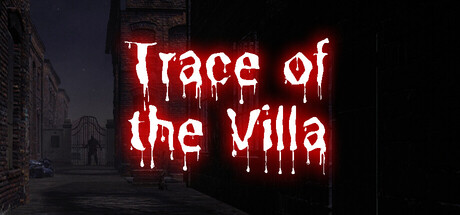
Trace of the Villa — Rooms as Puzzle Spaces and Story Containers
Trace of the Villa frames a slow-burn mansion mystery around Jin’s search for his missing sister, using furnished yet abandoned rooms to deliver environmental storytelling and layered puzzles. Released on 28 May, 2026 by Steadyturtle Co., Ltd., the game trades jump scares for clue-reading, object logic, and story puzzles that unfold as the house literally powers back to life.

Who, What, When, Where, Why, and How
Who it’s for
If you prefer story-rich adventure and investigative puzzle play on PC — players who like methodical clue reading, environmental storytelling, and slow-burn suspense — Trace of the Villa targets that audience. It will appeal to people who enjoy piecing together narrative fragments from objects and systems rather than action-oriented horror or time-pressured puzzles.
What the game is
Trace of the Villa is an Action / Adventure / Indie title on Steam developed and published by Steadyturtle Co., Ltd. The official short description places protagonist Jin at a remote, decaying mansion after leads that suggest his missing sister may still be alive. Rooms in the estate feel “less abandoned than erased,” and gameplay revolves around recovering manifests, hints, encrypted documents, and other artifacts that reframe what the house was used for.
When and where
Trace of the Villa released on 28 May, 2026 and is available on Steam for PC. It’s listed with standard single-player and accessibility categories, including Color Alternatives, Custom Volume Controls, Playable without Timed Input, Subtitle Options, and Family Sharing.
Why the mansion matters
The mansion isn’t just a backdrop: it’s an organizing principle. Rooms are treated as discrete puzzle spaces and also as containers for story — furnished scenes that imply interrupted lives. Because the house was “cut off from the grid and deliberately forgotten,” restoring power becomes a mechanic and a narrative device: bringing systems online reveals secrets, and each unlocked compartment or restored console changes how you read the next room.
How you progress — clue reading, object logic, story puzzles
Progression in Trace of the Villa emphasizes three interlocking habits:
- Clue reading: manifests, encrypted fragments, and transfer records give you breadcrumbs. The game expects you to cross-reference fragments to form timelines or decode patterns.
- Object logic: rooms contain physical objects and secured systems. Using keys, reactivating power, and operating safes all follow a logic that ties item use to environmental cues.
- Story puzzles: puzzles reveal narrative evidence — falsified identities, financial trails, and hints that people passed through under control. Solving puzzles is both mechanical and interpretive; each solution reframes who occupied the room and why.


Compact facts — Trace of the Villa
| Title | Trace of the Villa |
|---|---|
| Steam AppID | 3483660 |
| Developer | Steadyturtle Co., Ltd. |
| Publisher | Steadyturtle Co., Ltd. |
| Release date | 28 May, 2026 |
| Genres | Action, Adventure, Indie |
| Categories / accessibility | Single-player; Color Alternatives; Custom Volume Controls; Playable without Timed Input; Subtitle Options; Family Sharing |
| Short premise | Jin has spent years searching for his missing sister and follows a lead to a remote, decaying mansion where recovered manifests and hints indicate she may still be alive. |
Player scenarios — who should wishlist this
- The methodical investigator: You enjoy cataloguing evidence, backtracking after a new clue appears, and letting narrative shape the next objective rather than following overt markers.
- The environmental storyteller: You take pleasure in reading rooms for tone and implication — furniture, personal effects, and absent photographs are narrative fuel.
- The puzzle-first player who dislikes timers: Categories show Playable without Timed Input and subtitle/volume options — a good fit if you prefer to solve at your own pace.
- The atmospheric mystery fan: If you want psychological investigation over action, the mansion’s slow reveal and document-driven clues will suit you.
How Trace of the Villa sits beside other puzzle-adventure experiences
Below is an editorial comparison focused on genre, atmosphere, puzzle style, exploration, story tone, and pacing so you can decide which experience matches your preference.
| Title | Genre / Release | Atmosphere | Puzzle focus | Exploration style | Story tone / Pacing | Player fit |
|---|---|---|---|---|---|---|
| Trace of the Villa | Action / Adventure / Indie — 28 May, 2026 | Slow-burn mansion mystery, suffocating silence, erased identities | Clue reading, object logic, restoring systems, encrypted fragments | Room-by-room, investigative reconstruction of timelines | Measured, revealing narrative through unlocked evidence | Players who prefer narrative puzzle sequences and environmental storytelling |
| The Room | Adventure / Indie — 28 Jul, 2014 | Tactile, intimate, mechanical mystery | Puzzle boxes and mechanical contraptions | Single-room to small-chamber progression with heavy object interaction | Claustrophobic, puzzle-centric with an unfolding occult mystery | Fans of handcrafted mechanical puzzles and tactile problem solving |
| Escape Simulator | Adventure / Casual / Indie — 19 Oct, 2021 | Playful to tense depending on room; physics-heavy | Highly interactive escape-room puzzles, physics and object use | Modular rooms, often short scenarios with high interactivity | Variable pacing; can be brisk due to room-based objectives | Players who want physical interactivity and optional co-op |
Leave a Reply