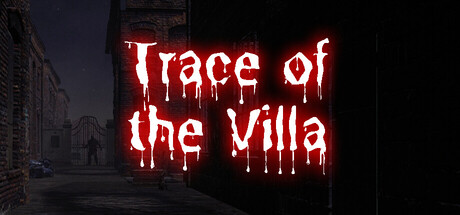
Trace of the Villa: rooms as puzzle spaces and story containers
Trace of the Villa frames a decaying mansion as a chain of rooms that double as puzzles and narrative vessels — each locked drawer, dark corridor, and powered terminal carries both a gameplay function and a piece of Jin’s investigation. Released 28 May, 2026 by Steadyturtle Co., Ltd., the game asks players to read clues, apply object logic, and follow story puzzles to uncover who lived here and why identities feel erased.

Who this is for
If you favor atmospheric mystery adventure and environmental storytelling — slow-burn suspense built from objects, documents, and room composition — Trace of the Villa is aimed at you. Players who enjoy reading manifests, rebuilding context from relocated items, and solving puzzles that reveal narrative beats rather than just gates will find the mansion’s rooms rewarding. The Steam page lists the game as Action, Adventure, Indie and as a Single-player title with accessibility options such as Color Alternatives, Custom Volume Controls, Playable without Timed Input, and Subtitle Options.
What the game is
Trace of the Villa centers on Jin, a protagonist who has spent years searching for his missing sister. A lead brings him to a remote, deliberately forgotten mansion where manifests and hints suggest she may still be alive somewhere along the trail. The house is presented as a place that was “less abandoned than erased”: furnished rooms with locked doors, personal belongings without photographs or names, and secured systems that, when restored, reveal hidden compartments, safes, and fragments of encrypted documents. Those elements establish a puzzle loop that marries object logic (what a found item can do), clue reading (how a document or environment points to the next step), and story puzzles (narrative information unlocked through solutions).
When and where — Steam specifics
Trace of the Villa released on Steam on 28 May, 2026 and is developed and published by Steadyturtle Co., Ltd. It appears on PC via its Steam store page and carries the Steam appid 3483660.
Why rooms matter: puzzle spaces that tell stories
Rooms in Trace of the Villa function both as mechanical arenas and as narrative containers. A study’s locked safe is not only a mechanical obstacle but a story node that, once opened, offers an encrypted record that reframes previous assumptions. Restoring power to the estate — a documented story beat on the Steam page — is an example of an environmental action that cascades into both gameplay (systems coming back online, new interactables) and story (revealing financial trails and falsified identities). That dual role keeps players constantly switching lenses: read an object as a tool, then read it again as a clue about the people who used it.
How progression works: reading clues and applying object logic
Progression in Trace of the Villa is built from three interlocking practices shown on the Steam page: careful clue reading, object-based logic, and layered story puzzles. Players extract information from manifests and encrypted fragments; use items or restored systems to access locked spaces; then interpret the results to understand the mansion’s role in a larger operation. The game emphasizes investigation — restoring power unveils secured systems and hidden compartments; safes yield fragments of documents and transfer records; those fragments point to more rooms and more puzzles.


Concrete facts — Trace of the Villa
| Title | Trace of the Villa |
|---|---|
| Steam AppID | 3483660 |
| Release date | 28 May, 2026 |
| Developer / Publisher | Steadyturtle Co., Ltd. |
| Genres | Action, Adventure, Indie |
| Selected Steam categories | Single-player; Color Alternatives; Custom Volume Controls; Playable without Timed Input; Subtitle Options; Family Sharing |
| Premise (short) | Jin searches a remote, decaying mansion and recovers manifests and hints that his missing sister may still be alive. |
How it compares — nearby puzzle/adventure experiences
Below is an editorial comparison on lawful criteria: genre, atmosphere, puzzle focus, exploration style, and pacing. These are meant to help decide fit, not to claim superiority.
| Title | Genre & Tone | Puzzle focus | Exploration style | Pacing |
|---|---|---|---|---|
| Trace of the Villa | Action / Adventure; mansion mystery, investigative | Clue reading, object logic, story-tied puzzles (safes, restored systems) | Room-by-room, environmental storytelling with systems to restore | Slow-burn, investigative |
| The Room | Adventure, puzzle; intimate, tactile mystery | Mechanical puzzles focused on single-object manipulation | Contained, single-room-to-room progression | Focused, puzzle-centric |
| The Room Two | Adventure, puzzle; cryptic, atmospheric | Layered mechanical puzzles with tactile interactions | Interconnected rooms and devices with a strong object-first loop | Measured, puzzle-driven |
| Escape Simulator | Adventure / Simulation; playful escape-room style | Highly interactive objects and physics-based problem solving | Modular rooms; community-made variety | Variable — can be fast or methodical depending on room |
| Unpacking | Casual / Indie; zen, narrative through objects | Spatial, item-placement puzzles that reveal life details | Domestic, vignette-style rooms that tell life-story through objects | Relaxed, reflective |
Player scenarios — does this fit your playstyle?
- If you like forensic, document-driven plots: The manifesto and encrypted fragments on the Steam page suggest a game that privileges reading records and following financial traces. Trace of the Villa is for you.
- If you prefer tactile, lock-and-key mechanical puzzles: Games like The Room place more emphasis on mechanical tinkering; Trace of the Villa blends that with broader environmental systems (power, secured terminals) and narrative payoff.
- If you want fast, social puzzle rooms: Escape Simulator’s community rooms and physics interactions are a different proposition; Trace of the Villa focuses on solitary investigation and story context.
- If you enjoy quiet, object-based narrative discovery: Unpacking shows how objects can reveal life stories; Trace of the Villa uses objects similarly but towards a darker, investigative mansion mystery.
Where to find more (YouTube discovery)
For trailers and gameplay searches, you can use this YouTube search path: Trace of the Villa trailer & gameplay search. This is provided as a discovery route; it does not
Leave a Reply