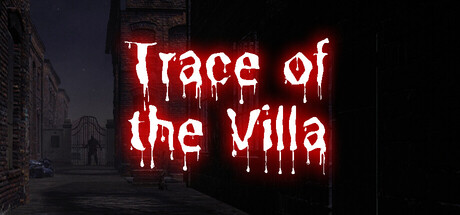
Trace of the Villa and the Case for Quiet Dread in Psychological Horror
Trace of the Villa frames its terrors around absence: a decaying, off-the-grid mansion and a protagonist named Jin who follows hints that his missing sister may still be alive. Rather than trading on jump scares, it promises slow, clue-driven exploration and the steady worsening of unease as the estate reveals what it has been hiding.

Quick facts
| Title | Trace of the Villa |
|---|---|
| Steam AppID | 3483660 |
| Developer / Publisher | Steadyturtle Co., Ltd. |
| Release date | 28 May, 2026 |
| Genres | Action, Adventure, Indie |
| Key Steam categories | Single-player; Color Alternatives; Custom Volume Controls; Playable without Timed Input; Subtitle Options; Family Sharing |
| Official short premise | “Jin has spent years searching for his missing sister, pursuing leads that took him to a remote, decaying mansion where he recovered manifests and hints that indicate his sister may still be alive, somewhere at the end of the trail he is about to follow.” |
What Trace of the Villa is — and how it makes tension
At its core the game is an atmospheric mystery adventure built around exploration and environmental storytelling. The official description on Steam frames the experience as a psychological investigation: the mansion “feels less abandoned than erased,” with rooms left as if occupants vanished mid-routine and systems that only slowly reveal hidden compartments, encrypted documents, and suspicious transfer records when power is restored.
Mechanically expect clue-driven progression: restore systems, open locked doors, examine manifests and fragments, and piece together a timeline of arrivals and departures. The game’s listed genres (Action, Adventure, Indie) and categories (including “Playable without Timed Input” and “Subtitle Options”) suggest a single-player, narrative-focused experience that privileges careful reading and slow escalation over reflex-based scares.


Who should wishlist it
Wishlist Trace of the Villa if you prefer slow-burn suspense, environmental storytelling, and puzzle-driven investigation over high-frequency jump scares. The game suits players who enjoy piecing together narrative from notes, manifests, and restored systems and who appreciate atmosphere created by absence — furnishings and everyday traces that imply lives interrupted.
If your ideal horror session is about reading the room as much as surviving it, this is the type of Steam indie horror to consider.
When and where: Steam specifics
Trace of the Villa released on Steam on 28 May, 2026 and is published and developed by Steadyturtle Co., Ltd. Its Steam page lists it under Action, Adventure, Indie and shows single-player and accessibility-oriented categories (color alternatives, custom volume controls, subtitles, and playable without timed input), indicating a PC-first store presence with standard Steam storefront features.
Why quiet dread and uncertainty can outpace shock claims
Shock can make your heart jump; uncertainty keeps it racing. When a game’s environment implies a story through what’s missing — no photos, falsified records, people “passed through” under strict control — the player fills gaps with inference. That cognitive engagement creates a sustained, anticipatory fear that often lingers longer than a sudden fright. Trace of the Villa leans into that psychology, asking players to assemble evidence and bear the weight of what those gaps imply.
How progression works — reading clues and restoring systems
The Steam description makes the loop plain: Jin restores power, secured systems come back online, hidden compartments unlock, and safes yield fragments of documents and transfer records. Each solved puzzle exposes more of a concealed operation — financial trails, falsified identities, arrivals without records — so progression is narrative-puzzle driven. Players move forward by interrogating the mansion’s infrastructure and its paper trail rather than by clearing rooms of enemies or timing perfect inputs.
Who will this not be for
Players seeking constant adrenaline, combat-heavy mechanics, or horror defined by frequent scripted jump scares may find Trace of the Villa too patient. The listed categories and the narrative focus suggest a deliberate pace: if you want quick-action horror or multiplayer thrills, this single-player mystery will likely feel measured rather than manic.
Player scenarios — when to play
- Late-night investigation: Sit in a quiet room, use headphones, and let the mansion’s silence demand attention to detail.
- Note-driven sessions: Play in chunks focused on solving a handful of puzzles and reading discovered manifests to follow the plot thread.
- Accessibility-minded play: With subtitle options and no timed inputs, the game accommodates players who prefer to take their time examining clues.
How it stacks up — brief comparison
| Title | Genre / Tone | Puzzle focus | Exploration style | Pacing / Who it’s for |
|---|---|---|---|---|
| Trace of the Villa | Action / Adventure / Indie — atmospheric mansion mystery | Clue-driven puzzles; restore systems, unlock compartments | Slow, methodical exploration of a decaying estate | Players who prefer environmental storytelling and slow-burn suspense |
| Amnesia: The Dark Descent | Action / Adventure / Indie — immersion and existential dread | Puzzles mixed with stealth and sanity mechanics | First-person, claustrophobic exploration | Players seeking intense immersion and survival-based tension |
| SOMA | Action / Adventure / Indie — sci-fi psychological horror | Environmental and logical puzzles, context-heavy | Exploration in a contained, atmospheric setting (undersea) | Players drawn to philosophical horror and narrative puzzles |
| Layers of Fear (2016) | Adventure / Indie — first-person psychological horror | Story-based puzzles; environment shifts to reflect madness | Mutable Victorian mansion with surreal changes | Players who like disorienting, art-driven psychological narratives |
| Layers of Fear (2023) | Adventure — consolidated chapters of psychological horror | Focus on storytelling and atmosphere over mechanical challenge | Chapter-based exploration; narrative emphasis | Players who prefer structured chapters and strong narrative focus |
| Poppy Playtime | Action / Adventure / Indie — toy-factory horror | Puzzle adventure with item-based mechanics (GrabPack) | Exploration of a large facility with set-piece encounters | Players who like puzzle mechanics combined with tense encounters |
Comparison notes: genre, atmosphere, puzzle focus, exploration style, and pacing are summarized from public descriptions and known release information for each title.
YouTube discovery
If you want trailers or gameplay clips, search YouTube for Trace of the Villa: Trace of the Villa trailer/gameplay on YouTube. Use this as a discovery path—do not assume every video in results is an official release unless verified on Steam or by the developer.
Deciding checklist
- Do you enjoy reconstructing a story from objects and documents? — Yes: wishlist it.
- Do you prefer rapid combat or multiplayer scares? — Probably
Steam page
Leave a Reply