
Trace of the Villa — a slow-burn mansion mystery built on locked-room clue chains
Jin arrives at a remote, decaying mansion with a single goal: follow fragmented manifests and hints that might lead him to a missing sister — Trace of the Villa launches on Steam 28 May, 2026. The game dresses its investigation in atmospheric environmental storytelling and puzzle-forward exploration, the sort of narrative puzzle design that asks you to read rooms, not just solve isolated riddles.

Quick facts
| Title | Trace of the Villa |
|---|---|
| Steam AppID | 3483660 |
| Release date | 28 May, 2026 |
| Developer | Steadyturtle Co., Ltd. |
| Publisher | Steadyturtle Co., Ltd. |
| Genres | Action, Adventure, Indie |
| Categories | Single-player, Color Alternatives, Custom Volume Controls, Playable without Timed Input, Subtitle Options, Family Sharing |
| Short description | Jin has spent years searching for his missing sister, pursuing leads that took him to a remote, decaying mansion where he recovered manifests and hints that indicate his sister may still be alive, somewhere at the end of the trail he is about to follow. |
Who is this for?
Trace of the Villa will appeal to players who prefer story-rich adventure and slow-burn suspense over twitch reflexes: people who enjoy reading a scene for clues, locking disparate details together, and letting narrative tension build as systems and rooms unlock. The game is listed as single-player and includes accessibility touches (subtitle options, custom volume controls, color alternatives) that suit PC players who want a focused, readable mystery experience.
What the game is
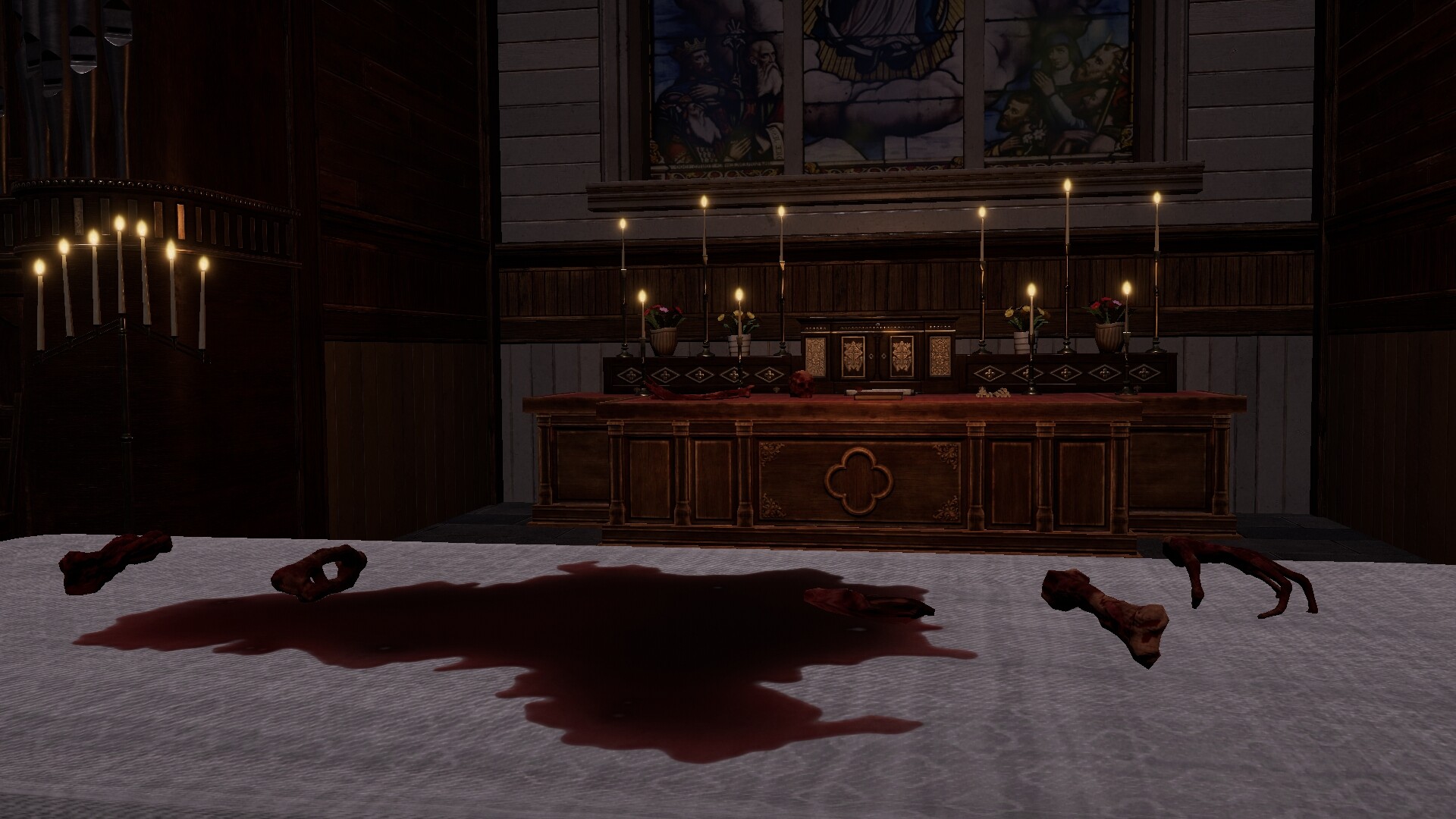
Official Steam materials frame Trace of the Villa as a psychological investigation in a cut-off estate where rooms feel “erased” rather than merely abandoned. You restore power, open safes, and salvage encrypted documents and transfer records; each solved puzzle pushes the timeline forward and reveals another layer of a concealed operation. The protagonist’s search for a missing sister is the narrative throughline described in the official short description and longer narrative text on Steam.
When and where (Steam context)
Trace of the Villa released on Steam 28 May, 2026. It appears on the Steam store as a PC indie title from Steadyturtle Co., Ltd., categorized under Action, Adventure, and Indie and marketed as a single-player experience with options that improve accessibility and playability for PC users.
Why the mansion theme matters
Mansion mysteries are effective because architecture becomes a storytelling tool: layered interiors, locked doors, and staged personal effects let designers encode narrative beats into space. Trace of the Villa uses that premise formally — the house itself is the puzzle book. The absence of photos or names in rooms is a design choice that shifts emphasis to deduction and pattern recognition: you infer missing history by aggregating small, contextual clues across multiple rooms, rather than being handed exposition.
How you read clues and progress — locked-room thinking and clue chains
Trace of the Villa emphasizes three interlocking practices familiar to escape-room and mystery players:
- Locked-room thinking — treat each closed door or inactive system as a node that unlocks more nodes; progress often requires returning with newly recovered items or codes.
- Clue chains — small discoveries (a ledger entry, a power relay, an encrypted fragment) aren’t isolated solutions but links that must be connected to other evidence to form a working hypothesis.
- Environmental reading — furniture placement, absent personal items, and staged interiors are primary sources of information; reading context replaces explicit exposition.
Players who enjoy piecing together timelines from scattered documents and who like inventory-light, scene-driven puzzle loops will find this approach satisfying. The Steam page lists features such as “Playable without Timed Input,” which aligns with a puzzle-first, contemplative pace where exploration trumps pressure.

Comparison: Where Trace of the Villa sits relative to nearby mystery/puzzle games
| Game | Genre | Puzzle focus | Exploration style | Story tone / pacing | Player fit |
|---|---|---|---|---|---|
| The Room | Adventure, Indie | Mechanical, tactile safes and puzzles | Single-room, handcrafted objects | Curiosity-driven, compact and focused | Players who like tactile contraptions and tightly scoped puzzles |
| The Room Two | Adventure, Indie | Sequential mechanical puzzles with narrative beats | Multi-scene but still object-centric | Slow reveal with an eerie atmosphere | Fans of object-based, atmosphere-led puzzle design |
| Escape Simulator | Adventure, Simulation, Indie | Physics, object interaction, community rooms | Room-by-room, high interactivity | Varied pacing depending on room; sandboxy | Players who want hands-on manipulation and co-op or workshop content |
| Hi‑Fi RUSH | Action | Rhythm-based combat and timing | Linear action levels | Fast, high-energy, upbeat | Action players; not a narrative puzzle match but useful contrast |
| Trace of the Villa | Action, Adventure, Indie | Clue-chain puzzles, environmental forensics, locked systems | Exploratory mansion with layered unlocks | Slow-burn, investigative, suspenseful | Players who want story-first puzzles and the discipline of reading rooms for hidden patterns |
Editorial note: these comparisons use genre, puzzle emphasis, exploration style, story tone, and pacing as neutral editorial criteria to help readers choose based on preference rather than claim superiority.
Player scenarios — will you like this?
- If you like slow-burn detective work: You’ll appreciate the game’s emphasis on documents, encrypted fragments, and financial trails that only make sense when pieced together across multiple rooms.
- If you prefer puzzle contraptions and immediate feedback: The Room series may deliver more focused object-based satisfaction; Trace of the Villa leans heavier on narrative context and chained discoveries.
- If you enjoy cooperative or physics-heavy interaction: Escape Simulator scratches that itch; Trace of the Villa is presented as single-player and concentrates on reading environments rather than sandbox manipulation.
- If you want accessibility and low-pressure play: Steam lists “Playable without Timed Input,” subtitle options, and custom
Steam page
View Trace of the Villa on Steam
YouTube discovery
For trailer and gameplay discovery, use YouTube search rather than relying on unverified embeds: Find Trace of the Villa trailer and gameplay searches on YouTube.
Leave a Reply